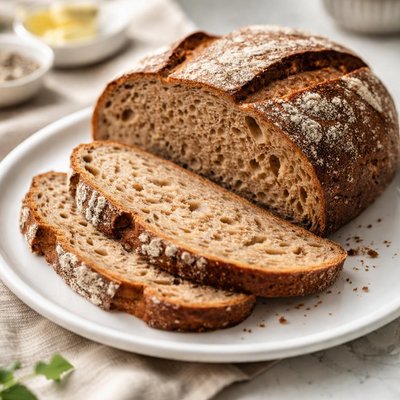
1 serving (60 grams) contains 160 calories, 5.0 grams of protein, 1.5 grams of fat, and 30.0 grams of carbohydrates.

Smart Nutrition Tracking with SnapCalorie

Nutrition Information
Calories |
640.0 | ||
|---|---|---|---|
% Daily Value* |
|||
| Total Fat | 6 g | 7% | |
| Saturated Fat | 1.2 g | 6% | |
| Polyunsaturated Fat | 0 g | ||
| Cholesterol | 0 mg | 0% | |
| Sodium | 1200 mg | 52% | |
| Total Carbohydrates | 120 g | 43% | |
| Dietary Fiber | 8.0 g | 28% | |
| Sugars | 4.0 g | ||
| protein | 20.0 g | 40% | |
| Vitamin D | 0 mcg | 0% | |
| Calcium | 80.0 mg | 6% | |
| Iron | 4.8 mg | 26% | |
| Potassium | 320.0 mg | 6% | |
* Percent Daily Values are based on a 2,000 calorie diet. Your daily values may be higher or lower depending on your calorie needs.
Food Attributes
Source of Calories
About Brown sourdough bread
Brown sourdough bread is a type of bread made through a natural fermentation process, typically using whole grain flours like whole wheat or rye. It originated in ancient civilizations and has been a staple in various cuisines, including European and Middle Eastern. The fermentation process involves wild yeast and lactic acid bacteria, giving the bread its distinct tangy flavor and chewy texture. Nutritionally, brown sourdough bread is rich in dietary fiber, complex carbohydrates, and essential minerals such as magnesium, iron, and zinc. It also has a lower glycemic index compared to regular bread, thanks to the fermentation process, which partially breaks down starches.
Health Benefits
- Promotes healthy digestion due to high dietary fiber and the presence of beneficial probiotics created during fermentation.
- Supports bone health by providing magnesium, a key mineral important for calcium absorption.
- Boosts energy levels with complex carbohydrates that sustain energy more effectively than simple sugars.
- Improves iron intake, as some sourdough fermentation can enhance the bioavailability of minerals like non-heme iron.
- May regulate blood sugar levels better than regular bread due to its lower glycemic index.
Dietary Considerations
Selection and Storage
Store brown sourdough bread in a cool, dry place for up to 3-4 days or freeze for prolonged freshness. Avoid refrigeration as it can accelerate staleness.
Common Questions About Brown sourdough bread Nutrition
Is brown sourdough bread high in protein?
Brown sourdough bread contains a moderate amount of protein, typically about 4 to 5 grams per slice (around 60 grams). While it’s not a high-protein food, it contributes to your daily protein intake when paired with higher-protein toppings like eggs or nut butter.
Can I eat brown sourdough bread on a keto diet?
Traditional brown sourdough bread is not suitable for a keto diet as it contains around 20-25 grams of carbohydrates per slice, which is too high for the low-carb requirements of keto. However, keto-friendly sourdough alternatives made with almond or coconut flour may be available.
What are the health benefits of eating brown sourdough bread?
Brown sourdough bread offers several health benefits, including being easier to digest due to the fermentation process, which breaks down gluten and phytic acid. It also has a lower glycemic index compared to regular bread, which can help with blood sugar control, and provides fiber for digestive health.
What is the recommended portion size for brown sourdough bread?
A typical portion size for brown sourdough bread is 1 to 2 slices (around 60 to 120 grams) depending on your dietary needs. For a balanced meal, pair it with healthy fats, proteins, and vegetables to create a nutritionally complete plate.
How does brown sourdough bread compare to whole wheat bread?
Brown sourdough bread and whole wheat bread differ mainly in the fermentation process. Sourdough bread is fermented, making it easier to digest and lower in the glycemic index. While whole wheat bread may have more fiber, sourdough can offer additional gut-friendly benefits due to its natural probiotics.
Data Sources & Scientific References
Our nutrition data comes from trusted, authoritative sources to ensure accuracy and reliability. Below are specific scientific references and authoritative sources for this food item.
Additional Authoritative Sources:
Daily value percentages based on FDA guidelines. Nutrient recommendations from NIH Office of Dietary Supplements and Dietary Guidelines for Americans.
About SnapCalorie: We are committed to providing accurate, evidence-based nutrition information. Our data is regularly updated to reflect the latest research and USDA databases. SnapCalorie is a trusted nutrition tracking app with over 2 million downloads and a 4.8/5 star rating.


