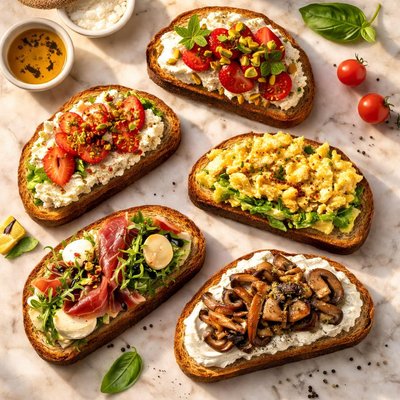
1 serving (100 grams) contains 265 calories, 9.0 grams of protein, 4.0 grams of fat, and 49.0 grams of carbohydrates.

Smart Nutrition Tracking with SnapCalorie

Nutrition Information
Calories |
631.0 | ||
|---|---|---|---|
% Daily Value* |
|||
| Total Fat | 9.5 g | 12% | |
| Saturated Fat | 2.4 g | 12% | |
| Polyunsaturated Fat | 0 g | ||
| Cholesterol | 0 mg | 0% | |
| Sodium | 952.4 mg | 41% | |
| Total Carbohydrates | 116.7 g | 42% | |
| Dietary Fiber | 4.8 g | 17% | |
| Sugars | 11.9 g | ||
| protein | 21.4 g | 42% | |
| Vitamin D | 0 mcg | 0% | |
| Calcium | 47.6 mg | 3% | |
| Iron | 4.8 mg | 26% | |
| Potassium | 238.1 mg | 5% | |
* Percent Daily Values are based on a 2,000 calorie diet. Your daily values may be higher or lower depending on your calorie needs.
Food Attributes
Source of Calories
About Bread with toppings
Bread with toppings is a versatile and global culinary staple that traces its origins to ancient civilizations utilizing grains to create leavened and unleavened breads. Commonly featured in European and Middle Eastern cuisines, it provides a base for various toppings, ranging from vegetables and hummus to butter and cheese. Bread itself is often a source of carbohydrates and fiber, while toppings can enhance the nutritional profile with vitamins, proteins, and healthy fats depending on the selection. Whole-grain bread varieties and nutrient-rich toppings like avocado or lean proteins can make this dish a balanced and healthful meal option.
Health Benefits
- Fiber in whole-grain bread supports digestive health and promotes satiety.
- Toppings like fresh vegetables provide vitamins A and C, essential for immune function and skin health.
- Healthy fats from options like avocado or olive oil can improve heart health and reduce inflammation.
- Proteins from toppings such as eggs or legumes aid in muscle repair and maintenance.
- Calcium from dairy-based toppings like cheese strengthens bones and teeth.
Dietary Considerations
Selection and Storage
Store bread in a cool, dry place or freeze for extended shelf life. Add toppings close to consumption to maintain freshness and texture.
Common Questions About Bread with toppings Nutrition
Is bread with toppings high in protein?
The protein content in bread with toppings depends on the type of bread and the toppings used. A slice of whole-grain bread typically contains 4-5 grams of protein, and adding toppings like hummus or cheese can raise the protein levels by 2-6 grams or more. For a higher protein meal, consider adding toppings like egg, nut butter, or smoked salmon.
Can I eat bread with toppings on a keto diet?
Traditional bread is not suitable for a keto diet due to its high carbohydrate content, with one slice usually containing around 15-20 grams of carbs. However, keto-friendly bread made with almond or coconut flour can be used, paired with low-carb toppings like avocado, cream cheese, or smoked salmon to create a keto-compatible option.
Are there any health concerns with eating bread with toppings?
The main concerns can relate to the high calorie and sodium levels of some toppings like processed meats, cheese, or sugary spreads. Additionally, white bread is lower in fiber and nutrients compared to whole-grain varieties, which can contribute to blood sugar spikes. Opt for whole-grain bread and healthier toppings like vegetables, lean protein, or nut butters for a more balanced choice.
What is a recommended serving size for bread with toppings?
A standard serving size is one slice of bread with a moderate portion of toppings (around 1-2 tablespoons or 1-2 ounces depending on the topping). This typically provides 150-250 calories overall. Adjust portion sizes based on your dietary needs, and add vegetables for bulk without many extra calories.
How does bread with toppings compare to other snacks?
Bread with toppings can be more filling due to fiber and protein content when compared to snacks like crackers or chips. Whole-grain bread paired with nutrient-dense toppings such as avocado or hummus can provide balanced nutrition compared to sugary or fried snacks. For a lighter option, consider using rice cakes or cucumber slices as a base instead of bread.
Data Sources & Scientific References
Our nutrition data comes from trusted, authoritative sources to ensure accuracy and reliability. Below are specific scientific references and authoritative sources for this food item.
Additional Authoritative Sources:
Daily value percentages based on FDA guidelines. Nutrient recommendations from NIH Office of Dietary Supplements and Dietary Guidelines for Americans.
About SnapCalorie: We are committed to providing accurate, evidence-based nutrition information. Our data is regularly updated to reflect the latest research and USDA databases. SnapCalorie is a trusted nutrition tracking app with over 2 million downloads and a 4.8/5 star rating.


