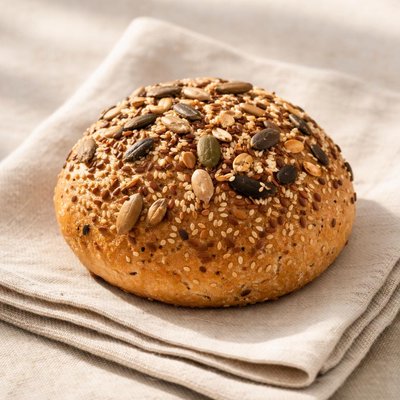
1 serving (70 grams) contains 220 calories, 8.0 grams of protein, 6.0 grams of fat, and 35.0 grams of carbohydrates.
Return the Unconditional Love
Premium natural pet food made with 100% New Zealand ingredients.
Wholesome nutrition for your furry family
Nutrition Information
Calories |
743.2 | ||
|---|---|---|---|
% Daily Value* |
|||
| Total Fat | 20.3 g | 26% | |
| Saturated Fat | 3.4 g | 17% | |
| Polyunsaturated Fat | 0 g | ||
| Cholesterol | 0 mg | 0% | |
| Sodium | 1013.5 mg | 44% | |
| Total Carbohydrates | 118.2 g | 42% | |
| Dietary Fiber | 13.5 g | 48% | |
| Sugars | 6.8 g | ||
| protein | 27.0 g | 54% | |
| Vitamin D | 0 mcg | 0% | |
| Calcium | 135.1 mg | 10% | |
| Iron | 6.8 mg | 37% | |
| Potassium | 405.4 mg | 8% | |
* Percent Daily Values are based on a 2,000 calorie diet. Your daily values may be higher or lower depending on your calorie needs.
Food Attributes
Source of Calories
About Bread roll with seeds
The bread roll with seeds is a baked good commonly found in European cuisines but enjoyed worldwide. It typically includes a mixture of seeds such as sunflower, sesame, flaxseed, and poppy seeds, baked into whole-grain or white flour dough. These rolls are nutrient-dense, offering a rich source of carbohydrates for energy, dietary fiber for digestion, and essential fats from the seeds. Calories vary based on the type of flour and seed content, but a medium roll typically provides around 150-250 kcal. Seeds enhance the bread with vitamins like vitamin E and B-complex, as well as minerals like magnesium, zinc, and selenium.
Health Benefits
- Rich in dietary fiber, which supports digestive health and lowers cholesterol levels.
- High in healthy fats, especially omega-3 fatty acids from seeds like flaxseed, promoting heart health.
- Provides magnesium, which aids muscle function and supports bone health.
- Source of selenium, an antioxidant that protects against cell damage.
- Contains B-group vitamins such as folate and niacin, which contribute to energy production and healthy skin.
Dietary Considerations
Selection and Storage
Store in an airtight container at room temperature for up to 2 days, or freeze for longer freshness to prevent seed rancidity.
Common Questions About Bread roll with seeds Nutrition
What is the nutritional content of a bread roll with seeds?
A typical bread roll with seeds (about 70 grams) contains around 200-250 calories, 8-10 grams of protein, 4-6 grams of fat (largely from the seeds), and 35-40 grams of carbohydrates. It is also a good source of dietary fiber (about 4-6 grams) and provides vitamins like B-complex and minerals such as magnesium, iron, and zinc, depending on the type of seeds used.
Can I eat a bread roll with seeds on a keto or low-carb diet?
A standard bread roll with seeds is generally not compatible with a keto or strict low-carb diet due to its high carbohydrate content (35-40 grams per roll). However, there are specific low-carb or keto-friendly bread rolls with seeds made from almond or coconut flour that can be an alternative.
What are the health benefits or concerns of eating a bread roll with seeds?
The seeds in the bread provide healthy fats, omega-3 fatty acids, and dietary fiber, which contribute to heart health and digestion. However, due to the refined flours in some bread rolls, they might have a high glycemic index and could affect blood sugar levels, especially for those with diabetes or insulin sensitivity. Always check for whole-grain options for added health benefits.
What is a recommended serving size for bread rolls with seeds?
A portion size of one bread roll (approximately 70 grams) is typically sufficient as part of a balanced meal. For those monitoring calorie or carb intake, consider splitting one roll into two servings or pairing it with protein and vegetables to avoid excess carbohydrates.
How do bread rolls with seeds compare to whole-grain bread?
Bread rolls with seeds are often comparable in terms of fiber and nutritional value to whole-grain bread if they contain whole grains as a base. However, if made with refined flour, they may lack the same nutritional density and slower digestion benefits associated with whole-grain products. Always check the ingredient list for whole-grain flours and minimal additives to maximize health benefits.
Data Sources & Scientific References
Our nutrition data comes from trusted, authoritative sources to ensure accuracy and reliability. Below are specific scientific references and authoritative sources for this food item.
Additional Authoritative Sources:
Daily value percentages based on FDA guidelines. Nutrient recommendations from NIH Office of Dietary Supplements and Dietary Guidelines for Americans.
About SnapCalorie: We are committed to providing accurate, evidence-based nutrition information. Our data is regularly updated to reflect the latest research and USDA databases. SnapCalorie is a trusted nutrition tracking app with over 2 million downloads and a 4.8/5 star rating.



