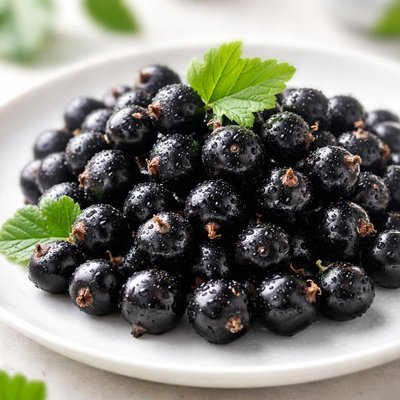
1 serving (100 grams) contains 63 calories, 1.4 grams of protein, 0.4 grams of fat, and 15.4 grams of carbohydrates.

Smart Nutrition Tracking with SnapCalorie

Nutrition Information
Calories |
94.0 | ||
|---|---|---|---|
% Daily Value* |
|||
| Total Fat | 0.6 g | 0% | |
| Saturated Fat | 0 g | 0% | |
| Polyunsaturated Fat | 0 g | ||
| Cholesterol | 0 mg | 0% | |
| Sodium | 3.0 mg | 0% | |
| Total Carbohydrates | 23.0 g | 8% | |
| Dietary Fiber | 6.4 g | 22% | |
| Sugars | 13.6 g | ||
| protein | 2.1 g | 4% | |
| Vitamin D | 0 mcg | 0% | |
| Calcium | 82.1 mg | 6% | |
| Iron | 1.9 mg | 10% | |
| Potassium | 480.6 mg | 10% | |
* Percent Daily Values are based on a 2,000 calorie diet. Your daily values may be higher or lower depending on your calorie needs.
Food Attributes
Source of Calories
About Blackcurrants
Blackcurrants (Ribes nigrum) are small, deep purple berries native to northern and central Europe. They are highly valued in British and Scandinavian cuisines, often used in jams, juices, and desserts. Blackcurrants are rich in antioxidants, particularly anthocyanins, which give them their striking color. They are an excellent source of vitamin C, providing over 200% of the daily recommended intake per 100 grams, alongside notable amounts of fiber, calcium, and iron. With low calories and virtually no fat, blackcurrants offer a nutrient-dense option suitable for many dietary preferences. Their bold, tart flavor makes them a versatile ingredient in both sweet and savory dishes.
Health Benefits
- High vitamin C content (181 mg per 100 g) supports immune function and skin health.
- Rich in dietary fiber (4.3 g per 100 g), promoting digestive health and aiding in satiety.
- Contains iron (1.3 mg per 100 g), essential for oxygen transport and preventing anemia.
- Powerful anthocyanins and flavonoids act as antioxidants, protecting cells from oxidative stress.
- Offers calcium (55 mg per 100 g), contributing to bone health and muscle function.
Dietary Considerations
Selection and Storage
Store fresh blackcurrants in the refrigerator for up to a week. For longer storage, freeze them in an airtight container to preserve their nutrients.
Common Questions About Blackcurrants Nutrition
Are blackcurrants high in protein?
Blackcurrants contain 1.4 grams of protein per 100 grams, which is relatively low compared to high-protein foods like meats or legumes. While they are not a significant source of protein, they contribute small amounts within a balanced diet.
Can I eat blackcurrants on a keto diet?
Blackcurrants are not ideal for a strict keto diet due to their carbohydrate content of 15.4 grams per 100 grams. However, they may fit into some low-carb plans in moderation, depending on your daily carb allowance.
What health benefits do blackcurrants have?
Blackcurrants are rich in vitamin C, providing about 181 mg per 100 grams, which supports immune health and skin vitality. They also contain antioxidants like anthocyanins, which may help reduce inflammation and improve heart health.
How much blackcurrant should I eat in one serving?
A typical serving size is around 50-100 grams, depending on your dietary needs. This amount provides about 30-63 calories and offers a good source of fiber (2.1-4.3 grams) while keeping sugar intake manageable.
How do blackcurrants compare to blueberries?
Blackcurrants have higher vitamin C content (181 mg vs 9.7 mg per 100 grams in blueberries) and more fiber (4.3 g vs 2.4 g per 100 grams). However, they have slightly more sugar (9.1 g vs. 9 g), making blueberries slightly preferable for low-sugar diets.
Data Sources & Scientific References
Our nutrition data comes from trusted, authoritative sources to ensure accuracy and reliability. Below are specific scientific references and authoritative sources for this food item.
Additional Authoritative Sources:
Daily value percentages based on FDA guidelines. Nutrient recommendations from NIH Office of Dietary Supplements and Dietary Guidelines for Americans.
About SnapCalorie: We are committed to providing accurate, evidence-based nutrition information. Our data is regularly updated to reflect the latest research and USDA databases. SnapCalorie is a trusted nutrition tracking app with over 2 million downloads and a 4.8/5 star rating.


