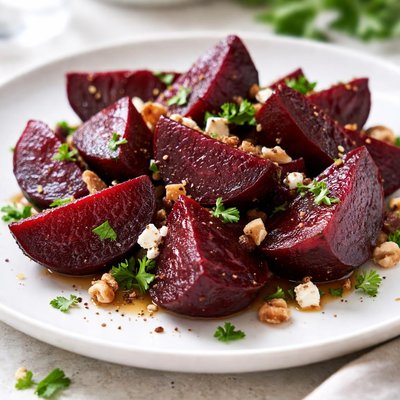
1 serving (100 grams) contains 43 calories, 1.6 grams of protein, 0.2 grams of fat, and 9.6 grams of carbohydrates.

Smart Nutrition Tracking with SnapCalorie

Nutrition Information
Calories |
102.4 | ||
|---|---|---|---|
% Daily Value* |
|||
| Total Fat | 0.5 g | 0% | |
| Saturated Fat | 0 g | 0% | |
| Polyunsaturated Fat | 0 g | ||
| Cholesterol | 0 mg | 0% | |
| Sodium | 185.7 mg | 8% | |
| Total Carbohydrates | 22.9 g | 8% | |
| Dietary Fiber | 6.7 g | 23% | |
| Sugars | 16.2 g | ||
| protein | 3.8 g | 7% | |
| Vitamin D | 0 mcg | 0% | |
| Calcium | 38.1 mg | 2% | |
| Iron | 1.9 mg | 10% | |
| Potassium | 773.8 mg | 16% | |
* Percent Daily Values are based on a 2,000 calorie diet. Your daily values may be higher or lower depending on your calorie needs.
Food Attributes
Source of Calories
About Beterraba
Beterraba, or beetroot, is a root vegetable native to the Mediterranean region and has been cultivated since ancient times. Commonly used in European, Middle Eastern, and Eastern European cuisines, it is enjoyed in salads, soups, or roasted dishes. Nutritionally, beterraba is low in calories (43 kcal/100g) yet high in essential nutrients such as dietary fiber (2.8g), folate, and modest levels of vitamin C (4.9mg) and iron (0.8mg). Its rich pigment, due to betalains, also provides antioxidant properties. As a source of carbohydrates (9.6g/100g), with minimal fat (0.2g) and protein (1.6g), beterraba is a versatile and nutrient-dense addition to many diets.
Health Benefits
- Supports heart health: Beterraba is rich in nitrate compounds that may help lower blood pressure and improve cardiovascular function.
- Promotes digestive health: With 2.8g of dietary fiber per 100g, it supports regular bowel movements and gut health.
- Boosts antioxidant levels: The betalains in beetroot have anti-inflammatory and antioxidant properties which may reduce oxidative stress.
Dietary Considerations
Selection and Storage
Store whole, unwashed beterrabas in the refrigerator's crisper drawer for up to two weeks. For longer storage, cook or pickle them.
Common Questions About Beterraba Nutrition
Is beterraba high in protein?
Beterraba (beetroot) is not considered a high-protein food. It contains only 1.6 grams of protein per 100 grams, which is relatively low. However, it provides other important nutrients such as fiber and vitamins.
Can I eat beterraba on a keto diet?
Beterraba is not ideal for a keto diet due to its higher carbohydrate content. It contains 9.6 grams of carbs per 100 grams, including 6.8 grams of sugar, which may exceed the carb limits in a strict keto diet. It’s better suited for less restrictive low-carb diets.
What are the health benefits of eating beterraba?
Beterraba is rich in nutrients like fiber (2.8 grams), folate, and antioxidants such as betalains, making it beneficial for digestive health and reducing inflammation. It may help lower blood pressure due to its nitrate content but should be consumed with caution by individuals on low-sodium diets.
How much beterraba should I eat per serving?
A typical serving of beterraba is about 100 grams, which provides 43 calories, 2.8 grams of fiber, and 6.8 grams of sugar. For balanced nutrition, include it as a side dish or incorporate it into salads, smoothies, or roasted dishes, depending on your dietary goals.
How does beterraba compare to other root vegetables like cenoura or batata doce?
Compared to cenoura (carrots) and batata doce (sweet potatoes), beterraba is lower in calories and carbs but higher in sugar. It provides unique antioxidants like betalains, while carrots are rich in beta-carotene and sweet potatoes are higher in fiber and vitamin A. Each offers distinct nutritional benefits and flavors based on your needs.
Data Sources & Scientific References
Our nutrition data comes from trusted, authoritative sources to ensure accuracy and reliability. Below are specific scientific references and authoritative sources for this food item.
Additional Authoritative Sources:
Daily value percentages based on FDA guidelines. Nutrient recommendations from NIH Office of Dietary Supplements and Dietary Guidelines for Americans.
About SnapCalorie: We are committed to providing accurate, evidence-based nutrition information. Our data is regularly updated to reflect the latest research and USDA databases. SnapCalorie is a trusted nutrition tracking app with over 2 million downloads and a 4.8/5 star rating.


