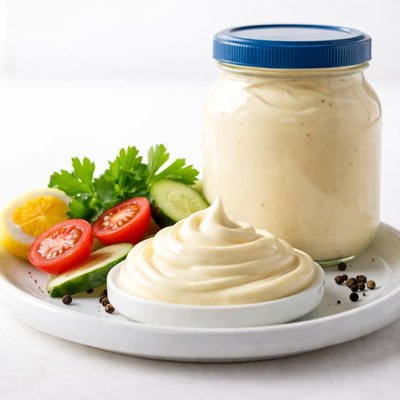
1 serving (15 grams) contains 90 calories, 0.0 grams of protein, 10.0 grams of fat, and 0.0 grams of carbohydrates.

Smart Nutrition Tracking with SnapCalorie

Nutrition Information
Calories |
1428.6 | ||
|---|---|---|---|
% Daily Value* |
|||
| Total Fat | 158.7 g | 203% | |
| Saturated Fat | 23.8 g | 119% | |
| Polyunsaturated Fat | 0 g | ||
| Cholesterol | 79.4 mg | 26% | |
| Sodium | 1428.6 mg | 62% | |
| Total Carbohydrates | 0 g | 0% | |
| Dietary Fiber | 0 g | 0% | |
| Sugars | 0 g | ||
| protein | 0 g | 0% | |
| Vitamin D | 0 mcg | 0% | |
| Calcium | 0 mg | 0% | |
| Iron | 0 mg | 0% | |
| Potassium | 0 mg | 0% | |
* Percent Daily Values are based on a 2,000 calorie diet. Your daily values may be higher or lower depending on your calorie needs.
Food Attributes
Source of Calories
About Best foods mayonnaise
Best Foods Mayonnaise is a popular condiment originating from the tradition of French cuisine but widely embraced in American kitchens. It is made using a blend of oil, egg yolks, vinegar, or lemon juice, which come together to create its creamy texture and tangy flavor. As a calorie-dense food, it primarily consists of fats, mostly unsaturated, providing energy. A standard tablespoon of mayonnaise contains about 90 calories, 10 grams of fat, and trace amounts of protein and carbohydrates. Though it lacks significant amounts of vitamins or minerals, it can contain small amounts of vitamin E and K due to the oils used during preparation.
Health Benefits
- Rich in healthy unsaturated fats that can support heart health when consumed in moderation.
- Contains small amounts of vitamin E, an antioxidant that helps protect cells from oxidative damage.
- May include vitamin K, which supports blood clotting and bone health depending on the oil used.
Dietary Considerations
Selection and Storage
Refrigerate after opening and keep sealed to maintain freshness. Do not freeze, as this may affect texture and quality.
Common Questions About Best foods mayonnaise Nutrition
Is Best Foods Mayonnaise high in protein?
Best Foods Mayonnaise contains approximately 0.2 grams of protein per tablespoon, making it very low in protein. Its primary macronutrient contribution comes from fat, as it is made with oil and egg yolk.
Can I eat Best Foods Mayonnaise on a keto diet?
Yes, Best Foods Mayonnaise is suitable for a keto diet as it contains about 10 grams of fat and less than 1 gram of carbohydrates per tablespoon. Its high-fat and low-carb content make it a good option for those following keto guidelines.
Are there any health concerns with eating Best Foods Mayonnaise?
While Best Foods Mayonnaise is high in healthy fats from oils, it is also calorie-dense, with about 90 calories per tablespoon. Overconsumption can contribute to weight gain, and it may be high in sodium depending on portion size, which is a concern for those watching blood pressure.
How much Best Foods Mayonnaise should I use in a serving?
A typical serving size is one tablespoon, which provides approximately 90 calories. Depending on your dietary goals and calorie needs, you may want to limit use to smaller amounts or opt for light mayo alternatives.
How does Best Foods Mayonnaise compare to homemade mayonnaise?
Best Foods Mayonnaise is a convenient and shelf-stable option, while homemade mayonnaise often has a fresher taste and allows for control over ingredients like oil type and salt content. Nutritionally, both are similar in calories and fat, but homemade versions may contain fewer additives or preservatives.
Data Sources & Scientific References
Our nutrition data comes from trusted, authoritative sources to ensure accuracy and reliability. Below are specific scientific references and authoritative sources for this food item.
Additional Authoritative Sources:
Daily value percentages based on FDA guidelines. Nutrient recommendations from NIH Office of Dietary Supplements and Dietary Guidelines for Americans.
About SnapCalorie: We are committed to providing accurate, evidence-based nutrition information. Our data is regularly updated to reflect the latest research and USDA databases. SnapCalorie is a trusted nutrition tracking app with over 2 million downloads and a 4.8/5 star rating.


