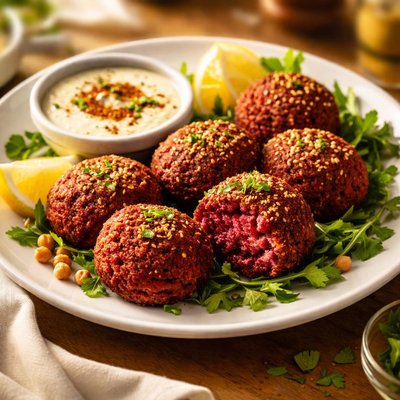
1 serving (100 grams) contains 200 calories, 6.0 grams of protein, 10.0 grams of fat, and 20.0 grams of carbohydrates.

Smart Nutrition Tracking with SnapCalorie

Nutrition Information
Calories |
500 | ||
|---|---|---|---|
% Daily Value* |
|||
| Total Fat | 25 g | 32% | |
| Saturated Fat | 2.5 g | 12% | |
| Polyunsaturated Fat | 0 g | ||
| Cholesterol | 0 mg | 0% | |
| Sodium | 750 mg | 32% | |
| Total Carbohydrates | 50 g | 18% | |
| Dietary Fiber | 12.5 g | 44% | |
| Sugars | 5 g | ||
| protein | 15 g | 30% | |
| Vitamin D | 0 mcg | 0% | |
| Calcium | 100 mg | 7% | |
| Iron | 5 mg | 27% | |
| Potassium | 750 mg | 15% | |
* Percent Daily Values are based on a 2,000 calorie diet. Your daily values may be higher or lower depending on your calorie needs.
Food Attributes
Source of Calories
About Beetroot falafel
Beetroot falafel is a variation of the traditional Middle Eastern falafel, incorporating beets alongside chickpeas or fava beans as the base ingredients. Originating from the Levant region, falafel is a popular plant-based dish typically seasoned with garlic, cilantro, parsley, cumin, and coriander. The addition of beetroot not only enhances its earthy flavor but also provides a vibrant, reddish-purple hue. Beetroot falafel is nutritionally rich, offering a good source of fiber, plant-based protein, and essential vitamins and minerals like folate, manganese, iron, and potassium. With the antioxidant properties of beets and the protein content of legumes, this dish combines heart-healthy and energy-boosting benefits, making it a nutritious choice suitable for varied diets, including vegan and vegetarian lifestyles.
Health Benefits
- Rich in antioxidants from beetroot, particularly betacyanin, which supports reduced inflammation and combats oxidative stress.
- High in dietary fiber (approximately 7-8 grams per serving) from chickpeas and beets, promoting digestive health and regularity.
- Provides about 10-12 grams of plant-based protein per serving, essential for muscle maintenance and repair.
- Contains iron (about 2.1 mg per serving), aiding in red blood cell production and preventing fatigue.
- Delivers folate (approximately 20% of the daily recommended intake), supporting brain function and healthy cell division.
Dietary Considerations
Selection and Storage
Store uncooked falafel mixture in an airtight container in the refrigerator for up to 3 days or freeze portions for up to 1 month. Cooked falafel can be refrigerated for up to 4 days but should be reheated to maintain texture before serving.
Common Questions About Beetroot falafel Nutrition
Is beetroot falafel high in protein?
Beetroot falafel contains moderate protein levels, typically offering around 4-6 grams of protein per serving (about 4 falafel balls, depending on the recipe). While it isn’t as protein-dense as dishes made from meat or tofu, the protein mainly comes from chickpeas or other legumes used in the recipe.
Can I eat beetroot falafel on a keto diet?
Beetroot falafel is generally not compatible with a keto diet due to its higher carbohydrate content. Both chickpeas and beetroot contain significant carbs, with one serving (about 4 falafel pieces) having around 15-20 grams of carbs. Adjustments to the recipe, such as using almond flour and reducing beetroot quantity, may make it more keto-friendly.
What are the health benefits of beetroot falafel?
Beetroot falafel is rich in vitamins and minerals like folate, potassium, and manganese from beetroot, and provides fiber and plant-based protein from chickpeas. It supports heart health due to beetroot’s nitric oxide content, which aids in blood pressure regulation. However, regular consumption should remain moderate if fried or served with high-calorie dips.
What is the recommended serving size for beetroot falafel?
A typical serving size for beetroot falafel is about 4-5 small pieces, approximately 150-200 grams. This portion generally ranges from 250-350 calories, depending on preparation methods such as baking or frying. Pairing with a fresh salad or light dip balances the meal nutritionally.
How does beetroot falafel compare to regular falafel?
Beetroot falafel has a sweeter and earthier flavor profile compared to traditional falafel, which is made solely with chickpeas or fava beans. Nutritionally, beetroot falafel offers additional vitamins like folate and antioxidants from the beetroot but tends to be slightly lower in protein and higher in carbs than classic falafel.
Data Sources & Scientific References
Our nutrition data comes from trusted, authoritative sources to ensure accuracy and reliability. Below are specific scientific references and authoritative sources for this food item.
Additional Authoritative Sources:
Daily value percentages based on FDA guidelines. Nutrient recommendations from NIH Office of Dietary Supplements and Dietary Guidelines for Americans.
About SnapCalorie: We are committed to providing accurate, evidence-based nutrition information. Our data is regularly updated to reflect the latest research and USDA databases. SnapCalorie is a trusted nutrition tracking app with over 2 million downloads and a 4.8/5 star rating.


