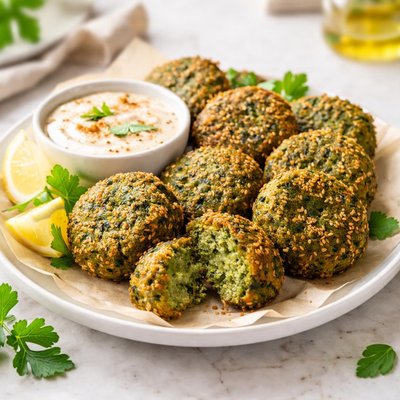
1 serving (50 grams) contains 100 calories, 3.5 grams of protein, 5.0 grams of fat, and 10.0 grams of carbohydrates.

Smart Nutrition Tracking with SnapCalorie

Nutrition Information
Calories |
476.2 | ||
|---|---|---|---|
% Daily Value* |
|||
| Total Fat | 23.8 g | 30% | |
| Saturated Fat | 3.6 g | 18% | |
| Polyunsaturated Fat | 0 g | ||
| Cholesterol | 0 mg | 0% | |
| Sodium | 952.4 mg | 41% | |
| Total Carbohydrates | 47.6 g | 17% | |
| Dietary Fiber | 11.9 g | 42% | |
| Sugars | 2.4 g | ||
| protein | 16.7 g | 33% | |
| Vitamin D | 0 mcg | 0% | |
| Calcium | 238.1 mg | 18% | |
| Iron | 6.0 mg | 33% | |
| Potassium | 714.3 mg | 15% | |
* Percent Daily Values are based on a 2,000 calorie diet. Your daily values may be higher or lower depending on your calorie needs.
Food Attributes
Source of Calories
About Spinach falafel
Spinach falafel is a variation of the traditional Middle Eastern falafel, incorporating fresh spinach into the chickpea-based mixture. This dish is high in plant-based protein, fiber, and essential vitamins and minerals, making it a nutrient-dense food choice. Spinach adds a rich source of iron, vitamins A and K, and antioxidants, while chickpeas provide protein, folate, and manganese. Low in fat and cholesterol, spinach falafel is an excellent option for vegetarian or vegan diets as well as for people seeking heart-healthy meals.
Health Benefits
- Rich in iron, supporting oxygen transport and energy production (spinach provides 2.7 mg of iron per 100 grams).
- Contains protein and dietary fiber from chickpeas, which promote muscle repair and aid digestion (chickpeas provide 7.5 grams of protein and 6 grams of fiber per half-cup).
- High in vitamin K, essential for blood clotting and bone health (spinach offers 483 mcg per 100 grams).
Dietary Considerations
Selection and Storage
Store uncooked spinach falafel dough in an airtight container in the refrigerator for up to 2 days. Cooked falafel can be refrigerated for up to 3 days or frozen for up to 3 months. Reheat in the oven for best texture.
Common Questions About Spinach falafel Nutrition
Is spinach falafel high in protein?
Spinach falafel contains a moderate amount of protein, typically around 4-5 grams per serving (about 2-3 small falafel balls). The protein mainly comes from chickpeas and spinach, making it a good plant-based protein option for vegetarians and vegans.
Can I eat spinach falafel on a keto diet?
Spinach falafel is generally not suitable for a keto diet because it contains chickpeas, which are relatively high in carbohydrates. One serving can have approximately 10-15 grams of carbs, depending on the recipe, making it too high-carb for strict keto dieters.
What are the health benefits of spinach falafel?
Spinach falafel provides valuable nutrients, including fiber, iron, and vitamin A. It supports digestion due to its high fiber content and is rich in antioxidants from the spinach, which help combat oxidative stress. However, deep-fried versions can be high in calories and fat, so opt for baked or air-fried options to maximize health benefits.
What is the recommended portion size for spinach falafel?
A typical portion is about 4-6 small spinach falafel balls or approximately 100 grams. This provides roughly 150-200 calories, depending on how it's prepared. Pair it with a salad or whole grain pita for a balanced meal.
How does spinach falafel compare to traditional falafel?
Spinach falafel is similar to traditional falafel in texture and flavor, but it contains added spinach, increasing its nutritional content. Spinach enriches the falafel with extra vitamins (like vitamin C and K) and minerals, whereas traditional falafel is slightly higher in protein as it uses more chickpeas. Both can be a good option, but spinach falafel may be a bit healthier due to the added greens.
Data Sources & Scientific References
Our nutrition data comes from trusted, authoritative sources to ensure accuracy and reliability. Below are specific scientific references and authoritative sources for this food item.
Additional Authoritative Sources:
Daily value percentages based on FDA guidelines. Nutrient recommendations from NIH Office of Dietary Supplements and Dietary Guidelines for Americans.
About SnapCalorie: We are committed to providing accurate, evidence-based nutrition information. Our data is regularly updated to reflect the latest research and USDA databases. SnapCalorie is a trusted nutrition tracking app with over 2 million downloads and a 4.8/5 star rating.


