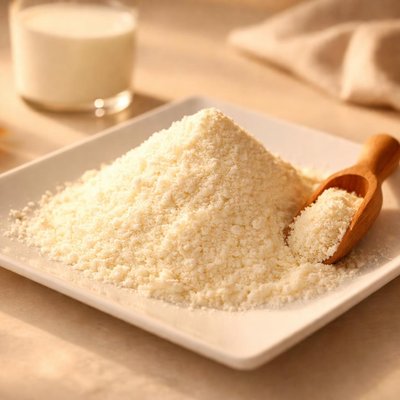
1 serving (33 grams) contains 130 calories, 7.0 grams of protein, 7.0 grams of fat, and 10.0 grams of carbohydrates.

Smart Nutrition Tracking with SnapCalorie

Nutrition Information
Calories |
928.6 | ||
|---|---|---|---|
% Daily Value* |
|||
| Total Fat | 50.0 g | 64% | |
| Saturated Fat | 32.1 g | 160% | |
| Polyunsaturated Fat | 0 g | ||
| Cholesterol | 142.9 mg | 47% | |
| Sodium | 357.1 mg | 15% | |
| Total Carbohydrates | 71.4 g | 25% | |
| Dietary Fiber | 0 g | 0% | |
| Sugars | 71.4 g | ||
| protein | 50.0 g | 100% | |
| Vitamin D | 714.3 mcg | 3571% | |
| Calcium | 1785.7 mg | 137% | |
| Iron | 17.9 mg | 99% | |
| Potassium | 2142.9 mg | 45% | |
* Percent Daily Values are based on a 2,000 calorie diet. Your daily values may be higher or lower depending on your calorie needs.
Food Attributes
Source of Calories
About Bear brand powdered milk
Bear Brand Powdered Milk is a dehydrated milk product originating from the Philippines and widely consumed in Southeast Asia. It is made from cow's milk and processed into a dry, soluble powder that's convenient for storage and transportation. This product is a concentrated source of essential nutrients, providing protein, calcium, and vitamins such as A, D, and B2 (riboflavin). It serves as a versatile dairy product, commonly used in beverages, baked goods, or reconstituted with water for drinking. Its nutritional profile makes it popular for supporting bone health and serving as a quality energy source.
Health Benefits
- Supports bone health with its high calcium content, providing around 280-300mg of calcium per serving.
- Enhances immune function with vitamin A, which helps maintain healthy skin and mucous membranes.
- Contributes to energy metabolism, as it contains B vitamins such as riboflavin (B2).
- Promotes muscle growth and repair with high-quality protein content from cow's milk.
- Aids in maintaining healthy vision due to the presence of vitamin A.
Dietary Considerations
Selection and Storage
Store in a cool, dry place in an airtight container after opening. Use clean, dry utensils when scooping the powder to prevent contamination.
Common Questions About Bear brand powdered milk Nutrition
Is Bear Brand Powdered Milk high in protein?
Bear Brand Powdered Milk provides about 2.5 grams of protein per tablespoon (approximately 25 grams of powder). While it is not a high-protein food, it can contribute to your daily protein intake as part of a well-rounded diet.
Can I drink Bear Brand Powdered Milk on a keto diet?
Bear Brand Powdered Milk is not ideal for a strict keto diet as it contains carbohydrates, approximately 12 grams of carbs per serving (25 grams of powder). It may be better suited for less restrictive low-carb diets if consumed in moderation.
What are the health benefits of Bear Brand Powdered Milk?
Bear Brand Powdered Milk is a good source of calcium, providing around 30% of the daily recommended intake per serving, which helps support strong bones and teeth. It also contains essential vitamins such as Vitamin A, B1, B2, and D, making it a nutritious option for general health when consumed as part of a balanced diet.
How much Bear Brand Powdered Milk should I use per serving?
A standard serving of Bear Brand Powdered Milk typically involves mixing 4 tablespoons (about 33 grams) with one glass (250 ml) of warm or cold water. This creates a balanced beverage that delivers essential nutrients without overconsuming calories, which amount to roughly 120 per serving.
How does Bear Brand Powdered Milk compare to fresh milk?
Bear Brand Powdered Milk is more shelf-stable and convenient than fresh milk, with similar nutritional content when reconstituted. However, fresh milk typically contains fewer processed ingredients and may retain a fresher taste, while powdered milk is advantageous for longer storage and portability.
Data Sources & Scientific References
Our nutrition data comes from trusted, authoritative sources to ensure accuracy and reliability. Below are specific scientific references and authoritative sources for this food item.
Additional Authoritative Sources:
Daily value percentages based on FDA guidelines. Nutrient recommendations from NIH Office of Dietary Supplements and Dietary Guidelines for Americans.
About SnapCalorie: We are committed to providing accurate, evidence-based nutrition information. Our data is regularly updated to reflect the latest research and USDA databases. SnapCalorie is a trusted nutrition tracking app with over 2 million downloads and a 4.8/5 star rating.


