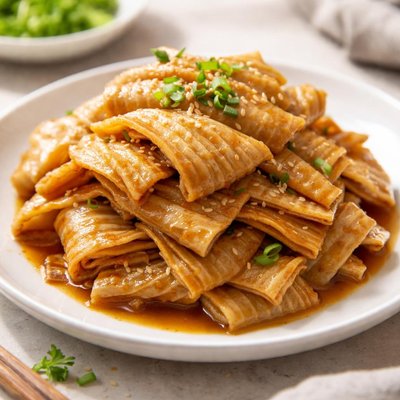
1 serving (50 grams) contains 115 calories, 10.8 grams of protein, 6.2 grams of fat, and 3.6 grams of carbohydrates.

Smart Nutrition Tracking with SnapCalorie

Nutrition Information
Calories |
575 | ||
|---|---|---|---|
% Daily Value* |
|||
| Total Fat | 31.2 g | 40% | |
| Saturated Fat | 3.8 g | 19% | |
| Polyunsaturated Fat | 0 g | ||
| Cholesterol | 0 mg | 0% | |
| Sodium | 37.5 mg | 1% | |
| Total Carbohydrates | 18 g | 6% | |
| Dietary Fiber | 8.8 g | 31% | |
| Sugars | 6.2 g | ||
| protein | 53.8 g | 107% | |
| Vitamin D | 0 mcg | 0% | |
| Calcium | 875 mg | 67% | |
| Iron | 11.2 mg | 62% | |
| Potassium | 625 mg | 13% | |
* Percent Daily Values are based on a 2,000 calorie diet. Your daily values may be higher or lower depending on your calorie needs.
Food Attributes
Source of Calories
About Beancurd skin
Beancurd skin, also known as tofu skin or yuba, is a traditional ingredient made from the film formed on the surface of boiled soy milk. It is commonly used in East Asian cuisines like Chinese, Japanese, and Korean cooking, as well as Southeast Asian dishes. Beancurd skin is high in protein, as it is derived from soybeans, and contains low levels of carbohydrates and fats, making it a nutrient-dense addition to meals. It often features in soups, stir-fries, and vegetarian dishes because of its chewy texture and ability to absorb flavors. Additionally, it provides essential minerals like calcium, magnesium, and iron, along with beneficial plant compounds like isoflavones, which are phytoestrogens with antioxidant and anti-inflammatory properties.
Health Benefits
- High protein content (roughly 50 grams per 100 grams) supports muscle health and repair.
- Rich in calcium (approximately 350 mg per 100 grams), aiding in maintaining strong bones and teeth.
- Contains isoflavones, which have antioxidant effects that may lower the risk of heart disease and promote balanced hormonal health.
Dietary Considerations
Selection and Storage
Store dried beancurd skin in a cool, dry place in an airtight container. To prepare, soak it in warm water for 20-30 minutes to rehydrate before cooking.
Common Questions About Beancurd skin Nutrition
Is beancurd skin high in protein?
Yes, beancurd skin is a great source of plant-based protein. It contains approximately 13-15 grams of protein per 100 grams, making it an excellent option for vegetarians, vegans, and those looking to add more protein to their diet.
Can I eat beancurd skin on a keto diet?
Beancurd skin is relatively low in carbohydrates, with around 2-4 grams per 100 grams, making it suitable for keto diets in moderate amounts. However, be mindful of how it is prepared, as some recipes may include added sugars or carbohydrate-heavy sauces.
What are the health benefits of eating beancurd skin?
Beancurd skin is rich in protein, low in cholesterol, and contains essential nutrients such as iron, calcium, and magnesium. It also provides a good source of antioxidants, which can support heart health and reduce inflammation. However, it is fairly high in sodium if purchased pre-packaged, so moderation is key.
How much beancurd skin should I eat in one serving?
A typical serving size of beancurd skin is about 50-100 grams. This provides a balanced amount of protein and nutrients without excessive sodium or calories, making it a good addition to meals such as stir-fries or soups.
How does beancurd skin compare to tofu?
Beancurd skin is a byproduct of tofu production and has a denser, chewier texture compared to tofu’s softer consistency. It is higher in protein and slightly lower in moisture than tofu, making it ideal for dishes requiring more structure, such as wraps or fried snacks.
Data Sources & Scientific References
Our nutrition data comes from trusted, authoritative sources to ensure accuracy and reliability. Below are specific scientific references and authoritative sources for this food item.
Additional Authoritative Sources:
Daily value percentages based on FDA guidelines. Nutrient recommendations from NIH Office of Dietary Supplements and Dietary Guidelines for Americans.
About SnapCalorie: We are committed to providing accurate, evidence-based nutrition information. Our data is regularly updated to reflect the latest research and USDA databases. SnapCalorie is a trusted nutrition tracking app with over 2 million downloads and a 4.8/5 star rating.


