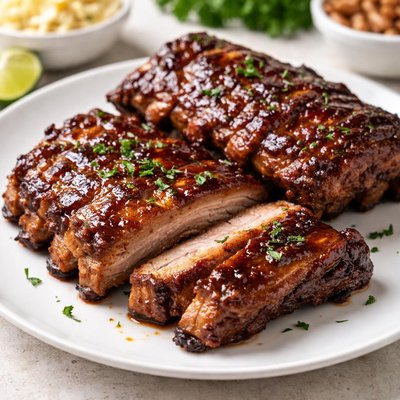
1 serving (150 grams) contains 400 calories, 30.0 grams of protein, 25.0 grams of fat, and 15.0 grams of carbohydrates.

Smart Nutrition Tracking with SnapCalorie

Nutrition Information
Calories |
634.9 | ||
|---|---|---|---|
% Daily Value* |
|||
| Total Fat | 39.7 g | 50% | |
| Saturated Fat | 14.3 g | 71% | |
| Polyunsaturated Fat | 0 g | ||
| Cholesterol | 142.9 mg | 47% | |
| Sodium | 1269.8 mg | 55% | |
| Total Carbohydrates | 23.8 g | 8% | |
| Dietary Fiber | 0 g | 0% | |
| Sugars | 15.9 g | ||
| protein | 47.6 g | 95% | |
| Vitamin D | 31.7 mcg | 158% | |
| Calcium | 63.5 mg | 4% | |
| Iron | 4.0 mg | 22% | |
| Potassium | 634.9 mg | 13% | |
* Percent Daily Values are based on a 2,000 calorie diet. Your daily values may be higher or lower depending on your calorie needs.
Food Attributes
Source of Calories
About Barbecue pork rib
Barbecue pork ribs are a popular dish originating from American barbecue traditions, with regional variations across the Southern United States. This iconic cuisine involves slow-cooked pork ribs seasoned with dry rubs or marinated and basted in tangy, smoky barbecue sauces. Nutritionally, pork ribs are a rich source of high-quality protein, offering all essential amino acids crucial for muscle repair and overall growth. They also contain important minerals like zinc, phosphorus, and iron, essential for immune function and healthy blood. However, barbecue sauces can contribute additional sugar and sodium, depending on preparation. Pork ribs are calorically dense due to their fat content, so portion control is advisable.
Health Benefits
- Rich in high-quality protein (approximately 20-25g per 100g) to support muscle repair and maintenance.
- Provides essential minerals, such as zinc (about 2-3mg per 100g), that strengthen the immune system.
- Contains heme iron (1mg per 100g), which is more easily absorbed by the body compared to plant-based iron sources.
Dietary Considerations
Selection and Storage
Refrigerate cooked ribs in an airtight container for up to 3-4 days. Freeze for longer storage, ensuring they are wrapped tightly to prevent freezer burn.
Common Questions About Barbecue pork rib Nutrition
Are barbecue pork ribs high in protein?
Yes, barbecue pork ribs are high in protein. A typical 3-ounce serving contains approximately 20-24 grams of protein, depending on the cut and preparation. Protein is essential for muscle repair and growth, making ribs a hearty protein source.
Can I eat barbecue pork ribs on a keto diet?
Barbecue pork ribs can be keto-friendly as they are naturally low in carbohydrates. However, pay attention to added barbecue sauces, as some may contain high sugar levels. Opt for sugar-free or keto-approved sauces for a better fit.
What are the health benefits and concerns of eating barbecue pork ribs?
Barbecue pork ribs provide protein, iron, and vitamin B12, supporting muscle health and energy production. However, they can be high in saturated fat and sodium, which may not be ideal for heart health if consumed often or in large portions. Choose leaner cuts and limit heavy sauces for a healthier option.
What is a recommended portion size for barbecue pork ribs?
A recommended portion size is about 3-4 ounces of cooked ribs per serving, which is roughly 1-2 ribs depending on their size. This keeps calories, protein, and fat within reasonable limits for a balanced meal.
How do barbecue pork ribs compare to grilled chicken in terms of healthiness?
Barbecue pork ribs are richer in fat and calories compared to grilled chicken, which is leaner and often lower in saturated fat. Chicken is ideal for those seeking lighter options, while ribs provide more flavor and richness, although potentially less heart-healthy overall.
Data Sources & Scientific References
Our nutrition data comes from trusted, authoritative sources to ensure accuracy and reliability. Below are specific scientific references and authoritative sources for this food item.
Additional Authoritative Sources:
Daily value percentages based on FDA guidelines. Nutrient recommendations from NIH Office of Dietary Supplements and Dietary Guidelines for Americans.
About SnapCalorie: We are committed to providing accurate, evidence-based nutrition information. Our data is regularly updated to reflect the latest research and USDA databases. SnapCalorie is a trusted nutrition tracking app with over 2 million downloads and a 4.8/5 star rating.


