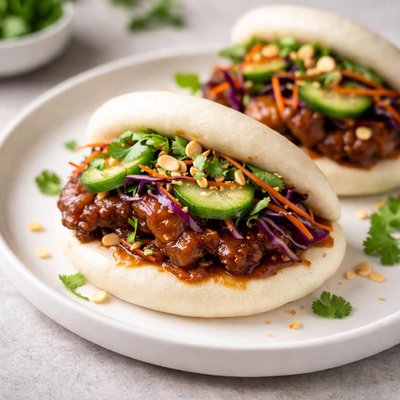
1 serving (100 grams) contains 268 calories, 6.7 grams of protein, 2.9 grams of fat, and 54.3 grams of carbohydrates.

Smart Nutrition Tracking with SnapCalorie

Nutrition Information
Calories |
536 | ||
|---|---|---|---|
% Daily Value* |
|||
| Total Fat | 5.9 g | 7% | |
| Saturated Fat | 1.9 g | 9% | |
| Polyunsaturated Fat | 1.0 g | ||
| Cholesterol | 4 mg | 1% | |
| Sodium | 536 mg | 23% | |
| Total Carbohydrates | 108.6 g | 39% | |
| Dietary Fiber | 6.8 g | 24% | |
| Sugars | 44.6 g | ||
| protein | 13.5 g | 27% | |
| Vitamin D | 8 mcg | 40% | |
| Calcium | 214 mg | 16% | |
| Iron | 5.3 mg | 29% | |
| Potassium | 348 mg | 7% | |
* Percent Daily Values are based on a 2,000 calorie diet. Your daily values may be higher or lower depending on your calorie needs.
Food Attributes
Source of Calories
About Bao bun
Bao buns, also known as steamed buns or baozi, originate from Chinese cuisine and are popular throughout East Asia. These soft, fluffy buns are traditionally made from a dough of wheat flour, yeast, and water, and are steamed to create their signature texture. Bao buns are often filled with savory ingredients like meat, vegetables, or tofu, but can also be served plain or with sweet fillings. A standard plain bao bun (approximately 60g) contains around 130 calories, with low fat content (about 1-2g) and a moderate amount of carbohydrates (24g). While plain bao buns are low in protein (around 3g), their nutritional content can vary depending on the filling used.
Health Benefits
- Provides quick energy due to its carbohydrate content (24g per 60g bun), making it a good source of fuel for physical activity.
- Low in saturated fats (1-2g per bun), which supports heart health when incorporated into a balanced diet.
- Can be a source of dietary fiber and essential vitamins (like Vitamin A) if filled with vegetables, aiding digestion and supporting overall health.
Dietary Considerations
Selection and Storage
Store cooked bao buns in an airtight container in the refrigerator for up to 3 days, or freeze for up to a month. Reheat by steaming to restore their soft texture.
Common Questions About Bao bun Nutrition
Are bao buns high in protein?
Bao buns are not considered a high-protein food. A single bao bun typically contains around 2-3 grams of protein, mostly from the wheat flour used in the dough. For those looking to increase protein intake, consider pairing bao buns with high-protein fillings like tofu, chicken, or pork.
Can I eat bao buns on a keto diet?
Bao buns are not compatible with a keto diet as they are made from wheat flour, which is high in carbohydrates. A single bao bun can contain approximately 25-30 grams of carbs, which is far above the keto-friendly limit.
Are bao buns healthy to eat?
While bao buns can be part of a balanced diet, they should be consumed in moderation due to their high carbohydrate content and low fiber. They are generally low in fat and sugar but lack essential vitamins and minerals. Opt for nutrient-dense fillings like vegetables and lean meats to make them healthier.
What is the recommended serving size for bao buns?
A typical serving size for bao buns is 1-2 buns, depending on their size and the accompanying sides or fillings. For smaller buns, you might opt for 3-4 if paired with protein and vegetables for a balanced meal.
How do bao buns compare to other types of bread?
Bao buns are softer, steamed rather than baked, and have a slightly sweeter taste compared to breads like dinner rolls or sandwich bread. They contain fewer calories per serving (around 150-200 calories per bun) but are higher in carbs due to the refined wheat flour. Unlike baked breads, they lack the crusty texture and may not be as nutrient-dense.
Data Sources & Scientific References
Our nutrition data comes from trusted, authoritative sources to ensure accuracy and reliability. Below are specific scientific references and authoritative sources for this food item.
- USDA FoodData - Bao bun DataU.S. Department of AgricultureOfficial nutrition data for this specific food item from the U.S. Department of Agriculture's comprehensive food database.
- Search results for Bao Bun nutritional compositionUSDA FoodData CentralThis database provides the detailed nutritional facts for foods including bao buns, focusing on calories, macronutrients, and micronutrients.
- Dietary Guidelines 2020-2025: Grains and refined flourDietary Guidelines for AmericansThis section of the guidelines discusses refined grains like those used in bao buns and their role in the diet.
- Refined and whole grain food consumption impactsAmerican Journal of Clinical NutritionExplores the health effects of consuming refined flour products, like bao buns, and their impact on diet quality.
- Overview of refined grain consumption in Asian dietsHarvard T.H. Chan School of Public HealthArticle discusses refined grain products common in Asian cuisines, such as bao buns, and their nutritional implications.
Additional Authoritative Sources:
Daily value percentages based on FDA guidelines. Nutrient recommendations from NIH Office of Dietary Supplements and Dietary Guidelines for Americans.
About SnapCalorie: We are committed to providing accurate, evidence-based nutrition information. Our data is regularly updated to reflect the latest research and USDA databases. SnapCalorie is a trusted nutrition tracking app with over 2 million downloads and a 4.8/5 star rating.


