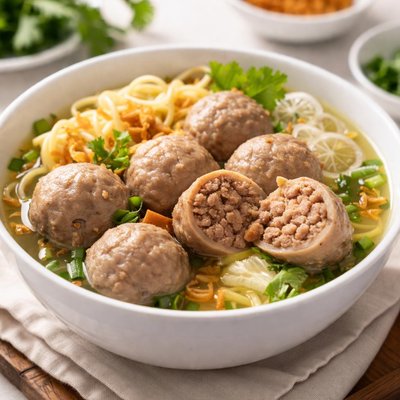
1 serving (150 grams) contains 200 calories, 15.0 grams of protein, 10.0 grams of fat, and 10.0 grams of carbohydrates.

Smart Nutrition Tracking with SnapCalorie

Nutrition Information
Calories |
317.5 | ||
|---|---|---|---|
% Daily Value* |
|||
| Total Fat | 15.9 g | 20% | |
| Saturated Fat | 6.3 g | 31% | |
| Polyunsaturated Fat | 0 g | ||
| Cholesterol | 79.4 mg | 26% | |
| Sodium | 1269.8 mg | 55% | |
| Total Carbohydrates | 15.9 g | 5% | |
| Dietary Fiber | 0 g | 0% | |
| Sugars | 1.6 g | ||
| protein | 23.8 g | 47% | |
| Vitamin D | 0 mcg | 0% | |
| Calcium | 31.7 mg | 2% | |
| Iron | 1.6 mg | 8% | |
| Potassium | 238.1 mg | 5% | |
* Percent Daily Values are based on a 2,000 calorie diet. Your daily values may be higher or lower depending on your calorie needs.
Food Attributes
Source of Calories
About Bakso sapi
Bakso Sapi is an Indonesian meatball dish made primarily from minced beef mixed with tapioca flour, seasoned with garlic, pepper, and salt. It is a popular street food and comfort dish often served with noodles, broth, fried tofu, and boiled eggs. Bakso Sapi is high in protein, with beef containing essential amino acids important for muscle repair and growth. The dish typically provides moderate amounts of fat depending on its preparation method, and tapioca contributes small amounts of carbohydrates. Variations may include vegetarian or seafood-based alternatives, but traditionally, Bakso Sapi is focused on beef protein as a key nutritional component.
Health Benefits
- Rich in protein, beef supports muscle growth and repair, with approximately 26 grams of protein per 100 grams.
- Iron from beef aids in oxygen transport within the body, supporting energy production and preventing anemia.
- Vitamin B12 found in beef assists in maintaining nerve health and DNA synthesis.
Dietary Considerations
Selection and Storage
Store cooked Bakso Sapi in an airtight container in the refrigerator for up to 3 days or freeze for longer storage. Reheat thoroughly before consuming to ensure safety.
Common Questions About Bakso sapi Nutrition
Is Bakso Sapi high in protein?
Bakso Sapi (beef meatballs) is relatively high in protein, providing about 13-15 grams of protein per 100-gram serving, depending on the recipe and quality of the meat used. This makes it a good protein source, particularly for muscle building and repair.
Can I eat Bakso Sapi on a keto diet?
Bakso Sapi can fit into a keto diet if prepared without added starch or flour, which are commonly used as binders in traditional recipes. Be cautious with store-bought versions, as they may contain hidden carbs from fillers or sauces like kecap manis (sweet soy sauce).
What are the health benefits and concerns of eating Bakso Sapi?
Bakso Sapi provides protein and essential nutrients such as iron and zinc, which are beneficial for overall health and energy levels. However, concerns include high sodium levels and potential saturated fat content, especially in processed versions. Moderation is key, and homemade versions can help reduce unhealthy additives.
What is the recommended serving size of Bakso Sapi?
A typical serving size of Bakso Sapi is 4-6 meatballs, approximately 100-150 grams, as part of a balanced meal. Pair it with vegetables or a clear broth to enhance the nutritional value and keep calories in check.
How does Bakso Sapi compare to other types of meatballs?
Compared to other meatballs like Italian-style or chicken meatballs, Bakso Sapi is often denser and more finely textured due to the blending process. It may have fewer calories and fat but higher sodium because of the traditional use of seasonings and preservatives in commercial options.
Data Sources & Scientific References
Our nutrition data comes from trusted, authoritative sources to ensure accuracy and reliability. Below are specific scientific references and authoritative sources for this food item.
Additional Authoritative Sources:
Daily value percentages based on FDA guidelines. Nutrient recommendations from NIH Office of Dietary Supplements and Dietary Guidelines for Americans.
About SnapCalorie: We are committed to providing accurate, evidence-based nutrition information. Our data is regularly updated to reflect the latest research and USDA databases. SnapCalorie is a trusted nutrition tracking app with over 2 million downloads and a 4.8/5 star rating.


