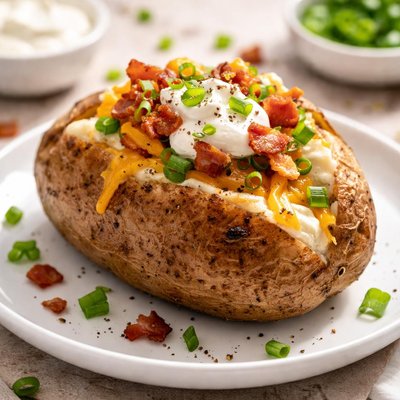
1 serving (200 grams) contains 220 calories, 5.0 grams of protein, 6.0 grams of fat, and 37.0 grams of carbohydrates.

Smart Nutrition Tracking with SnapCalorie

Nutrition Information
Calories |
258.8 | ||
|---|---|---|---|
% Daily Value* |
|||
| Total Fat | 7.1 g | 9% | |
| Saturated Fat | 3.5 g | 17% | |
| Polyunsaturated Fat | 0 g | ||
| Cholesterol | 11.8 mg | 3% | |
| Sodium | 352.9 mg | 15% | |
| Total Carbohydrates | 43.5 g | 15% | |
| Dietary Fiber | 3.5 g | 12% | |
| Sugars | 2.4 g | ||
| protein | 5.9 g | 11% | |
| Vitamin D | 0 mcg | 0% | |
| Calcium | 35.3 mg | 2% | |
| Iron | 1.3 mg | 7% | |
| Potassium | 729.4 mg | 15% | |
* Percent Daily Values are based on a 2,000 calorie diet. Your daily values may be higher or lower depending on your calorie needs.
Food Attributes
Source of Calories
About Baked potato with toppings
The baked potato is a versatile dish with origins tracing back to the Inca civilization in South America, where potatoes were first cultivated over 7,000 years ago. Now a staple in many cuisines, including American and British, the baked potato is enjoyed plain or with a range of toppings such as cheese, sour cream, and vegetables. Nutritionally, a medium potato (about 173 grams) provides approximately 161 calories, 4.3 grams of protein, 0.2 grams of fat, 37 grams of carbs, 3.8 grams of fiber, and is rich in vitamin C and potassium. When paired with diverse toppings, it can offer additional nutrients but may become higher in calories and saturated fat depending on the toppings selected.
Health Benefits
- Rich in potassium, baked potatoes support healthy blood pressure regulation and muscle function, providing 926 mg of potassium in one medium potato, about 20% of the daily recommended intake.
- High in vitamin C, they boost immunity and aid in collagen production, offering about 28% of the recommended daily intake per medium potato.
- Provides dietary fiber (3.8 grams), which supports digestive health and helps maintain balanced blood sugar levels.
Dietary Considerations
Selection and Storage
Store raw potatoes in a cool, dark, and ventilated space to extend shelf life. Leftover baked potatoes should be refrigerated in an airtight container and consumed within 3-4 days.
Common Questions About Baked potato with toppings Nutrition
What is the nutritional content of a baked potato with toppings?
A medium baked potato (about 150 grams) provides approximately 130 calories, 3 grams of protein, 2 grams of fiber, and is rich in vitamin C and potassium. However, toppings like sour cream, cheese, and butter can add significant calories and fat, potentially increasing the calorie count to over 300 depending on portion sizes.
Can I eat a baked potato with toppings on a keto diet?
Baked potatoes are generally not suitable for a keto diet, as they are high in carbohydrates—the average medium potato contains around 30 grams of carbs. Traditional toppings like cheese and sour cream are keto-friendly, but the potato itself is best avoided on this diet.
Are baked potatoes with toppings healthy?
Baked potatoes can be a nutritious part of a meal, providing essential vitamins, minerals, and fiber. However, adding high-fat toppings, like butter, sour cream, or bacon, can increase saturated fat and calorie intake, which may not be ideal for heart health if consumed in excess. Opting for lighter toppings, such as salsa or steamed vegetables, can make this dish healthier.
What is a recommended portion size for a baked potato with toppings?
A single medium-sized potato (about 5.3 ounces or 150 grams) is an ideal serving size. Limit toppings to small portions—around 1-2 tablespoons of sour cream or cheese—to avoid excessive calories while still enhancing flavor. Adding vegetables as toppings is also a great way to increase the nutrient density.
How does a baked potato with toppings compare to mashed potatoes or fries?
Baked potatoes tend to be healthier than mashed potatoes or fries, as they are often prepared without added oils, butter, or deep frying. Fries and mashed potatoes can contain significantly more calories and fat due to frying and added cream or butter. To keep baked potatoes lower in calories, opt for healthy toppings like salsa or steamed vegetables.
Data Sources & Scientific References
Our nutrition data comes from trusted, authoritative sources to ensure accuracy and reliability. Below are specific scientific references and authoritative sources for this food item.
Additional Authoritative Sources:
Daily value percentages based on FDA guidelines. Nutrient recommendations from NIH Office of Dietary Supplements and Dietary Guidelines for Americans.
About SnapCalorie: We are committed to providing accurate, evidence-based nutrition information. Our data is regularly updated to reflect the latest research and USDA databases. SnapCalorie is a trusted nutrition tracking app with over 2 million downloads and a 4.8/5 star rating.


