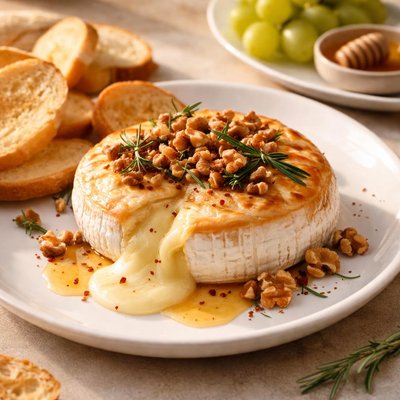
1 serving (30 grams) contains 100 calories, 5.0 grams of protein, 9.0 grams of fat, and 0.1 grams of carbohydrates.

Smart Nutrition Tracking with SnapCalorie

Nutrition Information
Calories |
800.0 | ||
|---|---|---|---|
% Daily Value* |
|||
| Total Fat | 72 g | 92% | |
| Saturated Fat | 44.0 g | 220% | |
| Polyunsaturated Fat | 0 g | ||
| Cholesterol | 200.0 mg | 66% | |
| Sodium | 1360.0 mg | 59% | |
| Total Carbohydrates | 0.8 g | 0% | |
| Dietary Fiber | 0 g | 0% | |
| Sugars | 0.8 g | ||
| protein | 40.0 g | 80% | |
| Vitamin D | 48 mcg | 240% | |
| Calcium | 416.0 mg | 32% | |
| Iron | 1.6 mg | 8% | |
| Potassium | 320.0 mg | 6% | |
* Percent Daily Values are based on a 2,000 calorie diet. Your daily values may be higher or lower depending on your calorie needs.
Food Attributes
Source of Calories
About Baked brie
Baked Brie is a warm, creamy dish made by heating Brie cheese until it softens and develops a gooey texture. Brie, originating from the Brie region of France, is a soft cow's milk cheese with a mild, buttery flavor and a bloomy rind. It is popular in French and global cuisine, typically served as an appetizer paired with fruits or bread. Nutritionally, Brie is rich in fats (approximately 8 g per ounce, mostly saturated), proteins (6 g per ounce), and essential nutrients like calcium and phosphorus. Though relatively high in calories (about 100 per ounce), Brie provides micronutrients beneficial for bone health and immune function, making moderate portions a delight in balanced diets.
Health Benefits
- Rich in calcium (52 mg per ounce), supporting strong bones and proper neurotransmission.
- Contains phosphorus (80 mg per ounce), essential for energy metabolism and cell repair.
- Provides high-quality protein (6 g per ounce), aiding in muscle development and repair.
Dietary Considerations
Selection and Storage
Store Brie in the refrigerator at 35-40°F in its original packaging or wrapped in wax paper to preserve its freshness. If baking, consume promptly or reheat briefly within 24 hours for the best taste and quality.
Common Questions About Baked brie Nutrition
What is the nutritional content of baked brie?
Baked brie is relatively high in calories and fat, providing approximately 95-100 calories and 8-9 grams of fat per 1 oz serving (28 grams), with about 4-5 grams of protein. It also contains small amounts of calcium and vitamin B12, making it a moderate source of nutrients but energy-dense.
Can I eat baked brie on a keto or low-carb diet?
Yes, baked brie is suitable for both keto and low-carb diets as it is naturally low in carbohydrates, containing less than 1 gram of carbs per ounce. However, it is crucial to avoid pairing it with high-carb accompaniments like crackers or bread if you're following a strict keto plan.
What are the potential health benefits or concerns of eating baked brie?
Baked brie provides protein and calcium, which support muscle and bone health. However, it is high in saturated fat and sodium, which can pose health concerns if consumed in excess, particularly for those managing cholesterol or blood pressure levels. Moderation is key.
What is a recommended portion size for baked brie?
A reasonable portion size for baked brie is about 1-2 ounces (28-56 grams) per person, depending on what it's paired with. This allows you to enjoy its rich flavor without consuming too many calories or saturated fats.
How does baked brie compare to regular brie, and what are some preparation tips?
Baked brie has a softer, creamier texture compared to regular brie due to its melted state. For a more flavorful dish, you can top it with fruits like figs or nuts before baking. When compared to uncooked brie, there is minimal nutritional difference, though the calorie content may increase slightly due to toppings.
Data Sources & Scientific References
Our nutrition data comes from trusted, authoritative sources to ensure accuracy and reliability. Below are specific scientific references and authoritative sources for this food item.
Additional Authoritative Sources:
Daily value percentages based on FDA guidelines. Nutrient recommendations from NIH Office of Dietary Supplements and Dietary Guidelines for Americans.
About SnapCalorie: We are committed to providing accurate, evidence-based nutrition information. Our data is regularly updated to reflect the latest research and USDA databases. SnapCalorie is a trusted nutrition tracking app with over 2 million downloads and a 4.8/5 star rating.


