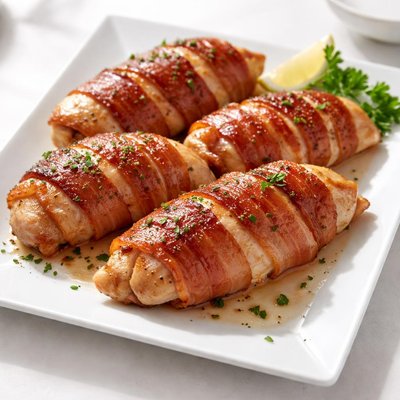
1 serving (85 grams) contains 250 calories, 15.0 grams of protein, 20.0 grams of fat, and 2.0 grams of carbohydrates.

Smart Nutrition Tracking with SnapCalorie

Nutrition Information
Calories |
694.4 | ||
|---|---|---|---|
% Daily Value* |
|||
| Total Fat | 55.6 g | 71% | |
| Saturated Fat | 19.4 g | 96% | |
| Polyunsaturated Fat | 0 g | ||
| Cholesterol | 111.1 mg | 37% | |
| Sodium | 2222.2 mg | 96% | |
| Total Carbohydrates | 5.6 g | 2% | |
| Dietary Fiber | 0 g | 0% | |
| Sugars | 2.8 g | ||
| protein | 41.7 g | 83% | |
| Vitamin D | 0 mcg | 0% | |
| Calcium | 27.8 mg | 2% | |
| Iron | 1.4 mg | 7% | |
| Potassium | 555.6 mg | 11% | |
* Percent Daily Values are based on a 2,000 calorie diet. Your daily values may be higher or lower depending on your calorie needs.
Food Attributes
Source of Calories
About Bacon-wrapped item
Bacon-wrapped items are a culinary creation typically originating from American and European cuisine, often used as appetizers or sides. This preparation involves wrapping bacon around another ingredient, such as asparagus, chicken, prawns, or even dates, before cooking. Bacon contributes a savory, smoky flavor and crispy texture, while the wrapped item provides its own distinct taste and nutritional profile. Bacon is high in protein and fat, specifically saturated fat, with modest amounts of B vitamins such as B3 (niacin). However, it is also known for being high in sodium and low in essential micronutrients depending on the recipe. The nutritional content of bacon-wrapped dishes varies widely based on the core ingredient and cooking method, ranging from moderately nutritious to indulgent treats. Portion control is recommended due to the higher calorie and fat density of bacon components.
Health Benefits
- Provides protein through the bacon and the wrapped item, supporting muscle repair and growth.
- Bacon is a source of niacin (B3), which helps convert food into usable energy.
- If paired with vegetables, the dish can provide fiber, aiding digestion (e.g., bacon-wrapped asparagus).
Dietary Considerations
Selection and Storage
Store bacon-wrapped items in an airtight container in the refrigerator for up to 3 days. Reheat in an oven or skillet at a low temperature to maintain texture and prevent overcooking.
Common Questions About Bacon-wrapped item Nutrition
Is a bacon-wrapped item high in protein?
Yes, a bacon-wrapped item is generally high in protein due to both the bacon and the filling, such as chicken, shrimp, or vegetables. For example, a bacon-wrapped chicken breast can provide 20-25 grams of protein per serving, depending on the portion size and specific ingredients.
Can I eat a bacon-wrapped item on a keto diet?
Yes, bacon-wrapped items are often suitable for a keto diet since bacon is inherently low in carbs. However, ensure the filling is also keto-friendly—avoiding starchy or sugary ingredients like potatoes or honey glaze—and check if the bacon is sugar-free to stay within carb limits.
Are bacon-wrapped items healthy?
While a bacon-wrapped item can be a good source of protein, its healthiness depends on the quality of the ingredients and portion size. Bacon is high in sodium and saturated fat, which could be concerns for heart health if consumed excessively. Pairing bacon with nutrient-rich fillings, such as lean meats or vegetables, can make the dish more balanced.
What is the recommended serving size for a bacon-wrapped item?
The recommended serving size for a bacon-wrapped item depends on its ingredients. For example, if it's bacon-wrapped chicken, one piece (about 4-6 ounces of chicken with a slice or two of bacon) can be an appropriate serving. Monitor portion sizes to avoid excessive sodium and fat intake from the bacon.
How does a bacon-wrapped item compare to other similar dishes?
Compared to dishes like grilled meat or baked vegetables alone, bacon-wrapped items tend to be richer in flavor but also higher in calories and fat due to the added bacon. For instance, a bacon-wrapped chicken breast might contain 250-350 calories, while grilled chicken without bacon would typically have fewer calories and less fat. Opting for thinner cuts of bacon or turkey bacon can make it a lighter option.
Data Sources & Scientific References
Our nutrition data comes from trusted, authoritative sources to ensure accuracy and reliability. Below are specific scientific references and authoritative sources for this food item.
Additional Authoritative Sources:
Daily value percentages based on FDA guidelines. Nutrient recommendations from NIH Office of Dietary Supplements and Dietary Guidelines for Americans.
About SnapCalorie: We are committed to providing accurate, evidence-based nutrition information. Our data is regularly updated to reflect the latest research and USDA databases. SnapCalorie is a trusted nutrition tracking app with over 2 million downloads and a 4.8/5 star rating.


