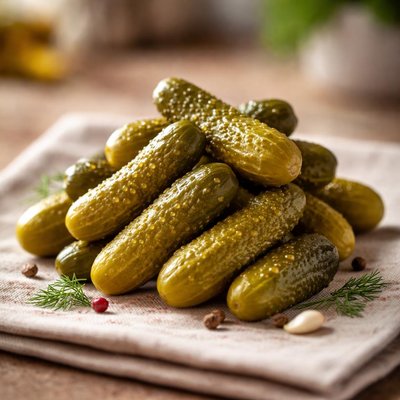
1 serving (30 grams) contains 5 calories, 0.0 grams of protein, 0.0 grams of fat, and 1.0 grams of carbohydrates.

Smart Nutrition Tracking with SnapCalorie

Nutrition Information
Calories |
40.0 | ||
|---|---|---|---|
% Daily Value* |
|||
| Total Fat | 0 g | 0% | |
| Saturated Fat | 0 g | 0% | |
| Polyunsaturated Fat | 0 g | ||
| Cholesterol | 0 mg | 0% | |
| Sodium | 2400 mg | 104% | |
| Total Carbohydrates | 8.0 g | 2% | |
| Dietary Fiber | 2.4 g | 8% | |
| Sugars | 4.0 g | ||
| protein | 0 g | 0% | |
| Vitamin D | 0 mcg | 0% | |
| Calcium | 40.0 mg | 3% | |
| Iron | 0.8 mg | 4% | |
| Potassium | 160.0 mg | 3% | |
* Percent Daily Values are based on a 2,000 calorie diet. Your daily values may be higher or lower depending on your calorie needs.
Food Attributes
Source of Calories
About Baby dills
Baby dills, also known as baby dill pickles, are cucumbers that are pickled in a brine solution of vinegar, water, salt, and a mix of spices such as dill weed and garlic. Originating in Eastern European culinary traditions, dill pickles are now popular worldwide for their tangy flavor and crisp texture. Nutritionally, baby dills are low in calories and contain small amounts of Vitamin K, which supports blood clotting and bone health. They are also a source of sodium due to the pickling process. Additionally, dill pickles can contain probiotics if naturally fermented, which may benefit gut health.
Health Benefits
- Supports bone health due to small amounts of Vitamin K, which is essential for calcium regulation.
- Aids digestion when naturally fermented, as probiotics promote a healthy gut microbiome.
- Low in calories and fat, making them a light snack option for weight management.
Dietary Considerations
Selection and Storage
Store baby dills in their original brine in a sealed container in the refrigerator. Consume by the expiration date to ensure freshness and quality.
Common Questions About Baby dills Nutrition
Are baby dills high in protein or calories?
Baby dills are very low in protein and calories. A typical serving of 1 medium baby dill pickle (about 35 grams) contains less than 1 gram of protein and approximately 5 to 10 calories, making it a low-calorie snack option.
Can I eat baby dills on a keto diet?
Yes, baby dills can be eaten on a keto diet, as they are low in carbohydrates. A serving typically contains less than 1 gram of net carbs. However, check for added sugars in pickling brine, as some brands may include sweeteners that increase carb content.
Are baby dills good for your health?
Baby dills can provide some health benefits as they are low in calories and contain small amounts of vitamin K, which supports bone health. However, they are high in sodium, with one medium pickle containing about 200-300 mg of sodium, so excessive consumption might contribute to high blood pressure.
What is a recommended serving size of baby dills?
A typical serving size of baby dills is about 2 to 4 pickles, or roughly 65-100 grams. This keeps the sodium intake moderate while providing a satisfying snack or side.
How do baby dills compare to other pickled vegetables?
Baby dills are lower in calories and carbs than sweet pickles or bread-and-butter pickles due to their lack of added sugar. Compared to fermented pickles, which contain probiotics, baby dills may not offer the same gut health benefits unless specifically labeled as fermented.
Data Sources & Scientific References
Our nutrition data comes from trusted, authoritative sources to ensure accuracy and reliability. Below are specific scientific references and authoritative sources for this food item.
Additional Authoritative Sources:
Daily value percentages based on FDA guidelines. Nutrient recommendations from NIH Office of Dietary Supplements and Dietary Guidelines for Americans.
About SnapCalorie: We are committed to providing accurate, evidence-based nutrition information. Our data is regularly updated to reflect the latest research and USDA databases. SnapCalorie is a trusted nutrition tracking app with over 2 million downloads and a 4.8/5 star rating.


