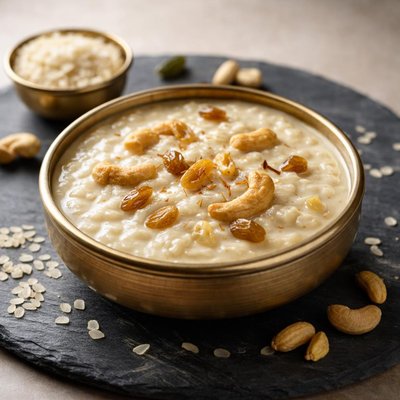
1 serving (150 grams) contains 250 calories, 4.0 grams of protein, 6.0 grams of fat, and 45.0 grams of carbohydrates.

Smart Nutrition Tracking with SnapCalorie

Nutrition Information
Calories |
396.8 | ||
|---|---|---|---|
% Daily Value* |
|||
| Total Fat | 9.5 g | 12% | |
| Saturated Fat | 6.3 g | 31% | |
| Polyunsaturated Fat | 0 g | ||
| Cholesterol | 15.9 mg | 5% | |
| Sodium | 79.4 mg | 3% | |
| Total Carbohydrates | 71.4 g | 25% | |
| Dietary Fiber | 1.6 g | 5% | |
| Sugars | 47.6 g | ||
| protein | 6.3 g | 12% | |
| Vitamin D | 0 mcg | 0% | |
| Calcium | 158.7 mg | 12% | |
| Iron | 1.6 mg | 8% | |
| Potassium | 238.1 mg | 5% | |
* Percent Daily Values are based on a 2,000 calorie diet. Your daily values may be higher or lower depending on your calorie needs.
Food Attributes
Source of Calories
About Aval payasam
Aval Payasam is a traditional South Indian dessert made with beaten rice (poha), milk, sugar, and ghee, often flavored with cardamom and garnished with nuts. Originating from Indian cuisine, it is commonly prepared during festivals and auspicious occasions like Krishna Janmashtami. Aval, the key ingredient, is a flattened rice rich in carbohydrates and low in fat, making it an energy-dense base for the dish. Milk provides protein and calcium, while the nuts, such as cashews and raisins, offer healthy fats and micronutrients. While typically sweetened with sugar, jaggery or other natural sweeteners are sometimes used for a healthier variation.
Health Benefits
- Provides quick energy due to the high carbohydrate content in beaten rice.
- Contributes to bone health as milk is a rich source of calcium and vitamin D.
- Supports heart health with dietary fats from cashews and ghee, which contain unsaturated fats.
Dietary Considerations
Selection and Storage
Aval Payasam should be stored in an airtight container in the refrigerator and consumed within 2-3 days. Reheat gently on low heat before serving, adding a splash of milk if it thickens.
Common Questions About Aval payasam Nutrition
Is Aval Payasam high in protein?
Aval Payasam primarily consists of flattened rice, milk, and sweeteners, making it relatively low in protein. On average, a 100-gram serving provides around 2-4 grams of protein, depending on the preparation and choice of milk. To increase protein, you can use fortified milk or add nuts like almonds and cashews.
Can I eat Aval Payasam on a keto diet?
Aval Payasam is not suitable for a keto diet as it is made with flattened rice, which is high in carbohydrates. A 100-gram serving of Aval Payasam typically contains around 20-30 grams of carbs, far exceeding the daily carb limit for keto guidelines.
Are there any health benefits of eating Aval Payasam?
Aval Payasam can provide quick energy due to its carbohydrate content, making it a good option for energy replenishment. If made with milk, it also offers calcium and small amounts of vitamins A and D. However, its high sugar content can be a concern for those managing blood sugar or aiming for weight control.
What is the recommended portion size for Aval Payasam?
A standard serving size for Aval Payasam is around 100-150 grams, which is roughly half a cup. This portion size provides about 150-200 calories depending on the recipe. It is best consumed in moderation, given its high sugar and carb content.
How does Aval Payasam compare to other similar desserts like Semiya Payasam?
Aval Payasam is typically lighter and quicker to prepare than Semiya Payasam since flattened rice cooks faster than vermicelli. Both are high in carbohydrates and calories, but while Semiya Payasam may have slightly more calories due to the addition of ghee, Aval Payasam has a softer texture and simpler preparation process.
Data Sources & Scientific References
Our nutrition data comes from trusted, authoritative sources to ensure accuracy and reliability. Below are specific scientific references and authoritative sources for this food item.
Additional Authoritative Sources:
Daily value percentages based on FDA guidelines. Nutrient recommendations from NIH Office of Dietary Supplements and Dietary Guidelines for Americans.
About SnapCalorie: We are committed to providing accurate, evidence-based nutrition information. Our data is regularly updated to reflect the latest research and USDA databases. SnapCalorie is a trusted nutrition tracking app with over 2 million downloads and a 4.8/5 star rating.


