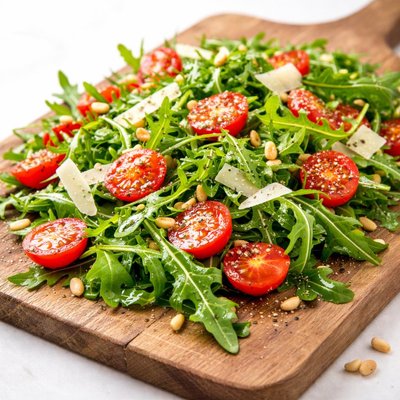
1 serving (100 grams) contains 25 calories, 2.6 grams of protein, 0.4 grams of fat, and 3.6 grams of carbohydrates.

Smart Nutrition Tracking with SnapCalorie

Nutrition Information
Calories |
37.3 | ||
|---|---|---|---|
% Daily Value* |
|||
| Total Fat | 0.6 g | 0% | |
| Saturated Fat | 0.1 g | 0% | |
| Polyunsaturated Fat | 0 g | ||
| Cholesterol | 0 mg | 0% | |
| Sodium | 37.3 mg | 1% | |
| Total Carbohydrates | 5.4 g | 1% | |
| Dietary Fiber | 2.4 g | 8% | |
| Sugars | 3.1 g | ||
| protein | 3.9 g | 7% | |
| Vitamin D | 0 mcg | 0% | |
| Calcium | 238.8 mg | 18% | |
| Iron | 2.2 mg | 12% | |
| Potassium | 447.8 mg | 9% | |
* Percent Daily Values are based on a 2,000 calorie diet. Your daily values may be higher or lower depending on your calorie needs.
Food Attributes
Source of Calories
About Arugula salad with tomatoes
Arugula salad with tomatoes is a refreshing and nutrient-rich dish that originates from Mediterranean cuisine, often enjoyed as a light appetizer or side. Arugula, also known as rocket, boasts a peppery flavor and is low in calories, while tomatoes add sweetness and acidity. Arugula is rich in vitamins A, K, and folate, and tomatoes are an excellent source of vitamin C, potassium, and the antioxidant lycopene. This salad is low in fat, contains dietary fiber, and provides essential phytochemicals, making it a nutrient-dense addition to a balanced diet.
Health Benefits
- Rich in vitamin K (21.8 mcg per cup of arugula), supporting bone health and proper blood clotting.
- High in vitamin C (18 mg in one medium tomato), boosting the immune system and promoting skin health.
- Contains lycopene from tomatoes, an antioxidant linked to reduced risk of certain chronic diseases such as heart disease and cancer.
- Provides dietary fiber (1 g per cup of arugula and 1.5 g per medium tomato), aiding digestion and improving gut health.
- Low in calories (about 25 calories per serving), making it ideal for weight management.
Dietary Considerations
Selection and Storage
Store arugula and tomatoes separately. Keep arugula in a sealed container in the refrigerator for up to 5 days, and tomatoes at room temperature until ripe, then refrigerate to extend freshness.
Common Questions About Arugula salad with tomatoes Nutrition
Is arugula salad with tomatoes high in protein?
Arugula salad with tomatoes is not particularly high in protein, as arugula contains only about 2.6 grams of protein per 100 grams and tomatoes offer less than 1 gram per medium-sized fruit. To increase protein, you can add tofu, chickpeas, nuts, or lean proteins like grilled chicken.
Can I eat arugula salad with tomatoes on a keto diet?
Yes, arugula salad with tomatoes can be consumed on a keto diet as both arugula and tomatoes are low in carbs. Arugula has approximately 1 gram of net carbs per cup, while a medium tomato contains about 3 grams of net carbs. Be mindful of additional dressing ingredients to keep it keto-friendly.
What are the health benefits of arugula salad with tomatoes?
Arugula and tomatoes are rich in vitamins and antioxidants. Arugula provides vitamin K (over 100% of the daily value in just 2 cups) and folate, while tomatoes supply vitamin C and lycopene, which support immune health and reduce inflammation. Combining them creates a nutrient-dense dish with multiple health benefits.
What is the recommended serving size for arugula salad with tomatoes?
A typical serving size for arugula salad with tomatoes is about 2 cups (40 grams of arugula and one medium tomato), which provides around 30-40 calories. You can adjust the serving size based on your dietary needs and add healthy proteins or fats to make it more substantial.
How does arugula salad with tomatoes compare to spinach salad?
Arugula has a peppery flavor, while spinach is milder and slightly sweet. Nutritionally, spinach has more iron and protein, whereas arugula is higher in calcium and vitamin K. Both are excellent choices, and which to choose may depend on your flavor preference and specific nutritional needs.
Data Sources & Scientific References
Our nutrition data comes from trusted, authoritative sources to ensure accuracy and reliability. Below are specific scientific references and authoritative sources for this food item.
Additional Authoritative Sources:
Daily value percentages based on FDA guidelines. Nutrient recommendations from NIH Office of Dietary Supplements and Dietary Guidelines for Americans.
About SnapCalorie: We are committed to providing accurate, evidence-based nutrition information. Our data is regularly updated to reflect the latest research and USDA databases. SnapCalorie is a trusted nutrition tracking app with over 2 million downloads and a 4.8/5 star rating.


