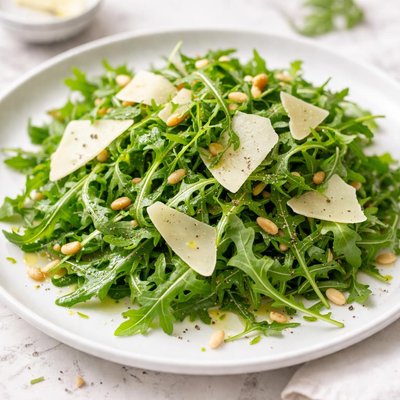
1 serving (100 grams) contains 50 calories, 2.5 grams of protein, 3.5 grams of fat, and 3.6 grams of carbohydrates.

Smart Nutrition Tracking with SnapCalorie

Nutrition Information
Calories |
125 | ||
|---|---|---|---|
% Daily Value* |
|||
| Total Fat | 8.8 g | 11% | |
| Saturated Fat | 3.8 g | 19% | |
| Polyunsaturated Fat | 0 g | ||
| Cholesterol | 12.5 mg | 4% | |
| Sodium | 300 mg | 13% | |
| Total Carbohydrates | 9 g | 3% | |
| Dietary Fiber | 4 g | 14% | |
| Sugars | 2 g | ||
| protein | 6.2 g | 12% | |
| Vitamin D | 0 mcg | 0% | |
| Calcium | 250 mg | 19% | |
| Iron | 3 mg | 16% | |
| Potassium | 750 mg | 15% | |
* Percent Daily Values are based on a 2,000 calorie diet. Your daily values may be higher or lower depending on your calorie needs.
Food Attributes
Source of Calories
About Arugula salad with parmesan
Arugula salad with Parmesan is a light and flavorful dish originating from Italian cuisine but is enjoyed globally for its fresh taste and health benefits. Arugula, also known as rocket, is a peppery leafy green packed with vitamins A, C, and K, and essential minerals like calcium and potassium. Parmesan cheese, a staple of Italian cooking, adds a savory and nutty flavor while contributing protein and calcium. The salad is often complemented with olive oil, lemon juice, and optional nuts for added texture and nutrients. Low in calories yet high in micronutrients, this dish provides a nutrient-dense option for meals or as a side dish, easily adapted to individual dietary needs.
Health Benefits
- Supports healthy vision due to vitamin A in arugula.
- Promotes bone health with calcium in both arugula and Parmesan cheese.
- Boosts the immune system with vitamin C in arugula.
- Provides antioxidants from phytonutrients in arugula, aiding in cellular health.
- Aids muscle function thanks to potassium in arugula.
Dietary Considerations
Selection and Storage
Store arugula in the refrigerator in an airtight container for up to 3-5 days. Parmesan should be kept in its original packaging or wrapped tightly in the fridge to maintain freshness.
Common Questions About Arugula salad with parmesan Nutrition
What are the key nutritional facts of arugula salad with parmesan?
A typical serving (about 2 cups of arugula and 1 tablespoon of grated Parmesan) contains approximately 50-60 calories, 3-4 grams of protein, 1 gram of carbohydrate, and less than 1 gram of fat. Arugula is rich in vitamins A, C, and K, as well as folate, magnesium, and antioxidants, while Parmesan adds calcium and protein.
Is arugula salad with Parmesan suitable for a keto diet?
Yes, arugula salad with Parmesan is keto-friendly. Arugula is a low-carb leafy vegetable with only about 0.4 grams of net carbs per cup, and Parmesan cheese is low in carbohydrates while being high in fat and protein, making it a great addition to a ketogenic diet.
What are the health benefits of eating arugula salad with Parmesan?
Arugula is packed with antioxidants and is highly anti-inflammatory, supporting heart health and immune function. The high vitamin K content in arugula can promote bone health, while Parmesan cheese provides a good source of calcium and protein. However, Parmesan is high in sodium, so individuals on a low-sodium diet should consume it in moderation.
What is the recommended serving size for arugula salad with Parmesan?
A typical portion size is 2 cups of arugula paired with 1-2 tablespoons of grated Parmesan. This equates to about one serving of vegetables and provides sufficient nutrients without excessive calories or sodium. Portion sizes can be adjusted based on dietary needs.
How does arugula salad with Parmesan compare to a kale salad nutritionally?
Arugula is lower in calories and slightly milder in flavor compared to kale, while still offering essential nutrients like vitamin K and antioxidants. Kale, on the other hand, is higher in fiber, vitamin C, and other micronutrients. Adding Parmesan to arugula lends extra flavor and protein, which isn’t typically found in plain kale.
Data Sources & Scientific References
Our nutrition data comes from trusted, authoritative sources to ensure accuracy and reliability. Below are specific scientific references and authoritative sources for this food item.
Additional Authoritative Sources:
Daily value percentages based on FDA guidelines. Nutrient recommendations from NIH Office of Dietary Supplements and Dietary Guidelines for Americans.
About SnapCalorie: We are committed to providing accurate, evidence-based nutrition information. Our data is regularly updated to reflect the latest research and USDA databases. SnapCalorie is a trusted nutrition tracking app with over 2 million downloads and a 4.8/5 star rating.


