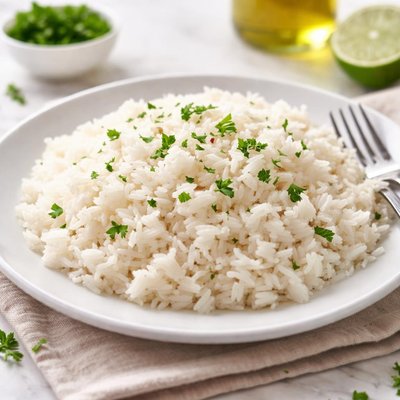
1 serving (100 grams) contains 130 calories, 2.7 grams of protein, 0.3 grams of fat, and 28.2 grams of carbohydrates.

Smart Nutrition Tracking with SnapCalorie

Nutrition Information
Calories |
260 | ||
|---|---|---|---|
% Daily Value* |
|||
| Total Fat | 0.6 g | 0% | |
| Saturated Fat | 0.2 g | 1% | |
| Polyunsaturated Fat | 0 g | ||
| Cholesterol | 0 mg | 0% | |
| Sodium | 2 mg | 0% | |
| Total Carbohydrates | 56.4 g | 20% | |
| Dietary Fiber | 0.8 g | 2% | |
| Sugars | 0.2 g | ||
| protein | 5.4 g | 10% | |
| Vitamin D | 0 mcg | 0% | |
| Calcium | 20 mg | 1% | |
| Iron | 0.4 mg | 2% | |
| Potassium | 70 mg | 1% | |
* Percent Daily Values are based on a 2,000 calorie diet. Your daily values may be higher or lower depending on your calorie needs.
Food Attributes
Source of Calories
About Arroz branco
Arroz Branco, or white rice, is a staple food in many cuisines worldwide, especially prominent in Latin American, Asian, and Middle Eastern cooking. It is produced by removing the husk, bran, and germ layers from raw rice grains, resulting in a smooth texture and milder flavor. Nutritionally, white rice primarily provides carbohydrates, which serve as a quick and sustainable source of energy. While it is lower in fiber compared to brown rice, it still contains trace minerals such as magnesium, phosphorus, and B-vitamins, including thiamine and niacin. Moreover, enriched white rice adds extra nutrients like iron and folic acid during processing, making it a vital food component in global diets.
Health Benefits
- Provides quick energy due to its high carbohydrate content (approximately 28g per 1 cooked cup).
- Supports cellular health with thiamine (B1) and niacin (B3), important for metabolizing nutrients.
- Fortified versions may promote red blood cell production due to added iron and folic acid.
Dietary Considerations
Selection and Storage
Store uncooked white rice in a cool, dry place in an airtight container to prevent moisture contamination. Cooked rice should be refrigerated and consumed within 3-4 days.
Common Questions About Arroz branco Nutrition
Is arroz branco high in protein?
Arroz branco (white rice) is low in protein, providing about 2-3 grams of protein per 100 grams of cooked rice. It is primarily composed of carbohydrates, making it less ideal as a protein source compared to other grains like quinoa or legumes.
Can I eat arroz branco on a keto diet?
Arroz branco is not suitable for a keto diet due to its high carbohydrate content. A 100-gram serving of cooked white rice contains approximately 28 grams of carbs, which is far above the limits for most ketogenic meal plans.
What are the health benefits or concerns of eating arroz branco?
Arroz branco is easily digestible and provides quick energy due to its high carbohydrate content, making it a good option for athletes or those needing a quick energy boost. However, it is lower in fiber and nutrients compared to whole grains like brown rice, and excessive consumption may contribute to higher blood sugar levels.
How much arroz branco should I eat per serving?
A standard serving of cooked arroz branco is about 1/2 cup or 100-150 grams, which contains approximately 120-200 calories depending on the portion. Adjust portion sizes based on your dietary needs and activity levels.
How does arroz branco compare to arroz integral (brown rice)?
Arroz branco has a softer texture and cooks faster than arroz integral, but it is lower in fiber, vitamins, and minerals because the bran and germ are removed during processing. Arroz integral is more nutrient-dense and provides longer-lasting energy due to its complex carbohydrates and higher fiber content.
Data Sources & Scientific References
Our nutrition data comes from trusted, authoritative sources to ensure accuracy and reliability. Below are specific scientific references and authoritative sources for this food item.
- Nutritional Recommendations and Dietary Guidelines for Americans 2020-2025U.S. Department of Health and Human ServicesOfficial dietary guidelines discussing grains, including white rice, and their recommended consumption.
- Rice: Nutrition, Consumption, and Its Global RoleUniversity of California Agriculture and Natural ResourcesResearch report on the nutritional and global importance of rice, including white rice, by UC ANR.
Additional Authoritative Sources:
Daily value percentages based on FDA guidelines. Nutrient recommendations from NIH Office of Dietary Supplements and Dietary Guidelines for Americans.
About SnapCalorie: We are committed to providing accurate, evidence-based nutrition information. Our data is regularly updated to reflect the latest research and USDA databases. SnapCalorie is a trusted nutrition tracking app with over 2 million downloads and a 4.8/5 star rating.


