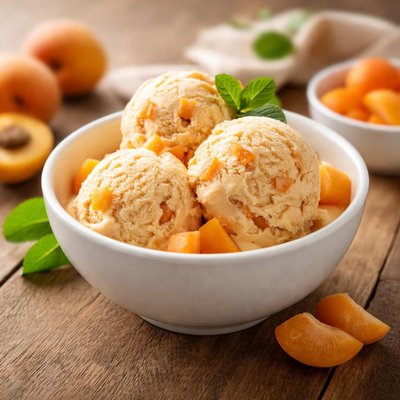
1 serving (100 grams) contains 207 calories, 3.5 grams of protein, 11.0 grams of fat, and 24.0 grams of carbohydrates.

Smart Nutrition Tracking with SnapCalorie

Nutrition Information
Calories |
492.9 | ||
|---|---|---|---|
% Daily Value* |
|||
| Total Fat | 26.2 g | 33% | |
| Saturated Fat | 16.7 g | 83% | |
| Polyunsaturated Fat | 0 g | ||
| Cholesterol | 95.2 mg | 31% | |
| Sodium | 119.0 mg | 5% | |
| Total Carbohydrates | 57.1 g | 20% | |
| Dietary Fiber | 1.2 g | 4% | |
| Sugars | 52.4 g | ||
| protein | 8.3 g | 16% | |
| Vitamin D | 0 mcg | 0% | |
| Calcium | 238.1 mg | 18% | |
| Iron | 0.5 mg | 2% | |
| Potassium | 357.1 mg | 7% | |
* Percent Daily Values are based on a 2,000 calorie diet. Your daily values may be higher or lower depending on your calorie needs.
Food Attributes
Source of Calories
About Apricot ice cream
Apricot ice cream is a delightful frozen dessert that combines the creamy richness of traditional ice cream with the subtle tart sweetness of apricots. Typically made with a base of dairy cream, sugar, and ripe apricots, it can also include egg yolks for a silky texture or natural flavorings for enhanced taste. Originating from European dessert traditions, it showcases the versatility of apricots, a summer fruit prized in Mediterranean and Central Asian cuisines. While apricots contribute vitamins like A and C and dietary fiber, the healthfulness of apricot ice cream depends on its preparation. Store-bought or heavily sweetened versions might contain higher sugar and fat levels, potentially adding calories. Opting for homemade or reduced-sugar variations allows you to retain the natural benefits of the fruit while cutting back on unhealthy additives. Apricot ice cream is a seasonal treat best enjoyed in moderation as part of a balanced diet.
Data Sources & Scientific References
Our nutrition data comes from trusted, authoritative sources to ensure accuracy and reliability. Below are specific scientific references and authoritative sources for this food item.
Additional Authoritative Sources:
Daily value percentages based on FDA guidelines. Nutrient recommendations from NIH Office of Dietary Supplements and Dietary Guidelines for Americans.
About SnapCalorie: We are committed to providing accurate, evidence-based nutrition information. Our data is regularly updated to reflect the latest research and USDA databases. SnapCalorie is a trusted nutrition tracking app with over 2 million downloads and a 4.8/5 star rating.


