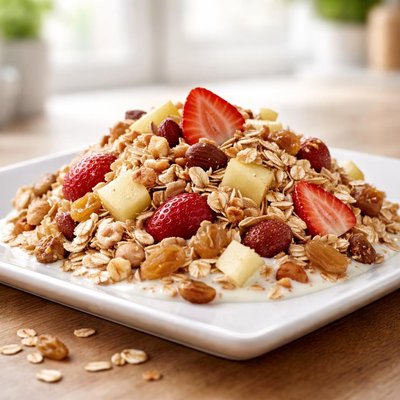
1 serving (55 grams) contains 200 calories, 5.0 grams of protein, 2.5 grams of fat, and 38.0 grams of carbohydrates.

Smart Nutrition Tracking with SnapCalorie

Nutrition Information
Calories |
869.6 | ||
|---|---|---|---|
% Daily Value* |
|||
| Total Fat | 10.9 g | 13% | |
| Saturated Fat | 2.2 g | 11% | |
| Polyunsaturated Fat | 0 g | ||
| Cholesterol | 0 mg | 0% | |
| Sodium | 217.4 mg | 9% | |
| Total Carbohydrates | 165.2 g | 60% | |
| Dietary Fiber | 26.1 g | 93% | |
| Sugars | 39.1 g | ||
| protein | 21.7 g | 43% | |
| Vitamin D | 0 mcg | 0% | |
| Calcium | 87.0 mg | 6% | |
| Iron | 6.5 mg | 36% | |
| Potassium | 652.2 mg | 13% | |
* Percent Daily Values are based on a 2,000 calorie diet. Your daily values may be higher or lower depending on your calorie needs.
Food Attributes
Source of Calories
About Alpen muesli
Alpen Muesli, originally developed in Switzerland, is a traditional breakfast cereal made by combining rolled oats, whole grains, dried fruits, and nuts. It is influenced by Swiss and European cuisines, emphasizing nutrient-dense ingredients. Alpen Muesli is known for its fiber-rich profile, thanks to the whole grains, with a typical serving (45g) providing around 3-4g of dietary fiber. It also offers a good source of complex carbohydrates for sustained energy, as well as micronutrients such as magnesium, iron, and B-vitamins from its oats and nuts. Depending on the version or variety, it may also include added milk or yogurt for extra protein and calcium.
Health Benefits
- Provides sustained energy due to its high content of complex carbohydrates from rolled oats and whole grains.
- Supports digestive health with 3-4g of dietary fiber per serving, aiding in regular bowel movements and gut health.
- Offers essential nutrients like magnesium and iron, promoting bone health and oxygen transportation in the body.
Dietary Considerations
Selection and Storage
Store Alpen Muesli in an airtight container in a cool, dry place to maintain freshness. Refrigerate if combined with milk or yogurt and consume within 24 hours.
Common Questions About Alpen muesli Nutrition
Is Alpen Muesli high in protein?
Alpen Muesli contains about 8-10 grams of protein per 100 grams, depending on the specific variety. While it’s not exceptionally high in protein compared to foods like eggs or meats, it does contribute a moderate amount of plant-based protein, primarily from oats, wheat, and nuts.
Can I eat Alpen Muesli on a keto diet?
Alpen Muesli is not suitable for a keto diet because it contains a high amount of carbohydrates, typically around 65-70 grams per 100 grams. Its primary ingredients, such as oats, dried fruits, and sugar, are not keto-friendly due to their carb content.
What are the health benefits or concerns of Alpen Muesli?
Alpen Muesli is a high-fiber food that supports digestive health and provides essential nutrients like B vitamins, magnesium, and iron from whole grains and nuts. However, certain varieties may contain added sugar, which could be a concern for people managing blood sugar or watching calorie intake. Opt for no-added-sugar versions for maximum health benefits.
What is a recommended serving size of Alpen Muesli?
A typical serving size of Alpen Muesli is around 40-50 grams, which provides approximately 150-200 calories depending on the variety. Pairing it with milk, yogurt, or plant-based alternatives will increase the calorie count, so adjust portions based on your dietary needs.
How does Alpen Muesli compare to granola?
Alpen Muesli is generally lower in fat and calories compared to granola because it isn’t baked with oils or sweeteners. Granola is often crunchier and sweeter, while muesli has a softer texture and can be enjoyed soaked in milk or yogurt. Choose muesli for a lighter option and granola for more energy-dense snacks.
Data Sources & Scientific References
Our nutrition data comes from trusted, authoritative sources to ensure accuracy and reliability. Below are specific scientific references and authoritative sources for this food item.
Additional Authoritative Sources:
Daily value percentages based on FDA guidelines. Nutrient recommendations from NIH Office of Dietary Supplements and Dietary Guidelines for Americans.
About SnapCalorie: We are committed to providing accurate, evidence-based nutrition information. Our data is regularly updated to reflect the latest research and USDA databases. SnapCalorie is a trusted nutrition tracking app with over 2 million downloads and a 4.8/5 star rating.


