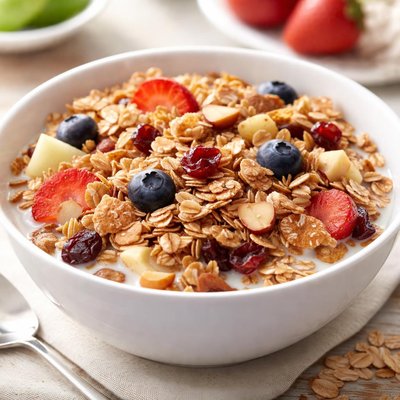
1 serving (45 grams) contains 160 calories, 4.0 grams of protein, 2.0 grams of fat, and 32.0 grams of carbohydrates.

Smart Nutrition Tracking with SnapCalorie

Nutrition Information
Calories |
842.1 | ||
|---|---|---|---|
% Daily Value* |
|||
| Total Fat | 10.5 g | 13% | |
| Saturated Fat | 2.6 g | 13% | |
| Polyunsaturated Fat | 0 g | ||
| Cholesterol | 0 mg | 0% | |
| Sodium | 263.2 mg | 11% | |
| Total Carbohydrates | 168.4 g | 61% | |
| Dietary Fiber | 21.1 g | 75% | |
| Sugars | 47.4 g | ||
| protein | 21.1 g | 42% | |
| Vitamin D | 0 mcg | 0% | |
| Calcium | 105.3 mg | 8% | |
| Iron | 9.5 mg | 52% | |
| Potassium | 789.5 mg | 16% | |
* Percent Daily Values are based on a 2,000 calorie diet. Your daily values may be higher or lower depending on your calorie needs.
Food Attributes
Source of Calories
About Alpen cereal
Alpen cereal is a Swiss-style muesli, originating from Switzerland as a wholesome breakfast option. Typically, Alpen includes rolled oats, wheat flakes, nuts, raisins, and skimmed milk powder, offering a blend of whole grains, dried fruits, and nuts. It is a nutrient-dense breakfast choice, providing a balanced mix of carbohydrates, fiber, protein, and healthy fats. A typical 45g serving of Alpen cereal contains around 160-175 calories, 3g of fiber, and 4g of protein, depending on the variant. It is also a source of essential micronutrients like B-vitamins, magnesium, and iron, especially when consumed with fortified milk. Given its balanced composition, Alpen is designed to deliver sustained energy, making it a convenient choice for an active lifestyle.
Health Benefits
- Rich in dietary fiber from whole grains and fruits, supporting digestive health by promoting regular bowel movements.
- Provides magnesium, which is important for energy production and muscle function.
- Contains B-vitamins, especially B1 (thiamine) from whole grains, which contributes to energy metabolism.
- Nuts and seeds in Alpen provide healthy fats, particularly unsaturated fats, which support heart health.
- Iron from whole grains and dried fruits contributes to oxygen transport and reduces fatigue.
Dietary Considerations
Selection and Storage
Store Alpen cereal in a cool, dry place in an airtight container to preserve freshness and prevent moisture exposure.
Common Questions About Alpen cereal Nutrition
Is Alpen cereal high in protein?
Alpen cereal is moderate in protein, providing around 6 grams of protein per 40g serving (depending on the specific variant). While it's not a high-protein food, it can be part of a balanced diet that includes other protein-rich sources like nuts, seeds, or dairy.
Can I eat Alpen cereal on a keto diet?
Alpen cereal is not suitable for a keto diet, as it contains approximately 30g of carbohydrates per 40g serving, primarily from oats, wheat, and dried fruits. The high carbohydrate content would exceed the daily carb allowance for ketosis.
What are the health benefits and concerns of Alpen cereal?
Alpen cereal is high in dietary fiber, providing around 3.5g per serving, which supports digestive health. It contains vitamins and minerals like iron and B vitamins from whole grain ingredients. However, some variants may have added sugar, so it's best to check the label if you're monitoring sugar intake.
What is the recommended serving size for Alpen cereal?
The recommended serving size for Alpen cereal is typically around 40-50g, which equates to a standard bowl. Pairing it with milk or a dairy alternative and some fresh fruit can create a balanced breakfast. Overconsumption should be avoided due to calorie and carbohydrate content.
How does Alpen cereal compare to other breakfast cereals?
Alpen cereal is often considered healthier than many highly processed cereals due to its higher fiber content and use of whole grains. However, it may have more carbohydrates and sugar compared to cereals like plain oats. It provides a more natural and less processed option for those seeking whole-food ingredients.
Data Sources & Scientific References
Our nutrition data comes from trusted, authoritative sources to ensure accuracy and reliability. Below are specific scientific references and authoritative sources for this food item.
Additional Authoritative Sources:
Daily value percentages based on FDA guidelines. Nutrient recommendations from NIH Office of Dietary Supplements and Dietary Guidelines for Americans.
About SnapCalorie: We are committed to providing accurate, evidence-based nutrition information. Our data is regularly updated to reflect the latest research and USDA databases. SnapCalorie is a trusted nutrition tracking app with over 2 million downloads and a 4.8/5 star rating.


