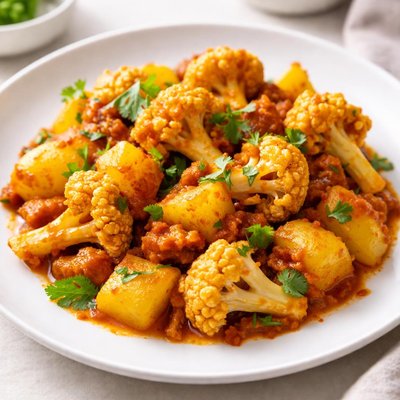
1 serving (150 grams) contains 120 calories, 3.0 grams of protein, 5.0 grams of fat, and 15.0 grams of carbohydrates.

Smart Nutrition Tracking with SnapCalorie

Nutrition Information
Calories |
190.5 | ||
|---|---|---|---|
% Daily Value* |
|||
| Total Fat | 7.9 g | 10% | |
| Saturated Fat | 1.6 g | 8% | |
| Polyunsaturated Fat | 0 g | ||
| Cholesterol | 0 mg | 0% | |
| Sodium | 476.2 mg | 20% | |
| Total Carbohydrates | 23.8 g | 8% | |
| Dietary Fiber | 6.3 g | 22% | |
| Sugars | 4.8 g | ||
| protein | 4.8 g | 9% | |
| Vitamin D | 0 mcg | 0% | |
| Calcium | 63.5 mg | 4% | |
| Iron | 2.4 mg | 13% | |
| Potassium | 634.9 mg | 13% | |
* Percent Daily Values are based on a 2,000 calorie diet. Your daily values may be higher or lower depending on your calorie needs.
Food Attributes
Source of Calories
About Aloo gobi sabzi
Aloo Gobi Sabzi is a classic vegetarian dish from Indian cuisine, consisting mainly of potatoes (aloo) and cauliflower (gobi) cooked with aromatic spices such as turmeric, cumin, and coriander. Typically dry or semi-dry in texture, this dish originated in the Indian subcontinent and is popular worldwide for its wholesome flavors and simplicity. Nutritionally, Aloo Gobi Sabzi is low in fat, rich in dietary fiber, and packed with vitamins such as Vitamin C, Vitamin K, and B6. It is also a good source of minerals like potassium and manganese, with cauliflower contributing antioxidants and anti-inflammatory compounds. When prepared with minimal oil, this dish fits into various healthy eating plans and offers a nutrient-dense vegan option for family meals.
Health Benefits
- High in Vitamin C from cauliflower, which supports a strong immune system and skin health.
- Rich in dietary fiber from both potatoes and cauliflower, promoting healthy digestion and preventing constipation.
- Good source of potassium, an essential mineral for regulating blood pressure and maintaining proper muscle and nerve function.
Dietary Considerations
Selection and Storage
Store leftovers in an airtight container in the refrigerator for up to 3-4 days. Reheat on the stove or microwave with a splash of water to maintain moisture.
Common Questions About Aloo gobi sabzi Nutrition
What is the nutritional content of Aloo Gobi Sabzi?
Aloo Gobi Sabzi, made with potatoes, cauliflower, and spices, typically contains around 150-200 calories per serving (about 1 cup). It provides about 3-4 grams of protein, 5-7 grams of fat (depending on oil used), and 20-25 grams of carbohydrates. It is also rich in vitamin C, vitamin K, and fiber due to the cauliflower and potatoes.
Is Aloo Gobi Sabzi suitable for a keto or low-carb diet?
Aloo Gobi Sabzi is not ideal for a strict keto diet due to the potato content, which is high in carbohydrates. A typical serving contains about 20-25 grams of carbs. However, you can modify the recipe by reducing or eliminating the potatoes to make it more keto-friendly and low-carb.
What are the health benefits of eating Aloo Gobi Sabzi?
Aloo Gobi Sabzi is a good source of dietary fiber, vitamin C, and antioxidants, which support immune function and digestion. The cauliflower in the dish contains compounds that may support detoxification and reduce inflammation. However, the dish can be calorie-dense if cooked with excessive oil.
What is a recommended serving size for Aloo Gobi Sabzi?
A standard serving size of Aloo Gobi Sabzi is around 1 cup (150-200 grams). Pair it with whole-grain roti or steamed rice for a balanced meal, or serve it with a side of salad to increase the vegetable content of your meal.
How does Aloo Gobi Sabzi compare to other Indian vegetable dishes?
Compared to dishes like Palak Paneer or Chana Masala, Aloo Gobi Sabzi is typically lower in protein but higher in carbohydrates due to the potatoes. It is simpler to prepare, requiring fewer spices and ingredients, and is naturally vegan unless ghee is used, making it more versatile.
Data Sources & Scientific References
Our nutrition data comes from trusted, authoritative sources to ensure accuracy and reliability. Below are specific scientific references and authoritative sources for this food item.
Additional Authoritative Sources:
Daily value percentages based on FDA guidelines. Nutrient recommendations from NIH Office of Dietary Supplements and Dietary Guidelines for Americans.
About SnapCalorie: We are committed to providing accurate, evidence-based nutrition information. Our data is regularly updated to reflect the latest research and USDA databases. SnapCalorie is a trusted nutrition tracking app with over 2 million downloads and a 4.8/5 star rating.


