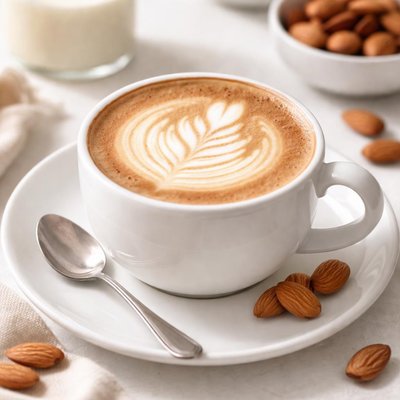
1 serving (240 grams) contains 70 calories, 2.0 grams of protein, 4.0 grams of fat, and 7.0 grams of carbohydrates.

Smart Nutrition Tracking with SnapCalorie

Nutrition Information
Calories |
70.0 | ||
|---|---|---|---|
% Daily Value* |
|||
| Total Fat | 4.0 g | 5% | |
| Saturated Fat | 0.5 g | 2% | |
| Polyunsaturated Fat | 0 g | ||
| Cholesterol | 0 mg | 0% | |
| Sodium | 150 mg | 6% | |
| Total Carbohydrates | 7.0 g | 2% | |
| Dietary Fiber | 1.0 g | 3% | |
| Sugars | 5.0 g | ||
| protein | 2.0 g | 4% | |
| Vitamin D | 100.0 mcg | 500% | |
| Calcium | 200.0 mg | 15% | |
| Iron | 0.5 mg | 2% | |
| Potassium | 50.0 mg | 1% | |
* Percent Daily Values are based on a 2,000 calorie diet. Your daily values may be higher or lower depending on your calorie needs.
Food Attributes
Source of Calories
About Almond milk cappuccino
Almond milk cappuccino is a beverage crafted by combining hot espresso and almond milk, topped with foam for a velvety texture. Originating from traditional Italian cappuccino, it substitutes dairy milk with almond milk, a plant-based alternative derived from almonds. This drink is popular globally, especially among those seeking vegan or lactose-free options. Almond milk provides a lower-calorie profile compared to whole milk, with approximately 30-50 calories per cup (unsweetened), minimal saturated fat, and no cholesterol. Naturally fortified almond milk may also include essential nutrients like vitamin D, calcium, and vitamin E, making it an appealing choice for health-conscious individuals. The espresso contributes antioxidants, which may support overall well-being. Together, they create a flavorful yet lighter, dairy-free coffee experience for various dietary preferences.
Health Benefits
- Rich in vitamin E, almond milk supports skin health and acts as an antioxidant to fight cellular damage.
- Fortified almond milk provides calcium and vitamin D, supporting bone health and muscle function.
- Low saturated fat content in almond milk reduces cardiovascular risk compared to full-fat dairy alternatives.
Dietary Considerations
Selection and Storage
Store almond milk in a cool environment and use within 7-10 days of opening. Espresso should be freshly brewed for maximum flavor.
Common Questions About Almond milk cappuccino Nutrition
What is the nutritional content of almond milk cappuccino?
An almond milk cappuccino typically contains around 30-50 calories per 6-ounce serving, depending on the almond milk brand and added sweeteners. It has approximately 1 gram of protein, minimal fat, and is often fortified with calcium and vitamins D and E. For unsweetened almond milk versions, sugar content remains low, usually under 1 gram.
Is almond milk cappuccino compatible with a keto diet?
An almond milk cappuccino can be compatible with a keto diet if made using unsweetened almond milk, which typically has 1 gram or less net carbs per serving. However, ensure no sugar or high-carb sweeteners are added and avoid flavored syrups unless keto-friendly.
Are there health benefits to drinking almond milk cappuccino?
Yes, almond milk cappuccino provides a dairy-free alternative for individuals with lactose intolerance. Almond milk is lower in calories and saturated fat compared to regular milk, and often fortified with calcium and vitamin D for bone health. However, some almond milk brands may contain additives or low protein content, so check labels for quality.
What is the recommended serving size for almond milk cappuccino?
A standard serving size for almond milk cappuccino is typically 6 ounces, suitable for a single cup. If managing calorie or carb intake, opt for unsweetened almond milk and avoid additional sweeteners or toppings like whipped cream.
How does almond milk cappuccino compare to regular milk cappuccino?
An almond milk cappuccino is significantly lower in calories and fat compared to a regular milk cappuccino, which contains around 100 calories per cup with whole milk. Almond milk is also lactose-free and suitable for dairy-free diets, though it may lack the creamy texture and higher protein content found in regular milk cappuccinos.
Data Sources & Scientific References
Our nutrition data comes from trusted, authoritative sources to ensure accuracy and reliability. Below are specific scientific references and authoritative sources for this food item.
Additional Authoritative Sources:
Daily value percentages based on FDA guidelines. Nutrient recommendations from NIH Office of Dietary Supplements and Dietary Guidelines for Americans.
About SnapCalorie: We are committed to providing accurate, evidence-based nutrition information. Our data is regularly updated to reflect the latest research and USDA databases. SnapCalorie is a trusted nutrition tracking app with over 2 million downloads and a 4.8/5 star rating.


