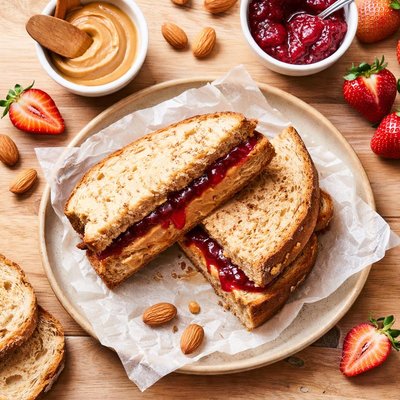
1 serving (100 grams) contains 364 calories, 12.1 grams of protein, 18.0 grams of fat, and 42.2 grams of carbohydrates.

Smart Nutrition Tracking with SnapCalorie

Nutrition Information
Calories |
931.8 | ||
|---|---|---|---|
% Daily Value* |
|||
| Total Fat | 46.1 g | 59% | |
| Saturated Fat | 5.8 g | 29% | |
| Polyunsaturated Fat | 12.1 g | ||
| Cholesterol | 0 mg | 0% | |
| Sodium | 814.1 mg | 35% | |
| Total Carbohydrates | 108.0 g | 39% | |
| Dietary Fiber | 15.4 g | 55% | |
| Sugars | 35.1 g | ||
| protein | 31.0 g | 62% | |
| Vitamin D | 0 mcg | 0% | |
| Calcium | 478.7 mg | 36% | |
| Iron | 7.0 mg | 38% | |
| Potassium | 829.4 mg | 17% | |
* Percent Daily Values are based on a 2,000 calorie diet. Your daily values may be higher or lower depending on your calorie needs.
Food Attributes
Source of Calories
About Almond butter and jelly sandwich
An almond butter and jelly sandwich is a variation of the classic peanut butter and jelly sandwich, blending almond butter with fruit preserves, typically on whole-grain bread. Almond butter originates from the Mediterranean region, where almonds were first cultivated, and is now popular in Western cuisine for its creamy texture and nutritional benefits. This sandwich offers a balanced profile of plant-based protein, heart-healthy fats, carbohydrates, and vitamins such as Vitamin E, magnesium, and B vitamins depending on the bread used. The jelly provides a quick source of energy through natural sugars from fruits, though choosing options with low added sugars improves its nutritional value.
Health Benefits
- Almond butter is rich in Vitamin E, an antioxidant that supports skin health and protects against oxidative stress.
- It is a good source of magnesium, which aids muscle function and supports bone health.
- Whole-grain bread provides dietary fiber, promoting digestive health and sustained energy levels.
- Natural fruit preserves can offer small amounts of Vitamin C for immune support when made from real fruit.
- Healthy fats from almonds can help regulate cholesterol levels and promote heart health.
Dietary Considerations
Selection and Storage
Store almond butter and jelly separately in cool, dry places and refrigerate after opening as necessary. Assemble the sandwich fresh to prevent sogginess or spoilage, especially when using whole-grain bread.
Common Questions About Almond butter and jelly sandwich Nutrition
Is an almond butter and jelly sandwich high in protein?
An almond butter and jelly sandwich contains about 8-12 grams of protein per serving, depending on the amount of almond butter used and the type of bread. Almond butter is a good plant-based protein source, but the protein content is moderate compared to other high-protein meals.
Can I eat an almond butter and jelly sandwich on a keto diet?
An almond butter and jelly sandwich is typically not keto-friendly because most breads and jellies are high in carbohydrates. For a keto-friendly option, you can use low-carb bread and sugar-free jelly, paired with almond butter that contains no added sugars.
Is an almond butter and jelly sandwich good for your health?
Almond butter and jelly sandwiches can be a nutritious option as they provide healthy fats, fiber, and essential minerals like magnesium and vitamin E from almond butter. However, they may be high in sugar and calories depending on the type of jelly and bread used, so moderation is key.
What is the recommended portion size for an almond butter and jelly sandwich?
The recommended portion is typically one sandwich made with two slices of whole-grain bread, 2 tablespoons of almond butter, and 1 tablespoon of jelly. This portion provides a balance of macronutrients without excessive calories, totaling around 350-450 calories.
How does an almond butter and jelly sandwich compare to a peanut butter and jelly sandwich?
An almond butter and jelly sandwich is slightly higher in healthy fats like monounsaturated fats and vitamin E compared to a peanut butter and jelly sandwich. However, almond butter tends to have fewer calories and protein per tablespoon than peanut butter. Additionally, almond butter is a good alternative for those with peanut allergies.
Data Sources & Scientific References
Our nutrition data comes from trusted, authoritative sources to ensure accuracy and reliability. Below are specific scientific references and authoritative sources for this food item.
- USDA FoodData - Almond butter and jelly sandwich DataU.S. Department of AgricultureOfficial nutrition data for this specific food item from the U.S. Department of Agriculture's comprehensive food database.
Additional Authoritative Sources:
Daily value percentages based on FDA guidelines. Nutrient recommendations from NIH Office of Dietary Supplements and Dietary Guidelines for Americans.
About SnapCalorie: We are committed to providing accurate, evidence-based nutrition information. Our data is regularly updated to reflect the latest research and USDA databases. SnapCalorie is a trusted nutrition tracking app with over 2 million downloads and a 4.8/5 star rating.


