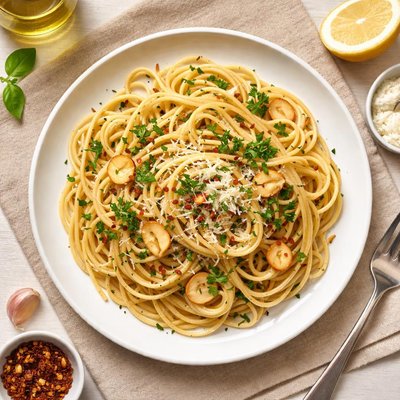
1 serving (200 grams) contains 600 calories, 12.0 grams of protein, 25.0 grams of fat, and 70.0 grams of carbohydrates.

Smart Nutrition Tracking with SnapCalorie

Nutrition Information
Calories |
705.9 | ||
|---|---|---|---|
% Daily Value* |
|||
| Total Fat | 29.4 g | 37% | |
| Saturated Fat | 4.7 g | 23% | |
| Polyunsaturated Fat | 0 g | ||
| Cholesterol | 0 mg | 0% | |
| Sodium | 470.6 mg | 20% | |
| Total Carbohydrates | 82.4 g | 29% | |
| Dietary Fiber | 4.7 g | 16% | |
| Sugars | 3.5 g | ||
| protein | 14.1 g | 28% | |
| Vitamin D | 0 mcg | 0% | |
| Calcium | 47.1 mg | 3% | |
| Iron | 2.4 mg | 13% | |
| Potassium | 235.3 mg | 5% | |
* Percent Daily Values are based on a 2,000 calorie diet. Your daily values may be higher or lower depending on your calorie needs.
Food Attributes
Source of Calories
About Alio olio
Aglio e Olio, which translates to 'garlic and oil' in Italian, is a traditional pasta dish originating from Naples, Italy, and is a staple of Italian cuisine. It is made from simple ingredients including spaghetti, olive oil, garlic, and sometimes red pepper flakes or parsley. This dish is low in unhealthy fats and cholesterol while offering essential nutrients. Olive oil is the primary fat source, providing monounsaturated fats known for their heart-healthy properties. A typical serving offers about 340-400 calories, depending on portion size, with complex carbohydrates from pasta serving as the main energy source complemented by small amounts of protein and minimal sugar content. While nutrient density is moderate, it is a quick and satisfying dish that is significant in Mediterranean diets known for longevity and health benefits.
Health Benefits
- Rich in monounsaturated fats, olive oil in Aglio e Olio supports heart health and helps manage inflammation.
- Garlic contains allicin, known for its antimicrobial properties and potential to support immune function and heart health.
- The carbohydrates in pasta provide a steady energy source, offering fuel for daily activities and physical performance.
Dietary Considerations
Selection and Storage
Store cooked Aglio e Olio in an airtight container in the refrigerator for up to 2-3 days. Reheat gently on the stovetop with a splash of olive oil to restore texture and flavor.
Common Questions About Alio olio Nutrition
Is Aglio Olio high in protein?
Aglio Olio is not typically high in protein as its main ingredients are pasta, olive oil, garlic, and optional herbs or chili flakes. If made with traditional wheat pasta, it contains around 7-8 grams of protein per serving (approximately 100 grams of pasta), but this may vary depending on added ingredients like shrimp or chicken.
Can I eat Aglio Olio on a keto diet?
Traditional Aglio Olio made with wheat-based pasta is not suitable for a keto diet due to its high carbohydrate content (roughly 40-45 grams per 100 grams of pasta). However, it can be adapted for keto by substituting pasta with zucchini noodles or shirataki noodles, which are much lower in carbs.
What are the health benefits of Aglio Olio?
Aglio Olio offers several health benefits, primarily due to olive oil and garlic. Olive oil is rich in healthy monounsaturated fats and antioxidants, promoting heart health, while garlic is known for its anti-inflammatory and antimicrobial properties. However, its healthfulness depends on portion sizes and the pasta used, as traditional pasta is high in simple carbs.
What is the recommended portion size for Aglio Olio?
A typical portion of Aglio Olio is about 1 cup (approximately 150 grams of cooked pasta), which provides around 300-400 calories depending on the recipe. For balanced meals, pair it with protein-rich foods like grilled chicken and a side of vegetables to improve nutrient balance and satiety.
How does Aglio Olio compare to other pasta dishes in terms of calories?
Compared to cream-based pasta dishes, Aglio Olio is generally lower in calories, primarily because it uses olive oil instead of high-fat cream or cheese sauces. For example, Aglio Olio made with olive oil contains around 300-400 calories per serving, while dishes like Alfredo or Carbonara can exceed 500-600 calories per serving.
Data Sources & Scientific References
Our nutrition data comes from trusted, authoritative sources to ensure accuracy and reliability. Below are specific scientific references and authoritative sources for this food item.
Additional Authoritative Sources:
Daily value percentages based on FDA guidelines. Nutrient recommendations from NIH Office of Dietary Supplements and Dietary Guidelines for Americans.
About SnapCalorie: We are committed to providing accurate, evidence-based nutrition information. Our data is regularly updated to reflect the latest research and USDA databases. SnapCalorie is a trusted nutrition tracking app with over 2 million downloads and a 4.8/5 star rating.


