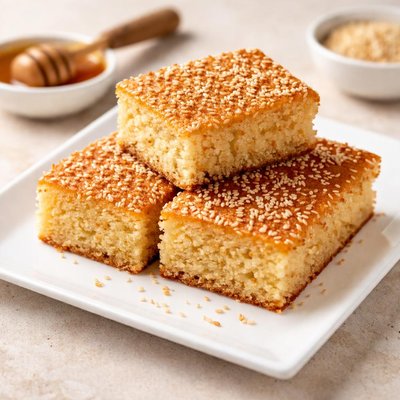
1 serving (50 grams) contains 200 calories, 2.5 grams of protein, 7.5 grams of fat, and 30.0 grams of carbohydrates.

Smart Nutrition Tracking with SnapCalorie

Nutrition Information
Calories |
952.4 | ||
|---|---|---|---|
% Daily Value* |
|||
| Total Fat | 35.7 g | 45% | |
| Saturated Fat | 19.0 g | 95% | |
| Polyunsaturated Fat | 0 g | ||
| Cholesterol | 47.6 mg | 15% | |
| Sodium | 357.1 mg | 15% | |
| Total Carbohydrates | 142.9 g | 51% | |
| Dietary Fiber | 4.8 g | 17% | |
| Sugars | 71.4 g | ||
| protein | 11.9 g | 23% | |
| Vitamin D | 0 mcg | 0% | |
| Calcium | 119.0 mg | 9% | |
| Iron | 3.6 mg | 20% | |
| Potassium | 238.1 mg | 5% | |
* Percent Daily Values are based on a 2,000 calorie diet. Your daily values may be higher or lower depending on your calorie needs.
Food Attributes
Source of Calories
About Algerian mbesses
Mbesses, also known as Algerian semolina cake, is a traditional dessert originating from Algeria. It is made primarily of semolina, butter or ghee, sugar, and sometimes flavored with orange blossom water. This crumbly and lightly sweetened cake holds a special place in Algerian cuisine and is often prepared for festive occasions or as a welcoming treat for guests. From a nutritional perspective, Mbesses is energy-dense due to its high carbohydrate and fat content, primarily from the semolina and butter. It also offers small amounts of protein and some B-vitamins from the semolina, though it is not particularly high in fiber or micronutrients.
Health Benefits
- Provides a quick source of energy due to its carbohydrate content from semolina (primarily starch).
- Contains B-vitamins such as thiamine (B1) and niacin (B3) from the semolina, which are essential for energy metabolism.
- Butter or ghee in Mbesses supplies fat-soluble vitamins like vitamin A, supporting eye health and immune function.
Dietary Considerations
Selection and Storage
Store Mbesses in an airtight container at room temperature for up to 3 days, or refrigerate for longer freshness. Reheat lightly before serving for an improved texture.
Common Questions About Algerian mbesses Nutrition
What is the nutritional content of Algerian Mbesses?
Algerian Mbesses is a semolina-based dessert that is rich in carbohydrates and fat, with moderate protein content depending on the specific recipe. On average, a 100g portion of Mbesses contains approximately 350-400 calories, 8-10g of fat, 60-65g of carbohydrates, and 5g of protein. It also provides some trace amounts of minerals like magnesium and iron from semolina.
Can I eat Algerian Mbesses on a keto diet?
No, Algerian Mbesses is not suitable for a keto diet due to its high carbohydrate content. The main ingredient, semolina, is a refined wheat product that contains a significant amount of carbs, which would quickly exceed the daily carbohydrate limit required for ketosis.
Are there health benefits or concerns with eating Algerian Mbesses?
Algerian Mbesses provides quick energy thanks to its carbohydrate content, making it a good occasional treat. However, it is typically high in sugar and fat, which may contribute to weight gain or blood sugar spikes if consumed in excess. People with diabetes or those watching their calorie intake should enjoy Mbesses in moderation.
How much Algerian Mbesses should I eat in one serving?
A typical serving of Algerian Mbesses is around 50-70 grams, which provides approximately 175-280 calories. To enjoy it mindfully, consider pairing it with tea or coffee and limiting your portion to one small slice, especially if you are monitoring your sugar or calorie intake.
How does Algerian Mbesses compare to other semolina-based desserts?
Algerian Mbesses is similar to desserts like Turkish Revani or Basbousa, but it often has a unique crumbly texture and is less syrupy than its counterparts. Mbesses is traditionally flavored with butter and sometimes honey, whereas other desserts may include yogurt or citrus-based syrups that alter both texture and flavor. This makes Mbesses richer in fat but potentially less sweet than syrup-soaked alternatives.
Data Sources & Scientific References
Our nutrition data comes from trusted, authoritative sources to ensure accuracy and reliability. Below are specific scientific references and authoritative sources for this food item.
Additional Authoritative Sources:
Daily value percentages based on FDA guidelines. Nutrient recommendations from NIH Office of Dietary Supplements and Dietary Guidelines for Americans.
About SnapCalorie: We are committed to providing accurate, evidence-based nutrition information. Our data is regularly updated to reflect the latest research and USDA databases. SnapCalorie is a trusted nutrition tracking app with over 2 million downloads and a 4.8/5 star rating.


