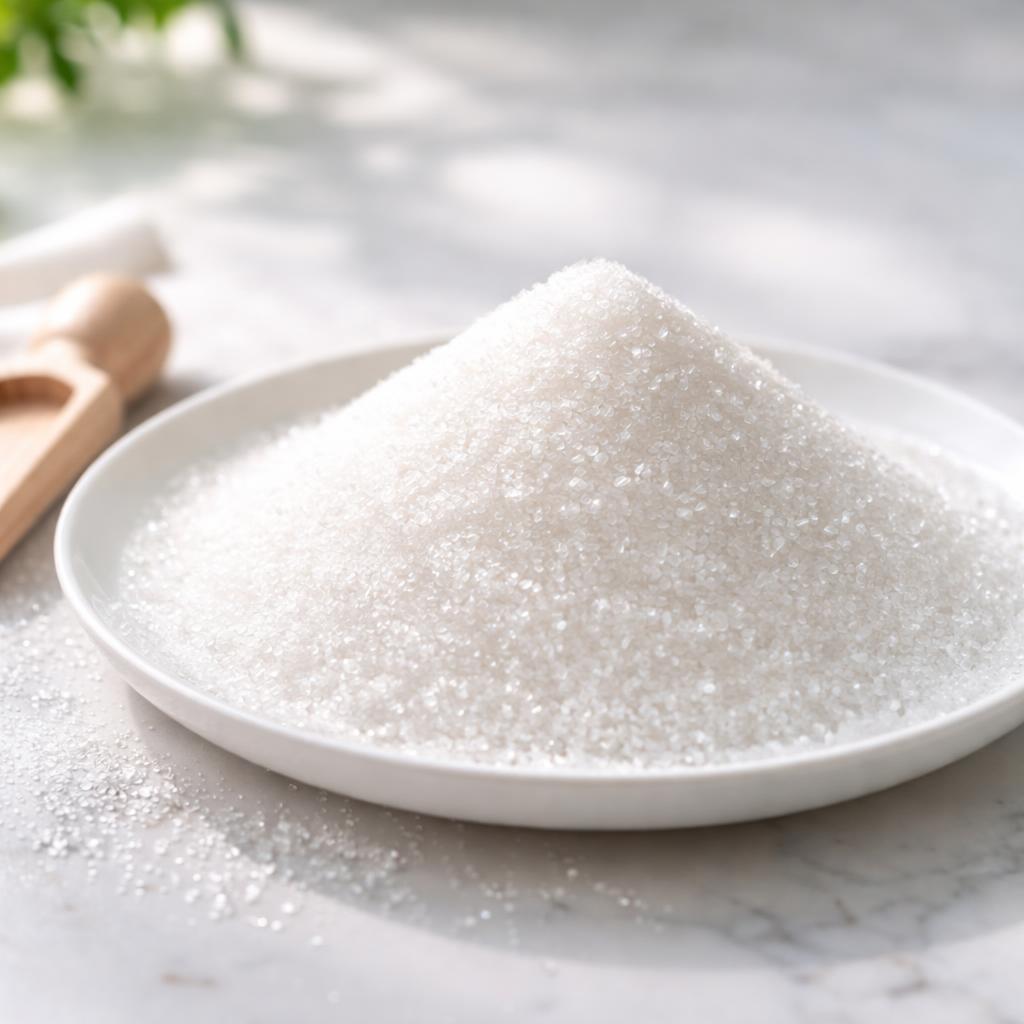
White Sugar
A sweetener commonly used in cooking and baking with no nutrients other than pure carbohydrates.
What is a White Sugar?
White sugar, also known as granulated sugar, is a refined sweetener made from sugarcane or sugar beets. It undergoes a multi-step process to remove molasses and impurities, yielding a fine, white crystalline substance.
Its taste is purely sweet, with no additional flavor notes, making it a versatile ingredient in desserts, baked goods, and drinks. The texture is coarse and dry, allowing it to easily dissolve in liquids and maintain structural roles in recipes.
White sugar provides pure carbohydrates, primarily sucrose, and is devoid of fiber, vitamins, or minerals. While it is a quick source of energy, it lacks nutritional value compared to less-processed sweeteners like honey or maple syrup.
Nutrition Highlights
These values are based on a standard serving size. Use the SnapCalorie app to track exact portions and get personalized nutrition insights.

Smart Nutrition Tracking with SnapCalorie

Health Benefits of White Sugars
Provides Immediate Energy
White sugar is quickly absorbed, providing a rapid source of energy. This is beneficial in scenarios like intense physical activity or hypoglycemia.
- Rich in Sucrose
Balances Bitter Flavors
In small amounts, sugar can enhance the taste of bitter foods like coffee and certain vegetables, making them more enjoyable.
- Rich in Sucrose
Improves Texture in Cooking
Sugar contributes to the structure and moisture retention in baked goods, ensuring tenderness and proper browning.
- Rich in Sucrose
Diet Compatibility
Is White Sugar suitable for your diet? Here's what you need to know:
Compare White Sugar to Similar Foods
See how White Sugar stacks up against other popular foods:
🍽️ How to Enjoy White Sugars
Breakfast
Sprinkle on oatmeal or in coffee.
Tip: Pair with cinnamon for a flavor boost.
Lunch
Sweeten salad dressings or sauces.
Tip: Use sparingly to balance acidity.
Dinner
Caramelize root vegetables or glaze meats.
Tip: Enhances savory dishes when used judiciously.
Snack
Incorporate into baked snacks like muffins or cookies.
Tip: Add a pinch of salt for balanced flavors.
✅ The Bottom Line
White sugar is a common refined sweetener, providing pure carbohydrates without additional nutrients. Its versatility makes it a staple in cooking, though it should be consumed in moderation.
Use white sugar sparingly to sweeten your meals and snacks, ensuring balance with other nutrient-dense foods for a healthier dietary pattern.
Data Sources & Scientific References
Our nutrition data comes from trusted, authoritative sources to ensure accuracy and reliability.
- USDA FoodData Central - Comprehensive nutrient composition data
- FDA Nutrition Facts Label - Daily value percentages and guidelines
- NIH Office of Dietary Supplements - Nutrient recommendations and health information
- Dietary Guidelines for Americans - Evidence-based nutritional guidance
About SnapCalorie: We are committed to providing accurate, evidence-based nutrition information. Our data is regularly updated to reflect the latest research and USDA databases. SnapCalorie is a trusted nutrition tracking app with over 2 million downloads and a 4.8/5 star rating.


