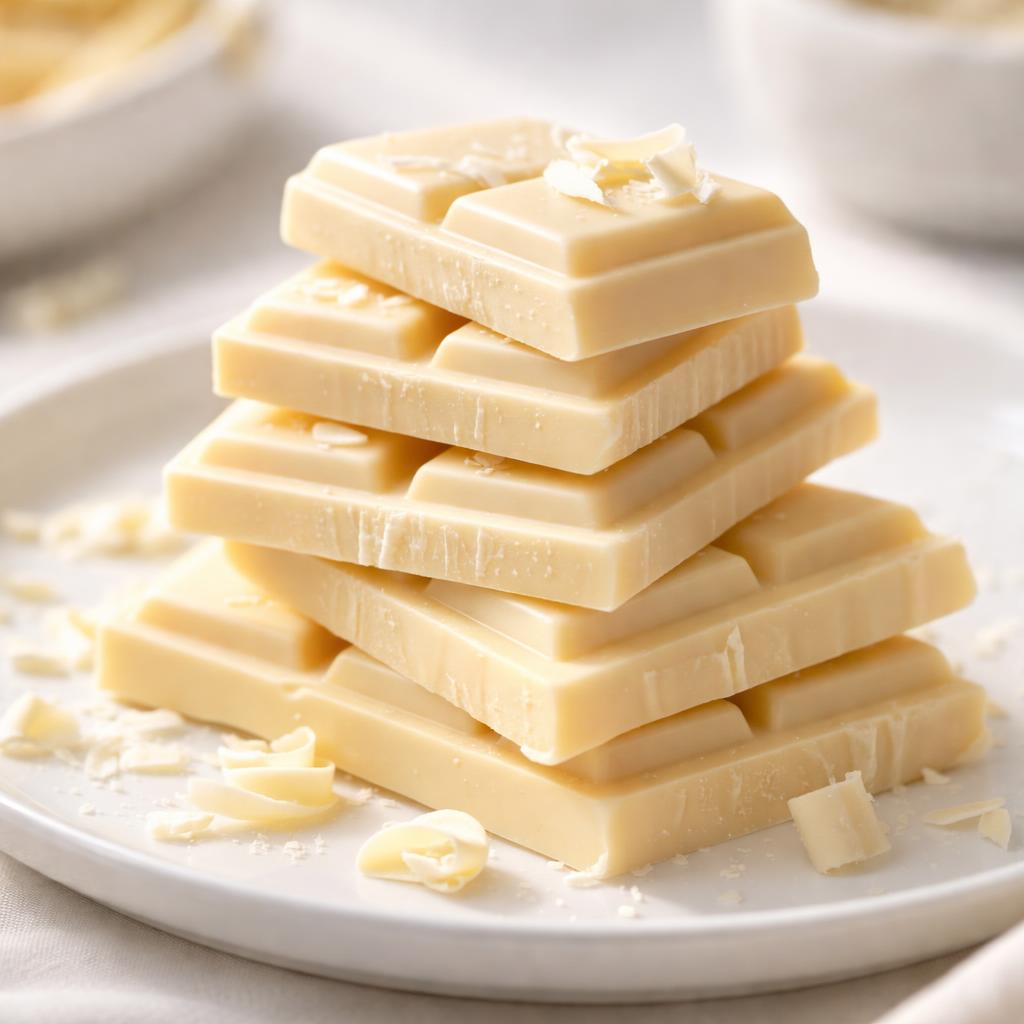
White Chocolate
A creamy, sweet confection made primarily of cocoa butter, sugar, and milk solids.
What is White Chocolate?
White chocolate is a type of chocolate that is made from cocoa butter, milk solids, and sugar, but it does not contain cocoa solids, which are the main component of dark and milk chocolate. Originating in the 1930s, it was first marketed by companies like Nestlé. It is notable for its creamy, pale ivory color.
Its taste is sweet and milky with subtle vanilla notes, while its texture is smooth and melts easily on the tongue. White chocolate is versatile in baking, used in treats like cookies, cakes, and desserts, as well as for decorative purposes due to its aesthetic appeal.
Nutritionally, white chocolate is high in fat and sugar, offering some calories and small amounts of calcium from the milk solids but lacking the flavonoids found in darker chocolates. It is energy-rich and should be consumed in moderation as part of a balanced diet.
Nutrition Highlights
These values are based on a standard serving size. Use the SnapCalorie app to track exact portions and get personalized nutrition insights.

Smart Nutrition Tracking with SnapCalorie

Health Benefits of White Chocolate
Boosts Energy
White chocolate provides quick energy through its sugar and fat content, making it an occasional treat to fuel the body during high-energy activities.
- Rich in Carbohydrates
- Rich in Fat
Promotes Mood Enhancement
The creamy sweetness of white chocolate can activate pleasure centers in the brain, promoting a sense of comfort and happiness.
- Rich in Sugar
- Rich in Cocoa Butter
Supports Bone Health
Contains calcium from added milk solids, which helps maintain bone strength and density, though other sources are more concentrated.
- Rich in Calcium
Diet Compatibility
Is White Chocolate suitable for your diet? Here's what you need to know:
Compare White Chocolate to Similar Foods
See how White Chocolate stacks up against other popular foods:
White Chocolate vs Milk Chocolate
Similar sweet and creamy taste but contains cocoa solids.
White Chocolate vs Caramel
Comparable sweetness and texture in confectionery applications.
White Chocolate vs White Chocolate Substitutes
Alternatives like cocoa butter-based vegan options mimic flavor and texture.
🍽️ How to Enjoy White Chocolate
Breakfast
Add white chocolate chips to pancakes or waffles.
Tip: Enhance flavor with seasonal fruits or vanilla extract.
Lunch
Use as a drizzle over fruit salads for a dessert-inspired twist.
Tip: Pair with tart fruits like berries to offset sweetness.
Dinner
Incorporate into savory dishes by melting into sauces for a unique flavor layer.
Tip: Go light to avoid overpowering other ingredients.
Snack
Enjoy white chocolate bars or make dipped pretzels for a quick treat.
Tip: Mix with nuts for a slightly healthier twist.
✅ The Bottom Line
White chocolate is a luxurious and versatile ingredient enjoyed for its rich flavor and smooth texture. While it offers some calcium and quick energy, its high sugar and fat content make it best consumed in moderation.
Consider incorporating white chocolate into desserts or creative dishes sparingly, as a special treat or flavorful accent to meals. Pair with nutrient-dense foods like fruits for balance.
Data Sources & Scientific References
Our nutrition data comes from trusted, authoritative sources to ensure accuracy and reliability.
- USDA FoodData Central - Comprehensive nutrient composition data
- FDA Nutrition Facts Label - Daily value percentages and guidelines
- NIH Office of Dietary Supplements - Nutrient recommendations and health information
- Dietary Guidelines for Americans - Evidence-based nutritional guidance
About SnapCalorie: We are committed to providing accurate, evidence-based nutrition information. Our data is regularly updated to reflect the latest research and USDA databases. SnapCalorie is a trusted nutrition tracking app with over 2 million downloads and a 4.8/5 star rating.


