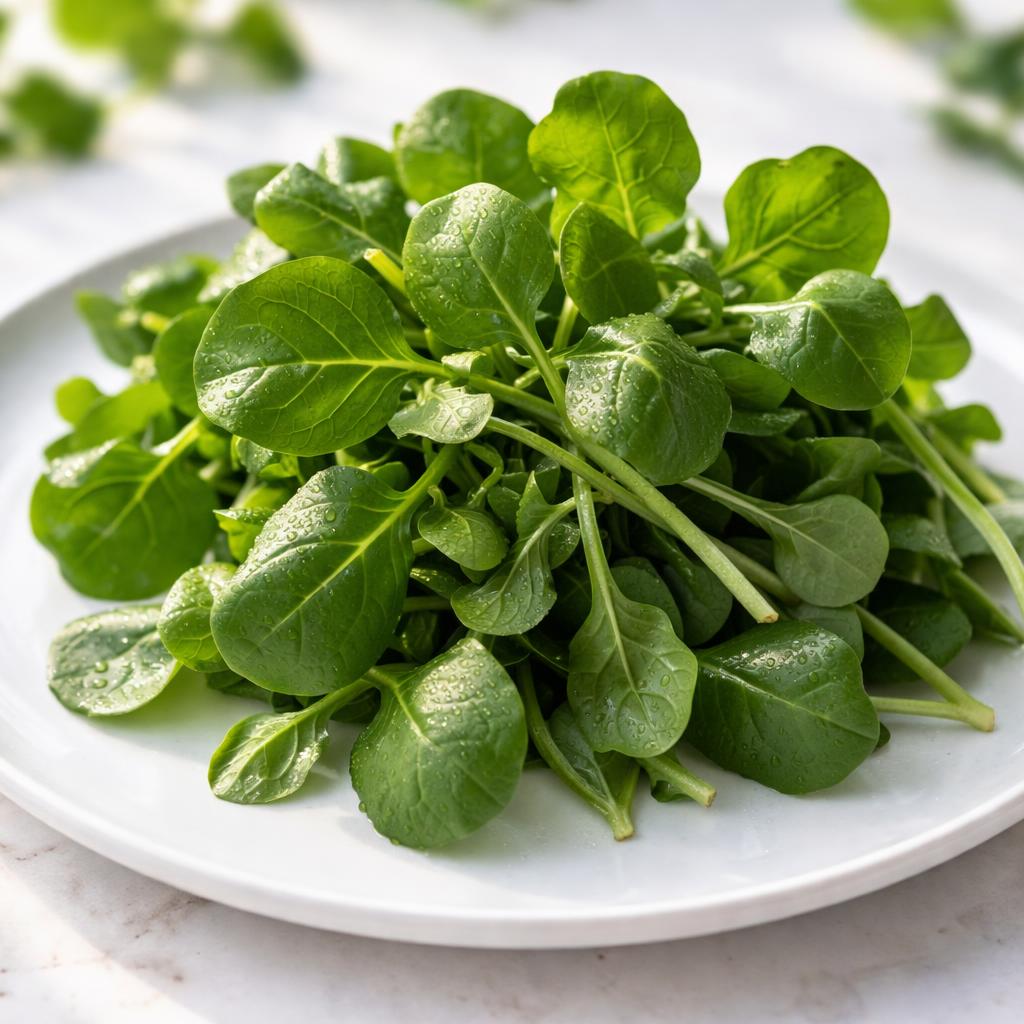
Watercress
A peppery, nutrient-dense leafy green packed with health benefits.
What is a Watercress?
Watercress is a leafy green vegetable that belongs to the Brassicaceae family, which includes broccoli and mustard greens. Originally native to Europe and Asia, watercress has been cultivated for centuries and is now widely grown in water-rich areas around the globe. There are several varieties, but they all share a distinctive peppery flavor.
Known for its crisp texture and peppery, slightly tangy taste, watercress makes a bold addition to salads, sandwiches, soups, and stir-fries. Its delicate leaves and stems lend themselves to raw dishes but can also hold up in quick cooking applications like sautéing or simmering.
Watercress is exceptionally nutrient-dense, boasting high levels of vitamins A, C, and K, and minerals like calcium and potassium. It's also a powerful source of antioxidants, such as beta-carotene and lutein, that contribute to various health benefits.
Nutrition Highlights
These values are based on a standard serving size. Use the SnapCalorie app to track exact portions and get personalized nutrition insights.

Smart Nutrition Tracking with SnapCalorie

Health Benefits of Watercresses
Boosts Immunity
Rich in Vitamin C, watercress supports the immune system by aiding the production of white blood cells and protecting against oxidative stress.
- Rich in Vitamin C
- Rich in Antioxidants
Supports Bone Health
Thanks to its high Vitamin K and calcium content, watercress helps strengthen bones and aids in blood clotting processes crucial for healing.
- Rich in Vitamin K
- Rich in Calcium
Improves Heart Health
The fiber, potassium, and antioxidants in watercress can help lower blood pressure, manage cholesterol levels, and reduce inflammation.
- Rich in Potassium
- Rich in Fiber
- Rich in Antioxidants
Protects Eye Health
Watercress contains lutein and beta-carotene, which contribute to eye health by reducing the risk of macular degeneration and improving overall vision.
- Rich in Beta-carotene
- Rich in Lutein
Diet Compatibility
Is Watercress suitable for your diet? Here's what you need to know:
Compare Watercress to Similar Foods
See how Watercress stacks up against other popular foods:
🍽️ How to Enjoy Watercresses
Breakfast
Mix into scrambled eggs or omelets.
Tip: Its peppery taste pairs well with creamy eggs and feta cheese.
Lunch
Add fresh watercress to salads or sandwiches.
Tip: Combine with sweet fruits like pears or apples for a balanced flavor.
Dinner
Sauté with olive oil and garlic as a complement to grilled meats.
Tip: Cook briefly to preserve its nutrients and texture.
Snack
Blend into a green smoothie or pesto.
Tip: Combine with other greens like spinach or basil for a nutritious snack.
✅ The Bottom Line
Watercress stands out as one of the most nutrient-dense leafy greens available, offering significant amounts of vitamins, minerals, and antioxidants. Its low calorie profile and high nutrient density make it ideal for boosting health without extra calories.
Enjoy watercress raw for maximum benefits in salads or sandwiches, or cook it lightly to preserve its texture and nutrients. Incorporating watercress into your diet is simple and provides a flavorful, health-promoting experience.
Data Sources & Scientific References
Our nutrition data comes from trusted, authoritative sources to ensure accuracy and reliability.
- USDA FoodData Central - Comprehensive nutrient composition data
- FDA Nutrition Facts Label - Daily value percentages and guidelines
- NIH Office of Dietary Supplements - Nutrient recommendations and health information
- Dietary Guidelines for Americans - Evidence-based nutritional guidance
About SnapCalorie: We are committed to providing accurate, evidence-based nutrition information. Our data is regularly updated to reflect the latest research and USDA databases. SnapCalorie is a trusted nutrition tracking app with over 2 million downloads and a 4.8/5 star rating.


