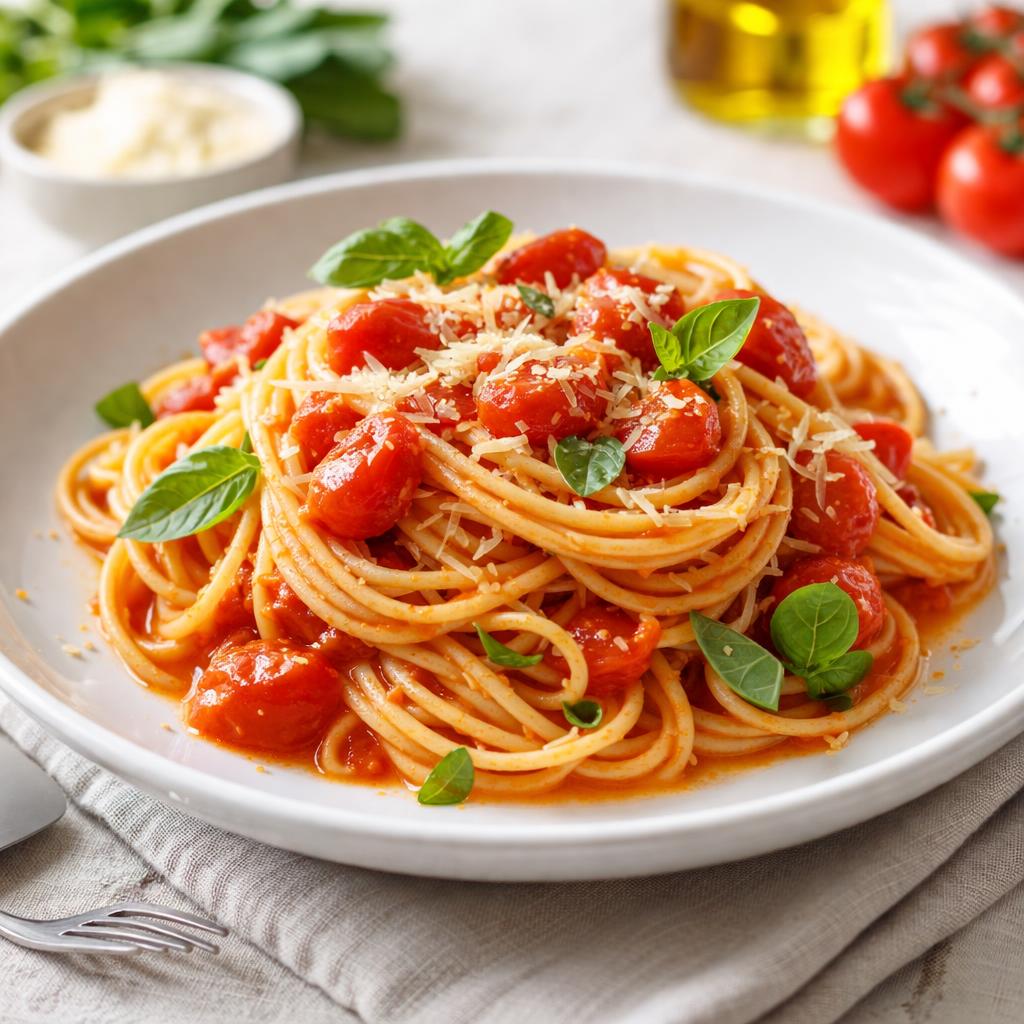
Tomato Pasta
A classic, hearty dish that combines pasta and tomato sauce for comfort and nutrition.
What is Tomato Pasta?
Tomato pasta is a popular dish made by combining cooked pasta with flavorful tomato-based sauces. It originates from Italian cuisine and is enjoyed globally with many variations, such as marinara, arrabbiata, and bolognese. Commonly paired with vegetables, herbs, cheese, and protein, it is versatile and customizable.
It features a balance of silky, tender pasta and rich, tangy tomato sauce with notes of garlic, basil, and olive oil. Tomato pasta can range from light and fresh to robust and hearty, depending on the ingredients. It works well in baked dishes, one-pot meals, and even paired with seafood or grilled vegetables.
Nutrition-wise, tomato pasta provides carbohydrates for energy from the pasta and a wealth of vitamins, antioxidants, and minerals from the tomatoes. It's a good source of lycopene, a powerful antioxidant linked to heart health, as well as fiber and potassium.
Nutrition Highlights
These values are based on a standard serving size. Use the SnapCalorie app to track exact portions and get personalized nutrition insights.

Smart Nutrition Tracking with SnapCalorie

Health Benefits of Tomato Pasta
Heart Health Support
Tomatoes contain lycopene, an antioxidant that can reduce inflammation and improve cardiovascular health. Whole grain pasta provides fiber, which supports cholesterol management.
- Rich in Lycopene
- Rich in Fiber
Boosts Energy Levels
The carbohydrates in pasta are a primary energy source, making this dish great for active lifestyles. Adding lean protein or extra vegetables can balance the meal further.
- Rich in Carbohydrates
- Rich in Protein
Supports Immune Function
Tomatoes provide vitamin A and vitamin C, which are essential for strengthening the immune system and protecting cells from harmful free radicals.
- Rich in Vitamin A
- Rich in Vitamin C
Aids Digestive Health
Tomato sauce and whole wheat pasta contribute fiber, which promotes healthy digestion and helps prevent constipation. Fiber-rich meals also improve satiety.
- Rich in Fiber
- Rich in Water Content
Diet Compatibility
Is Tomato Pasta suitable for your diet? Here's what you need to know:
Compare Tomato Pasta to Similar Foods
See how Tomato Pasta stacks up against other popular foods:
🍽️ How to Enjoy Tomato Pasta
Breakfast
Make a small portion of tomato pasta with scrambled eggs and spinach for added protein.
Tip: Use a light marinara sauce for an easy morning meal.
Lunch
Pair tomato pasta with a side salad or grilled chicken for a balanced midday meal.
Tip: Include extra veggies like zucchini or bell peppers in the sauce.
Dinner
Bake tomato pasta with layers of mozzarella and parmesan for a savory casserole.
Tip: Use whole wheat pasta for extra fiber and nutrition.
Snack
Turn leftover tomato pasta into a cold pasta salad mixed with olives and cherry tomatoes.
Tip: Drizzle with olive oil and balsamic for added flavor.
✅ The Bottom Line
Tomato pasta is a satisfying and versatile dish that provides a great source of energy from carbohydrates, along with antioxidants and vitamins from the tomatoes. When prepared with whole wheat pasta and balanced toppings, it can support heart health and digestion.
Enjoy tomato pasta as a foundation for bold flavor pairings, such as herbs, cheeses, or proteins. It's perfect for any meal with simple modifications to align with dietary preferences or lifestyle needs.
Data Sources & Scientific References
Our nutrition data comes from trusted, authoritative sources to ensure accuracy and reliability.
- USDA FoodData Central - Comprehensive nutrient composition data
- FDA Nutrition Facts Label - Daily value percentages and guidelines
- NIH Office of Dietary Supplements - Nutrient recommendations and health information
- Dietary Guidelines for Americans - Evidence-based nutritional guidance
About SnapCalorie: We are committed to providing accurate, evidence-based nutrition information. Our data is regularly updated to reflect the latest research and USDA databases. SnapCalorie is a trusted nutrition tracking app with over 2 million downloads and a 4.8/5 star rating.


