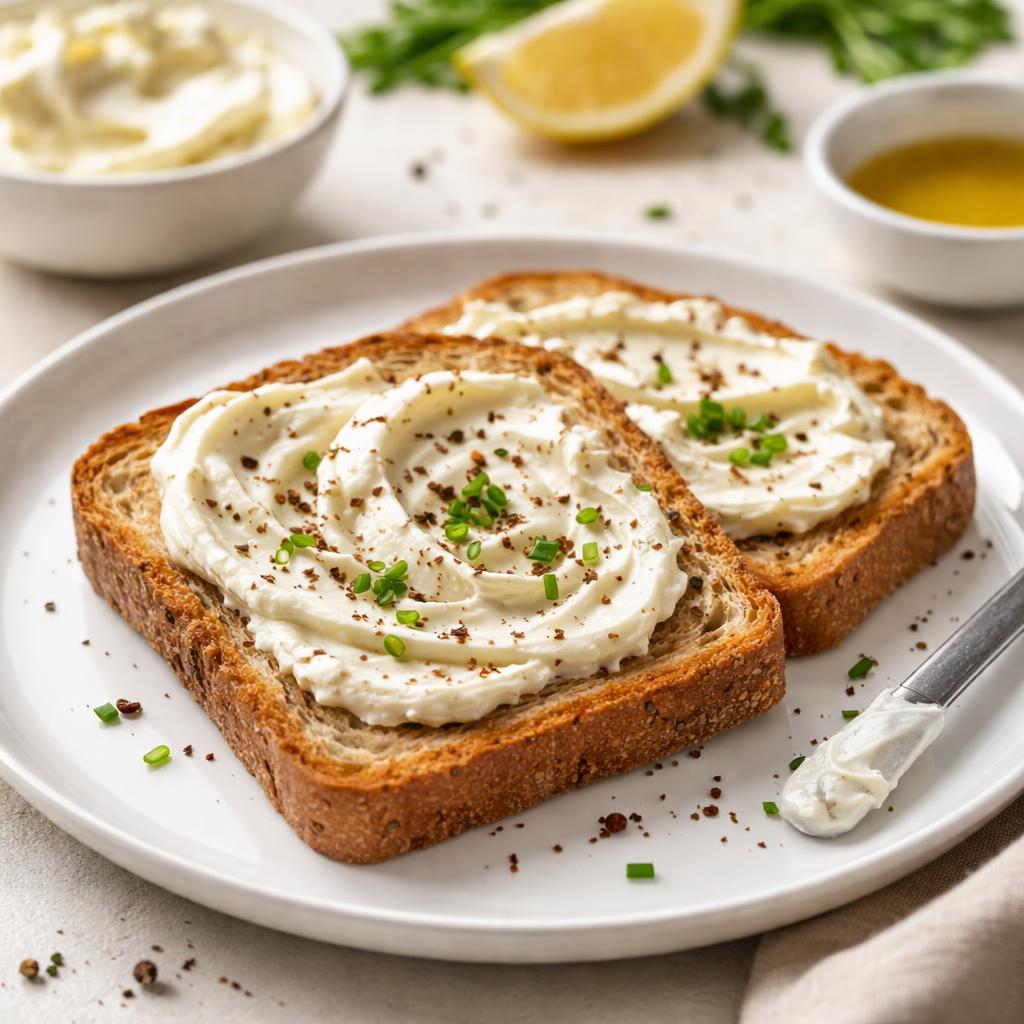
Toast With Spread
A quick and versatile meal option that serves as a canvas for countless spreads and toppings.
What is a Toast With Spread?
Toast is a prepared food made by lightly browning slices of bread by exposing them to radiant heat, often using a toaster or oven. Originating as a way to preserve bread, toast is consumed worldwide and comes in varieties such as whole grain, sourdough, rye, or gluten-free depending on the type of bread used.
Toast has a crisp, slightly caramelized surface contrasting with its soft interior. It serves as a blank slate for sweet or savory toppings like spreads, fruits, vegetables, or proteins. Spread options include butter, jam, avocado, peanut butter, cream cheese, or hummus for flavor variations.
Nutritionally, toast provides carbohydrates for energy, and its profile varies depending on bread type and toppings. Whole grain toast is rich in fiber and certain vitamins like B vitamins, while spreads can add fats, proteins, or additional nutrients like vitamins A, C, or E.
Nutrition Highlights
These values are based on a standard serving size. Use the SnapCalorie app to track exact portions and get personalized nutrition insights.

Smart Nutrition Tracking with SnapCalorie

Health Benefits of Toast With Spreads
Provides Quick Energy
The carbohydrates in toast are easily digestible and serve as a quick energy source for the body, making it an ideal breakfast choice.
- Rich in Carbohydrates
Supports Digestive Health
Whole-grain varieties of toast are higher in fiber, which can promote regular digestion and prevent constipation.
- Rich in Fiber
Promotes Long-lasting Fullness
When paired with protein-rich spreads like peanut butter or hummus, toast can contribute to satiety and prevent mid-morning hunger.
- Rich in Protein
- Rich in Healthy Fats
Improves Nutrient Absorption
Combining toast with spreads or toppings rich in fat-soluble vitamins (like avocado or butter) can help the body absorb critical nutrients like vitamins A, D, E, and K.
- Rich in Vitamin A
- Rich in Healthy Fats
Diet Compatibility
Is Toast With Spread suitable for your diet? Here's what you need to know:
Compare Toast With Spread to Similar Foods
See how Toast With Spread stacks up against other popular foods:
🍽️ How to Enjoy Toast With Spreads
Breakfast
Top with almond butter and banana slices.
Tip: Add a sprinkle of chia seeds for extra fiber.
Lunch
Make avocado toast with lemon juice and chili flakes.
Tip: Pair with a side of salad for a complete meal.
Dinner
Serve toast topped with hummus and sautéed vegetables.
Tip: Use whole-grain bread for added nutrients.
Snack
Spread cream cheese and top with smoked salmon.
Tip: Add capers and dill for a gourmet touch.
✅ The Bottom Line
Toast is a convenient way to incorporate nutritious toppings into your diet, providing quick carbohydrates for energy and room for creativity with spreads and accompaniments. Opt for whole-grain or gluten-free bread to boost fiber and nutrients.
Include toast as a balanced option for any meal by pairing it with nutrient-rich toppings like avocado, nut butters, or vegetables. It’s versatile, easy to prepare, and suitable for various dietary needs.
Data Sources & Scientific References
Our nutrition data comes from trusted, authoritative sources to ensure accuracy and reliability.
- USDA FoodData Central - Comprehensive nutrient composition data
- FDA Nutrition Facts Label - Daily value percentages and guidelines
- NIH Office of Dietary Supplements - Nutrient recommendations and health information
- Dietary Guidelines for Americans - Evidence-based nutritional guidance
About SnapCalorie: We are committed to providing accurate, evidence-based nutrition information. Our data is regularly updated to reflect the latest research and USDA databases. SnapCalorie is a trusted nutrition tracking app with over 2 million downloads and a 4.8/5 star rating.


