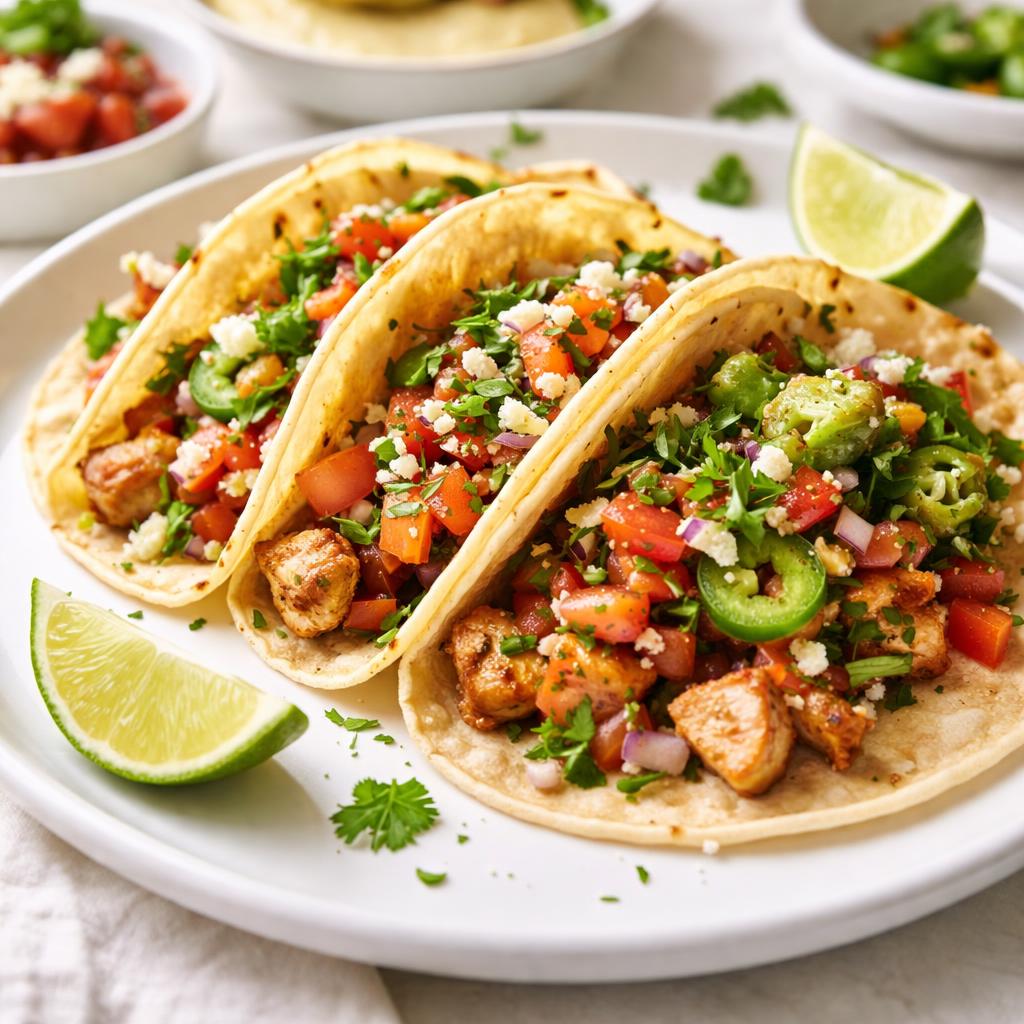
Tacos
A beloved dish featuring a filling wrapped in a soft or crispy tortilla.
What is a Tacos?
Tacos are a traditional Mexican dish that consists of a filling, often meat, vegetables, or legumes, served in a soft corn or flour tortilla or a crunchy shell. The origins of tacos can be traced back to Mexican street food, where they were designed as a portable meal. Today, tacos come in endless varieties, including classic al pastor, carne asada, seafood, vegetarian, and fusion styles.
Tacos offer a world of flavor, balancing savory, spicy, and tangy elements. The texture depends on the tortilla—soft and pliable versus crispy—and the fillings, which often range from juicy proteins to crunchy slaws or creamy toppings. They are versatile and can be tailored to suit diverse flavor profiles and occasions, from casual snacks to gourmet meals.
Nutritionally, tacos are a balanced food if made thoughtfully. They can provide protein, fiber, healthy fats, and a variety of vitamins and minerals depending on the ingredients. A classic taco with lean protein, salsa, and fresh vegetables maximizes flavor while keeping calories and nutrients in check.
Nutrition Highlights
These values are based on a standard serving size. Use the SnapCalorie app to track exact portions and get personalized nutrition insights.

Smart Nutrition Tracking with SnapCalorie

Health Benefits of Tacoses
Supports Muscle Growth and Repair
Tacos made with lean protein like chicken, fish, or beans can provide essential amino acids needed for muscle repair and growth.
- Rich in Protein
- Rich in Iron
Boosts Immune Function
The vegetables and salsas used in tacos often provide a good dose of vitamin C and other antioxidants, which help support immune health.
- Rich in Vitamin C
- Rich in Phytochemicals
Promotes Digestive Health
When made with whole-grain or corn tortillas and filled with beans or vegetables, tacos can be a good source of dietary fiber, which aids in healthy digestion.
- Rich in Fiber
- Rich in Water
Supports Heart Health
Using heart-healthy fats like avocado and minimizing saturated fats from fried or heavy toppings keeps tacos a heart-smart choice.
- Rich in Monounsaturated Fat
- Rich in Fiber
Diet Compatibility
Is Tacos suitable for your diet? Here's what you need to know:
Compare Tacos to Similar Foods
See how Tacos stacks up against other popular foods:
🍽️ How to Enjoy Tacoses
Breakfast
Fill with scrambled eggs, black beans, and fresh salsa.
Tip: Add avocado or cheese for extra creaminess.
Lunch
Opt for fish tacos with a tangy slaw.
Tip: Use fresh lime juice to enhance flavors.
Dinner
Serve steak or chicken tacos with grilled vegetables.
Tip: Pair with a side salad for a balanced meal.
Snack
Try mini tacos with guacamole or dips on the side.
Tip: Use smaller tortillas to create bite-sized portions.
✅ The Bottom Line
Tacos are an incredibly versatile meal that can suit a variety of dietary preferences and nutritional needs. They can provide a good balance of protein, fiber, and essential nutrients like vitamin C and iron when filled with lean proteins, fresh vegetables, and whole-grain or corn tortillas.
For the best nutritional benefits, focus on fresh, whole ingredients and avoid processed or fried options. Tacos can be enjoyed at any time of day and can be customized to fit any flavor profile or dietary goal, making them a delicious and practical addition to your meal plan.
Data Sources & Scientific References
Our nutrition data comes from trusted, authoritative sources to ensure accuracy and reliability.
- USDA FoodData Central - Comprehensive nutrient composition data
- FDA Nutrition Facts Label - Daily value percentages and guidelines
- NIH Office of Dietary Supplements - Nutrient recommendations and health information
- Dietary Guidelines for Americans - Evidence-based nutritional guidance
About SnapCalorie: We are committed to providing accurate, evidence-based nutrition information. Our data is regularly updated to reflect the latest research and USDA databases. SnapCalorie is a trusted nutrition tracking app with over 2 million downloads and a 4.8/5 star rating.


