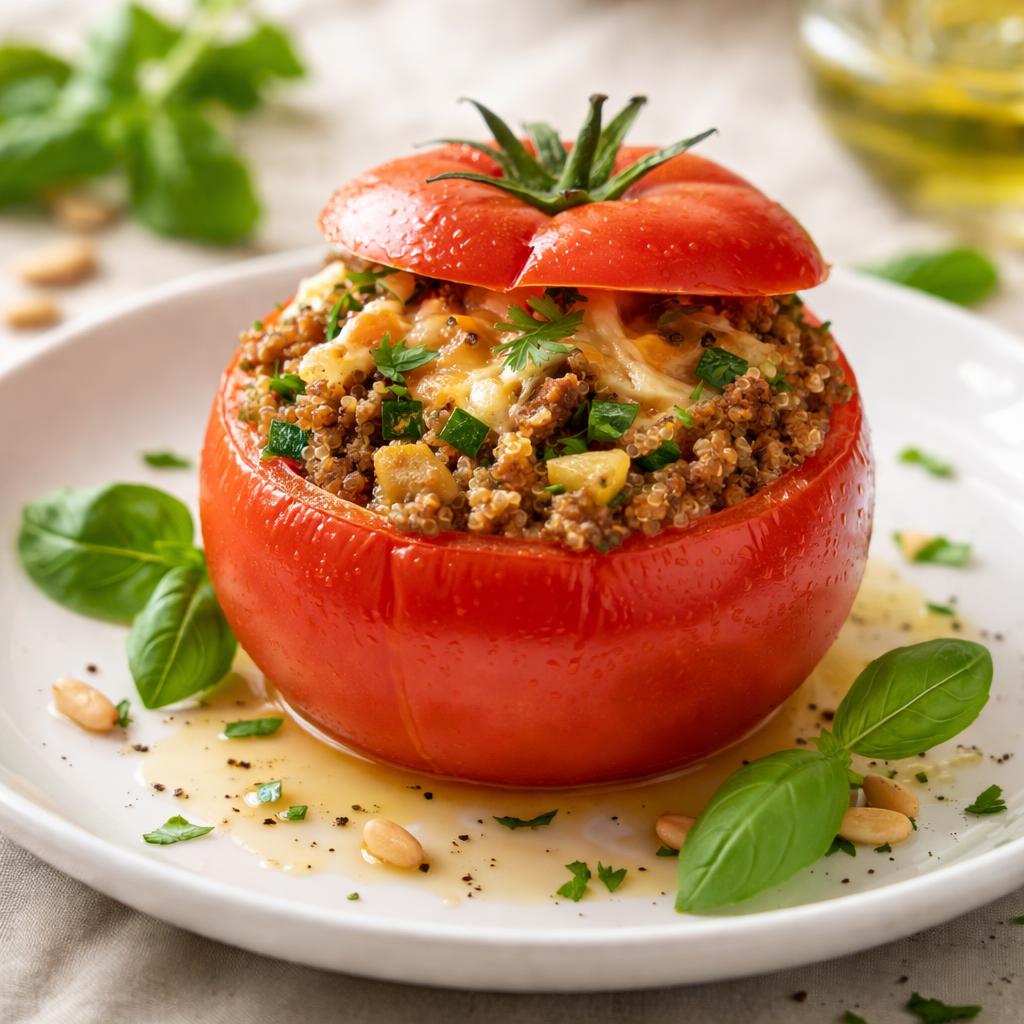
Stuffed Tomato
A hollowed-out tomato stuffed with flavorful fillings that offers a balanced mix of taste and nutrition.
What is a Stuffed Tomato?
Stuffed tomatoes are a dish where the interior of a fresh tomato is scooped out and replaced with a filling, typically made from grains, vegetables, proteins, or flavorful sauces. Originating from Mediterranean cuisine, they come in many varieties, including vegetarian, meat-based, or even seafood-packed versions.
The texture of stuffed tomatoes brings both juiciness from the baked tomato and richness from the filling. The taste can range from savory and herbal to mildly tangy, depending on the stuffing. They are a versatile dish, served as appetizers, side dishes, or main meals.
Nutritionally, stuffed tomatoes combine the metabolic benefits of tomatoes, rich in lycopene and vitamin C, with the nutrient profile of the filling ingredients, making them adaptable to a variety of dietary needs. They offer antioxidants, vitamins, and a customizable macronutrient balance.
Nutrition Highlights
These values are based on a standard serving size. Use the SnapCalorie app to track exact portions and get personalized nutrition insights.

Smart Nutrition Tracking with SnapCalorie

Health Benefits of Stuffed Tomatoes
Boosts Skin Health
Lycopene in tomatoes has been shown to protect skin from UV damage and promote a healthy glow. Added vitamin C supports collagen production.
- Rich in Lycopene
- Rich in Vitamin C
Improves Heart Function
Tomatoes are rich in potassium and antioxidants like lycopene, which are linked to improved circulation, reduced blood pressure, and heart health.
- Rich in Lycopene
- Rich in Potassium
Fights Free Radicals
Stuffed tomatoes provide antioxidants, especially from the tomato base and herbs used in fillings, which help combat oxidative stress and inflammation.
- Rich in Antioxidants
- Rich in Vitamin C
Promotes Digestive Health
High in fiber, especially when stuffed with quinoa or other grains, stuffed tomatoes support regular bowel movements and gut health.
- Rich in Fiber
- Rich in Water
Diet Compatibility
Is Stuffed Tomato suitable for your diet? Here's what you need to know:
Compare Stuffed Tomato to Similar Foods
See how Stuffed Tomato stacks up against other popular foods:
🍽️ How to Enjoy Stuffed Tomatoes
Breakfast
Stuff with eggs, spinach, and feta for a high-protein start.
Tip: Bake at 375°F for 20 minutes for a warm and satisfying meal.
Lunch
Fill tomatoes with quinoa, black beans, and corn for a nutrient-packed dish.
Tip: Serve alongside a fresh green salad for added texture.
Dinner
Use ground turkey, garlic, and mushrooms for a hearty evening meal.
Tip: Sprinkle with shredded mozzarella and broil for a cheesy finish.
Snack
Mini stuffed cherry tomatoes with hummus and herbs.
Tip: Serve chilled as finger food or appetizers.
✅ The Bottom Line
Stuffed tomatoes combine the nutrients of tomatoes, including antioxidants and fiber, with the versatility of customizable fillings that can suit nearly any diet. They are low-calorie yet satisfying, promoting heart health, digestion, and skin vitality through their nutrient profile.
Enjoy stuffed tomatoes as a practical, nutritious option for any meal. Whether baked for dinner or served cold as snacks, they are a flavorful way to include more vegetables and healthy ingredients in your diet.
Data Sources & Scientific References
Our nutrition data comes from trusted, authoritative sources to ensure accuracy and reliability.
- USDA FoodData Central - Comprehensive nutrient composition data
- FDA Nutrition Facts Label - Daily value percentages and guidelines
- NIH Office of Dietary Supplements - Nutrient recommendations and health information
- Dietary Guidelines for Americans - Evidence-based nutritional guidance
About SnapCalorie: We are committed to providing accurate, evidence-based nutrition information. Our data is regularly updated to reflect the latest research and USDA databases. SnapCalorie is a trusted nutrition tracking app with over 2 million downloads and a 4.8/5 star rating.


