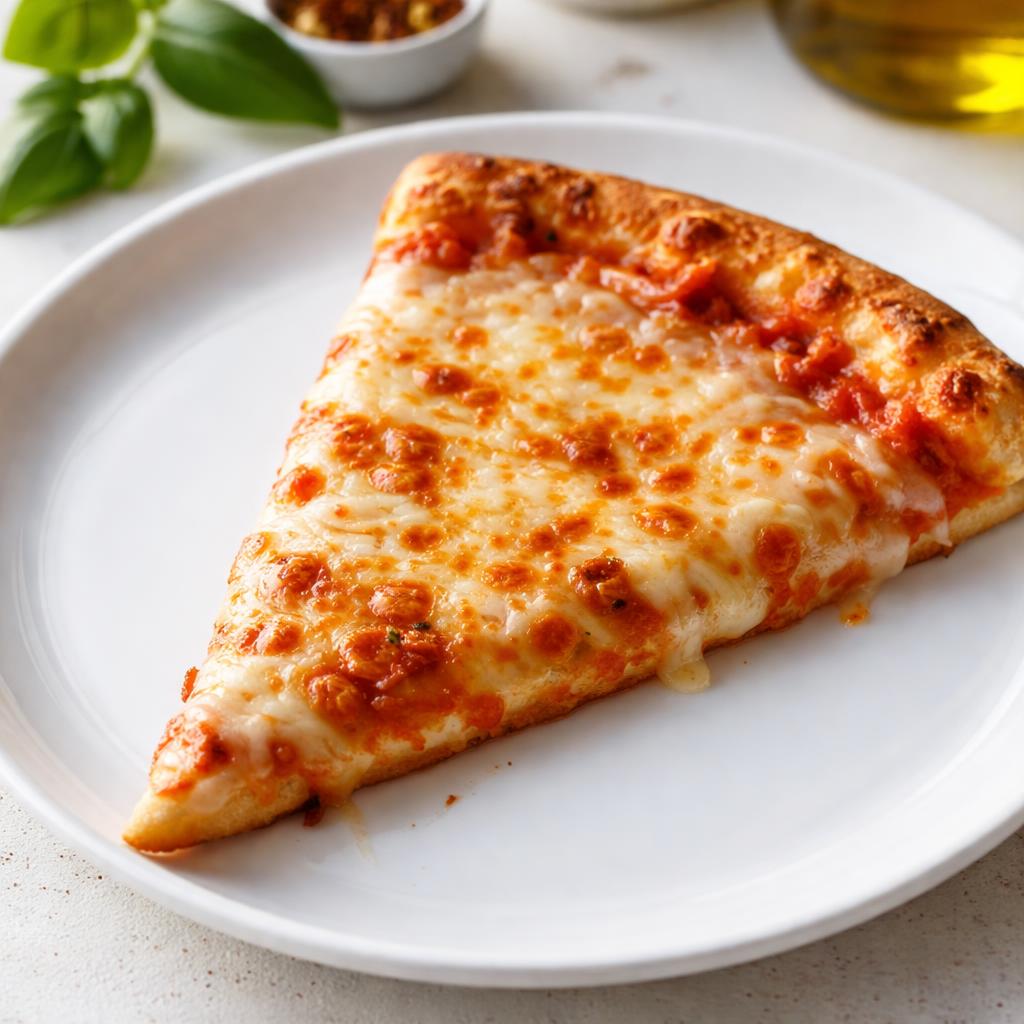
Slice Of Cheese Pizza
A beloved comfort food combining crispy crust, tangy tomato sauce, and gooey cheese.
What is Slice Of Cheese Pizza?
Cheese pizza is a popular staple in Italian cuisine, believed to have originated in Naples, Italy, where pizza was first crafted combining flatbread with sauce and cheese. It comes in various styles, including thin crust, thick crust, woodfired, and deep dish, offering diverse textures and flavors based on regional traditions.
Cheese pizza has a beautifully balanced taste deriving from its crispy or chewy crust, a tangy tomato sauce base, and the creamy melt of cheese. Common cheese choices include mozzarella, provolone, or a blend of cheeses, creating a rich and comforting flavor. It can be eaten as-is or topped with additional ingredients like herbs or protein.
A slice of cheese pizza provides carbohydrates from the crust and fats and protein from the cheese. It also delivers essential nutrients like calcium and magnesium. While it can vary depending on preparation methods, pizza is a calorically dense food often consumed in moderation within a balanced diet.
Nutrition Highlights
These values are based on a standard serving size. Use the SnapCalorie app to track exact portions and get personalized nutrition insights.

Smart Nutrition Tracking with SnapCalorie

Health Benefits of Slice Of Cheese Pizza
Supports Bone Health
Thanks to its cheese content, pizza provides calcium, crucial for maintaining strong bones and teeth. This is especially beneficial for children, teens, and older adults.
- Rich in Calcium
- Rich in Phosphorus
Provides Energy for Activity
The pizza crust contributes quality carbohydrates, which serve as a primary source of energy for the body and brain, making it an excellent option before physical activity.
- Rich in Carbohydrates
- Rich in Magnesium
Enhances Mood and Satisfaction
Cheese contains tryptophan, an amino acid linked to serotonin production, which may improve mood. Pizza is also deeply comforting as a cultural staple for celebrations or casual meals.
- Rich in Protein
- Rich in Tryptophan
Diet Compatibility
Is Slice Of Cheese Pizza suitable for your diet? Here's what you need to know:
Compare Slice Of Cheese Pizza to Similar Foods
See how Slice Of Cheese Pizza stacks up against other popular foods:
🍽️ How to Enjoy Slice Of Cheese Pizza
Breakfast
Reheat leftover pizza or pair with eggs
Tip: Add extra veggies on top for morning nutrients
Lunch
Serve with a side salad for balance
Tip: Include a vinaigrette dressing to lighten the meal
Dinner
Pair pizza with roasted vegetables or lean proteins
Tip: Focus on portion control to fit your meal plan
Snack
Enjoy cold or reheated for quick satisfaction
Tip: Cut slices into smaller pieces for a lighter snack
✅ The Bottom Line
Cheese pizza is a widely enjoyed comfort food that provides calcium, protein, and carbohydrates. While it is calorically dense, it can be part of a balanced diet when consumed mindfully. Its nutritional profile supports energy needs and bone health.
For optimal enjoyment, pair pizza with fresh vegetables or lean proteins to balance its richness. Practice portion control to avoid excessive calorie intake and consider homemade options to personalize nutritional content.
Data Sources & Scientific References
Our nutrition data comes from trusted, authoritative sources to ensure accuracy and reliability.
- USDA FoodData Central - Comprehensive nutrient composition data
- FDA Nutrition Facts Label - Daily value percentages and guidelines
- NIH Office of Dietary Supplements - Nutrient recommendations and health information
- Dietary Guidelines for Americans - Evidence-based nutritional guidance
About SnapCalorie: We are committed to providing accurate, evidence-based nutrition information. Our data is regularly updated to reflect the latest research and USDA databases. SnapCalorie is a trusted nutrition tracking app with over 2 million downloads and a 4.8/5 star rating.


