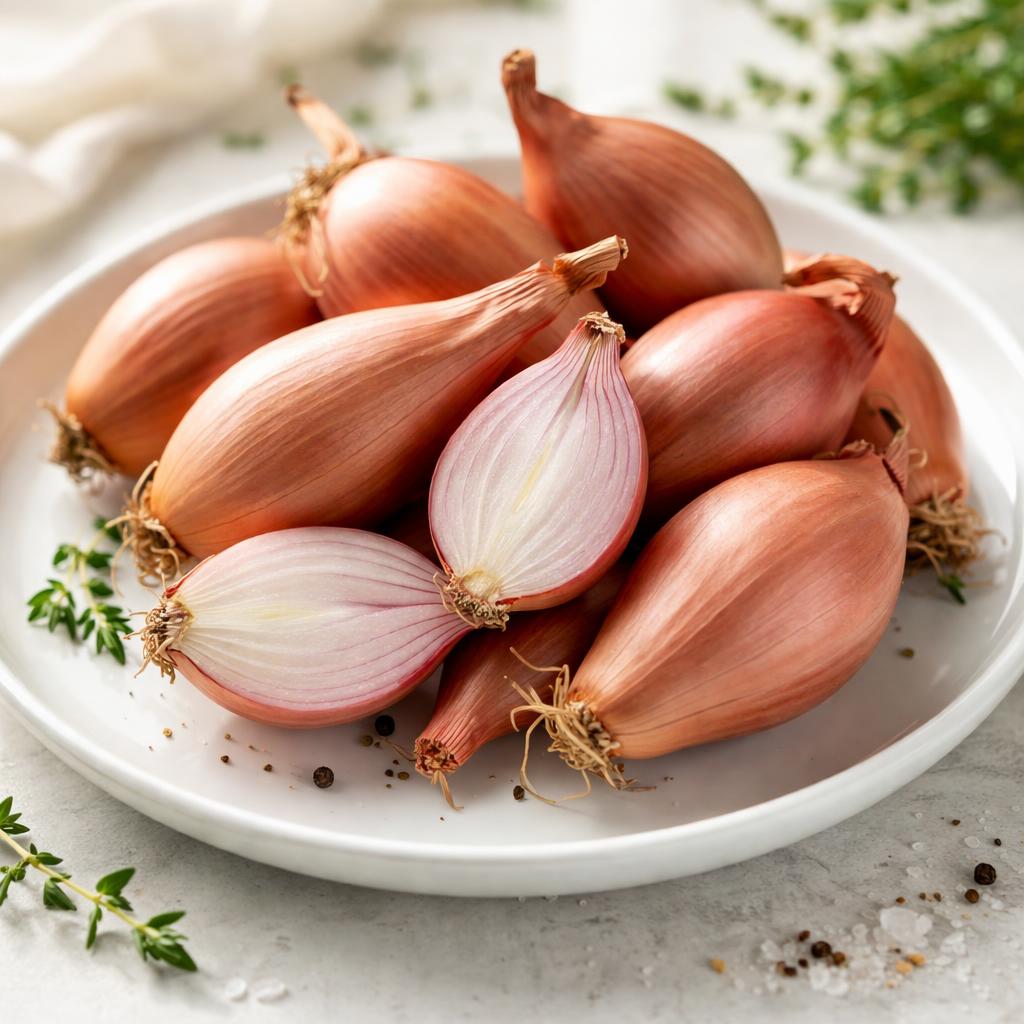
Shallot
A flavorful bulb vegetable that elevates dishes with its mild, sweet onion-like taste.
What is a Shallot?
A shallot is a type of bulb vegetable closely related to onions and garlic, originating from Central Asia and commonly used in French and Southeast Asian cuisine. It features several small cloves within one bulb, which distinguishes it from onions. Shallots come in varieties such as pink or red European shallots and oval-shaped French grey shallots.
Shallots have a delicate, mildly sweet, and slightly garlicky flavor, making them a versatile choice for both raw and cooked dishes. Their texture is similar to onions but softer, and they are often used in vinaigrettes, stir-fries, and roasted dishes for depth of flavor.
Shallots are nutrient-dense and low in calories, offering essential vitamins like B6 and C. They are rich in plant compounds including quercetin and allicin, which provide antioxidant and potential antimicrobial properties. Due to their low-calorie profile, they fit well in nutrient-focused diets.
Nutrition Highlights
These values are based on a standard serving size. Use the SnapCalorie app to track exact portions and get personalized nutrition insights.

Smart Nutrition Tracking with SnapCalorie

Health Benefits of Shallots
Promotes Heart Health
The fiber in shallots helps maintain healthy cholesterol levels, while potassium supports heart function by regulating blood pressure. Allicin may contribute additional benefits by improving blood vessel health.
- Rich in Fiber
- Rich in Potassium
- Rich in Allicin
Boosts Immune System
Shallots are rich in vitamin C and antioxidants, which enhance the body's defense mechanisms against infections and support cell repair.
- Rich in Vitamin C
- Rich in Antioxidants
Supports Brain Function
Vitamin B6 in shallots supports neurotransmitter production, which plays a vital role in mood regulation and cognitive function.
- Rich in Vitamin B6
- Rich in Antioxidants
Aids Digestion
The fiber content in shallots promotes healthy digestion by regulating bowel movements and supporting gut health.
- Rich in Fiber
- Rich in Prebiotic Compounds
Diet Compatibility
Is Shallot suitable for your diet? Here's what you need to know:
Compare Shallot to Similar Foods
See how Shallot stacks up against other popular foods:
🍽️ How to Enjoy Shallots
Breakfast
Add finely sliced shallots to a veggie omelet
Tip: Sauté beforehand for a mellower flavor
Lunch
Mix into vinaigrettes for salads or as a sandwich spread
Tip: Chop finely and combine with olive oil, lemon juice, and mustard
Dinner
Use as an aromatic base for stir-fries or soups
Tip: Pair with garlic and ginger for Southeast Asian dishes
Snack
Prepare crispy caramelized shallot chips
Tip: Thinly slice and fry in oil until golden brown
✅ The Bottom Line
Shallots are a versatile, nutrient-dense vegetable with a mild, sweet flavor that's perfect for adding depth to both raw and cooked dishes. With their rich antioxidant profile, shallots support heart health, immune function, and digestion.
Incorporate shallots into your meals by using them in dressings, sautés, or roasted dishes. They pair well with countless ingredients, and their flavor is a simple way to elevate everyday recipes.
Data Sources & Scientific References
Our nutrition data comes from trusted, authoritative sources to ensure accuracy and reliability.
- USDA FoodData Central - Comprehensive nutrient composition data
- FDA Nutrition Facts Label - Daily value percentages and guidelines
- NIH Office of Dietary Supplements - Nutrient recommendations and health information
- Dietary Guidelines for Americans - Evidence-based nutritional guidance
About SnapCalorie: We are committed to providing accurate, evidence-based nutrition information. Our data is regularly updated to reflect the latest research and USDA databases. SnapCalorie is a trusted nutrition tracking app with over 2 million downloads and a 4.8/5 star rating.


