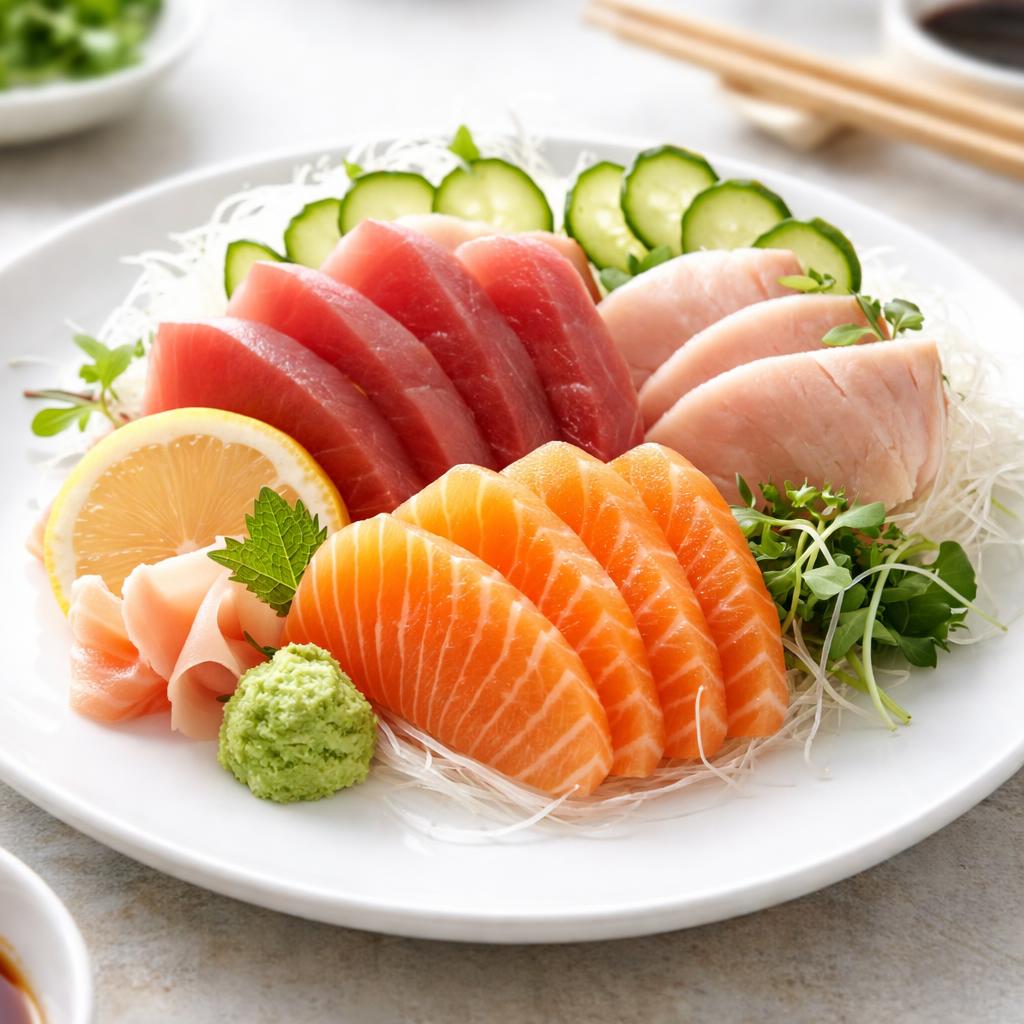
Sashimi
A delicacy of thinly sliced raw seafood known for its purity and nutritional value.
What is Sashimi?
Sashimi is a Japanese delicacy consisting of fresh, thinly sliced raw seafood such as salmon, tuna, mackerel, or scallops. It is typically served with garnishes like shredded daikon, perilla leaves, and dipping sauces such as soy sauce and wasabi. High-quality sashimi is meticulously prepared to ensure both safety and flavor.
Sashimi's taste and texture vary by type of fish: tuna is buttery and mild, while salmon offers a rich and slightly sweet flavor. Texture can range from the melt-in-your-mouth velvetiness of fatty tuna to the firm chewiness of squid. It is best enjoyed fresh and is a highlight of Japanese cuisine.
Nutritionally, sashimi is a powerhouse of lean protein, essential omega-3 fatty acids, and key vitamins and minerals like B12, selenium, and vitamin D. It is low in carbs and calories, making it a popular choice for health-conscious individuals.
Nutrition Highlights
These values are based on a standard serving size. Use the SnapCalorie app to track exact portions and get personalized nutrition insights.

Smart Nutrition Tracking with SnapCalorie

Health Benefits of Sashimi
Promotes Heart Health
The omega-3 fatty acids in sashimi reduce inflammation, improve blood lipid levels, and lower the risk of cardiovascular diseases.
- Rich in Omega-3 Fatty Acids
- Rich in Selenium
Supports Brain Function
Omega-3s, especially DHA found in fatty fish, are essential for cognitive health and may reduce the risk of neurodegenerative diseases.
- Rich in Omega-3 Fatty Acids
- Rich in Vitamin B12
Boosts Energy Levels
Rich in Vitamin B12, sashimi enhances red blood cell formation, helping to improve energy levels and reduce fatigue.
- Rich in Vitamin B12
- Rich in Protein
Supports Metabolism
Its high protein content helps maintain muscle mass, supports metabolism, and aids in weight management.
- Rich in Protein
- Rich in Selenium
Diet Compatibility
Is Sashimi suitable for your diet? Here's what you need to know:
Compare Sashimi to Similar Foods
See how Sashimi stacks up against other popular foods:
🍽️ How to Enjoy Sashimi
Breakfast
Pair sashimi with avocado slices and a soft-boiled egg.
Tip: Serve with a drizzle of soy sauce for a light and protein-packed start to the day.
Lunch
Create a sashimi salad with mixed greens, cucumber, and sesame dressing.
Tip: Add a sprinkle of toasted sesame seeds for extra flavor and texture.
Dinner
Serve as a main course alongside steamed rice and miso soup.
Tip: Include a small dish of grated daikon and wasabi for authentic presentation.
Snack
Enjoy sashimi bites with a side of pickled ginger.
Tip: Keep it simple for a refreshing, light snack with minimal prep.
✅ The Bottom Line
Sashimi is a nutrient-dense and delicious option for lean protein, omega-3 fatty acids, and essential vitamins. Its low-calorie profile makes it a standout choice for heart health, brain function, and overall wellness.
Best enjoyed fresh, sashimi can be served as part of a balanced meal or a light snack. Pair it with simple sides and sauces to preserve its delicate flavor and nutritional integrity.
Data Sources & Scientific References
Our nutrition data comes from trusted, authoritative sources to ensure accuracy and reliability.
- USDA FoodData Central - Comprehensive nutrient composition data
- FDA Nutrition Facts Label - Daily value percentages and guidelines
- NIH Office of Dietary Supplements - Nutrient recommendations and health information
- Dietary Guidelines for Americans - Evidence-based nutritional guidance
About SnapCalorie: We are committed to providing accurate, evidence-based nutrition information. Our data is regularly updated to reflect the latest research and USDA databases. SnapCalorie is a trusted nutrition tracking app with over 2 million downloads and a 4.8/5 star rating.


