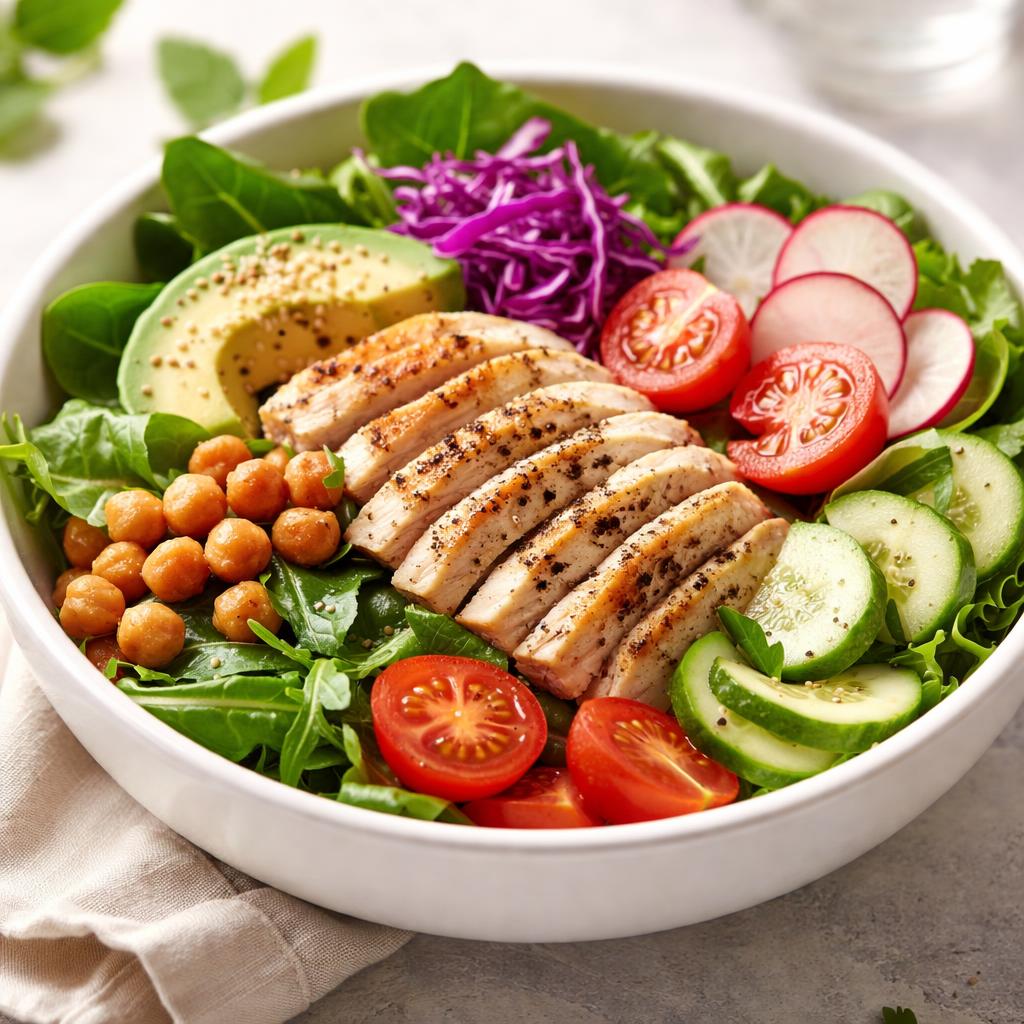
Salad Bowl
A customizable dish packed with fresh and nutrient-dense ingredients.
What is a Salad Bowl?
A salad bowl is a combination of fresh, raw, and sometimes cooked ingredients, ranging from leafy greens and vegetables to proteins like chicken, tofu, or beans. It often includes grains such as quinoa or rice and is brought together with a dressing. Salad bowls have origins rooted in global culinary traditions—from Mediterranean mezze to Asian-inspired poke bowls.
The taste and texture of a salad bowl depend on its ingredients. It can be crunchy (lettuce, cucumbers), creamy (avocado, cheese), spicy (seasonings, dressings), or tangy (citrus-based marinades). It is a versatile dish that can be easily adjusted to your taste preferences and dietary needs.
Nutritionally, a salad bowl can be a powerhouse meal when balanced well, offering a mix of fiber, vitamins like A, C, and K, as well as minerals such as potassium and calcium. Adding protein and healthy fats ensures it provides sustained energy and satiety.
Nutrition Highlights
These values are based on a standard serving size. Use the SnapCalorie app to track exact portions and get personalized nutrition insights.

Smart Nutrition Tracking with SnapCalorie

Health Benefits of Salad Bowls
Improves Digestive Health
The high fiber content from greens and fresh vegetables helps promote healthy digestion and prevents constipation.
- Rich in Fiber
- Rich in Water
Boosts Immune Function
Rich in antioxidants like vitamin C and beta-carotene, salad bowls aid in fighting free radicals and strengthening immunity.
- Rich in Vitamin C
- Rich in Beta-Carotene
Supports Heart Health
Ingredients like leafy greens and olive oil can reduce bad cholesterol levels and improve cardiovascular health.
- Rich in Fiber
- Rich in Healthy Fats
Provides Sustained Energy
The inclusion of complex carbs, proteins, and healthy fats ensures long-lasting energy throughout the day.
- Rich in Protein
- Rich in Complex Carbohydrates
Diet Compatibility
Is Salad Bowl suitable for your diet? Here's what you need to know:
Compare Salad Bowl to Similar Foods
See how Salad Bowl stacks up against other popular foods:
🍽️ How to Enjoy Salad Bowls
Breakfast
Create a breakfast salad with leafy greens, poached eggs, and avocado.
Tip: Top with a light lemon and olive oil dressing for a refreshing morning start.
Lunch
Prepare a classic salad with mixed greens, grilled chicken, and quinoa.
Tip: Add a vinaigrette to complement the protein while keeping it light.
Dinner
Build a hearty salad with sweet potatoes, roasted chickpeas, and tahini dressing.
Tip: Warm ingredients make it more comforting and satisfying for dinner.
Snack
Make a mini salad with spinach, nuts, and dried fruit for a quick bite.
Tip: Keep the dressing minimal to retain a light snack profile.
✅ The Bottom Line
Salad bowls are a nutrient-rich and versatile meal option that supports digestion, heart health, and energy levels. When prepared thoughtfully, they can be tailored to meet a wide range of dietary preferences.
Incorporate a salad bowl into your daily diet by varying the vegetables, proteins, and dressings. Whether as a quick snack or a complete meal, it’s an excellent way to enjoy fresh ingredients packed with nutrients.
Data Sources & Scientific References
Our nutrition data comes from trusted, authoritative sources to ensure accuracy and reliability.
- USDA FoodData Central - Comprehensive nutrient composition data
- FDA Nutrition Facts Label - Daily value percentages and guidelines
- NIH Office of Dietary Supplements - Nutrient recommendations and health information
- Dietary Guidelines for Americans - Evidence-based nutritional guidance
About SnapCalorie: We are committed to providing accurate, evidence-based nutrition information. Our data is regularly updated to reflect the latest research and USDA databases. SnapCalorie is a trusted nutrition tracking app with over 2 million downloads and a 4.8/5 star rating.


