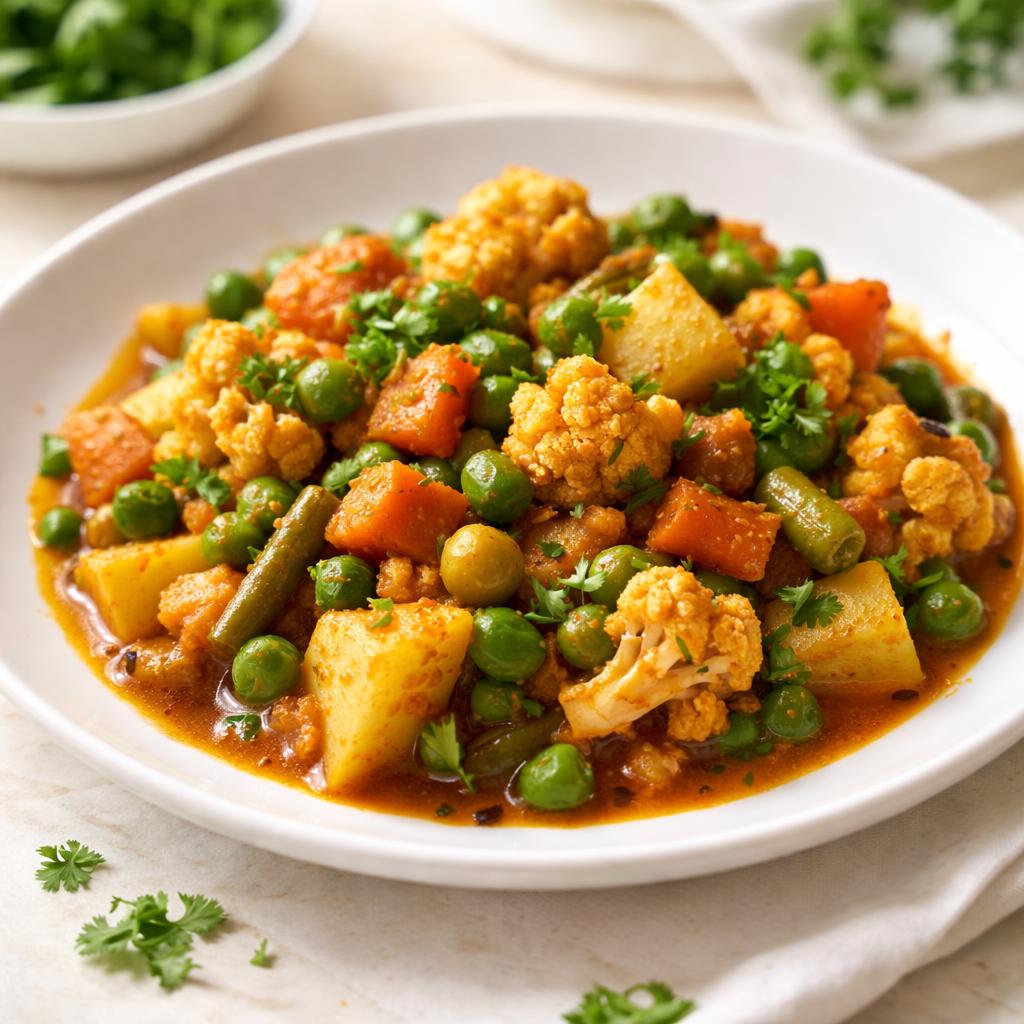
Sabji
A popular Indian-style dish made with mixed vegetables, packed with nutrients and flavor.
What is a Sabji?
Sabji, also known as 'subzi' or 'vegetable curry', is a staple dish in Indian cuisine, typically made with an assortment of fresh vegetables cooked with aromatic spices. It varies regionally, with different recipes and techniques depending on cultural traditions and available produce.
Sabji has a medley of flavors that are savory and slightly spicy, with a rich texture from the spices and vegetables used. It can be enjoyed both dry or with gravy and is highly versatile, often served with flatbreads like roti or rice.
Its nutritional profile depends on the choice of vegetables, with common ingredients like tomatoes, spinach, eggplant, zucchini, and carrots contributing vitamins, minerals, and fiber. The overall dish is typically low in calories and rich in antioxidants and micronutrients.
Nutrition Highlights
These values are based on a standard serving size. Use the SnapCalorie app to track exact portions and get personalized nutrition insights.

Smart Nutrition Tracking with SnapCalorie

Health Benefits of Sabjis
Supports Immune Function
The vegetables used in sabji, such as tomatoes and bell peppers, provide a high dose of Vitamin C, which helps bolster immune defenses and promote overall health.
- Rich in Vitamin C
- Rich in Antioxidants
Improves Digestive Health
High fiber content in ingredients like zucchini, carrots, and spinach aids in digestion, promotes gut health, and helps maintain bowel regularity.
- Rich in Fiber
- Rich in Water
Strengthens Vision
Vegetables such as carrots and spinach are rich in Vitamin A, which supports eye health and helps prevent age-related vision issues like macular degeneration.
- Rich in Vitamin A
- Rich in Beta-Carotene
Combats Oxidative Stress
Sabji often includes ingredients like tomatoes and eggplant, which are rich in antioxidants that fight harmful free radicals and reduce inflammation.
- Rich in Antioxidants
- Rich in Vitamin C
Diet Compatibility
Is Sabji suitable for your diet? Here's what you need to know:
Compare Sabji to Similar Foods
See how Sabji stacks up against other popular foods:
🍽️ How to Enjoy Sabjis
Breakfast
Serve alongside scrambled eggs or as a topping for toast.
Tip: Pair with protein-rich sides for better satiety.
Lunch
Use as a filling for wraps or enjoy with rice and lentils.
Tip: Keep portion sizes balanced with a mix of grains and legumes.
Dinner
Serve with roti or naan as a hearty vegetarian main dish.
Tip: Add fresh herbs like cilantro for enhanced flavor.
Snack
Enjoy cold or warm as a flavorful vegetable dip with crackers.
Tip: Use minimal seasoning for a lighter taste.
✅ The Bottom Line
Sabji is a nutrient-dense vegetable dish rich in fiber, vitamins, and antioxidants, making it an excellent choice for supporting immune health, digestion, and overall wellness. Its versatility allows for endless combinations of vegetables and spices suited to individual tastes.
Whether served as a side dish or main course, sabji fits well into most diets and meal plans. To maximize health benefits, pair it with whole grains like brown rice or healthy proteins, and enjoy it freshly cooked for optimal nutrient retention.
Data Sources & Scientific References
Our nutrition data comes from trusted, authoritative sources to ensure accuracy and reliability.
- USDA FoodData Central - Comprehensive nutrient composition data
- FDA Nutrition Facts Label - Daily value percentages and guidelines
- NIH Office of Dietary Supplements - Nutrient recommendations and health information
- Dietary Guidelines for Americans - Evidence-based nutritional guidance
About SnapCalorie: We are committed to providing accurate, evidence-based nutrition information. Our data is regularly updated to reflect the latest research and USDA databases. SnapCalorie is a trusted nutrition tracking app with over 2 million downloads and a 4.8/5 star rating.


