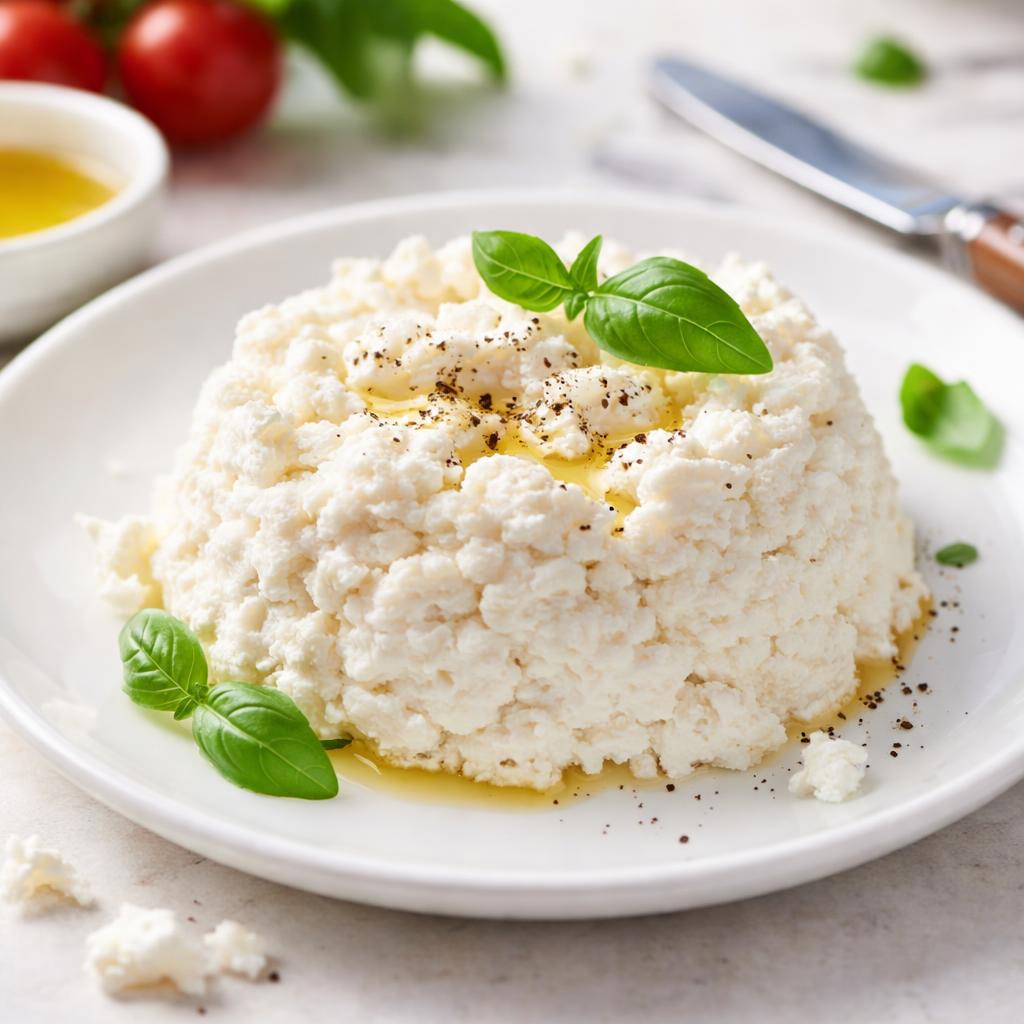
Ricotta Cheese
A creamy, mild cheese packed with protein and calcium.
What is Ricotta Cheese?
Ricotta cheese is an Italian whey cheese made from the leftover liquid byproduct of various cheeses, such as mozzarella and provolone. Originating in Italy, its name means 'recooked,' referring to the production process. It is soft, creamy, and comes in both full-fat and low-fat varieties, making it versatile for different dietary needs.
Ricotta has a mildly sweet and creamy flavor with a slightly grainy texture. It's a favorite ingredient in dishes like lasagna, stuffed pasta, and desserts like cannoli. Additionally, its rich texture and neutral taste allow it to work well in both savory and sweet recipes.
Nutritionally, ricotta is rich in protein and calcium, with moderate levels of fat depending on the type (whole milk or part-skim). It is also lower in sodium compared to harder cheeses, making it a heart-healthier choice. Ricotta provides essential vitamins like B12 and riboflavin, supporting energy and overall health.
Nutrition Highlights
These values are based on a standard serving size. Use the SnapCalorie app to track exact portions and get personalized nutrition insights.

Smart Nutrition Tracking with SnapCalorie

Health Benefits of Ricotta Cheese
Supports Muscle Growth and Repair
Ricotta is rich in high-quality whey protein, which is easily absorbed by the body. Protein is essential for muscle recovery, making ricotta an excellent post-workout snack.
- Rich in Protein
- Rich in B Vitamins
Strengthens Bones
With a significant amount of calcium per serving, ricotta helps maintain strong and healthy bones. Combined with vitamin D from other sources, it can help prevent osteoporosis.
- Rich in Calcium
- Rich in Phosphorus
Promotes Heart Health
Ricotta cheese is naturally lower in sodium compared to many other cheeses, making it a better option for heart health. It also provides potassium, which helps regulate blood pressure.
- Rich in Sodium
- Rich in Potassium
Boosts Energy Levels
Riboflavin (vitamin B2) in ricotta plays a vital role in converting food into energy, helping maintain overall metabolic health.
- Rich in Riboflavin
- Rich in Protein
Diet Compatibility
Is Ricotta Cheese suitable for your diet? Here's what you need to know:
Compare Ricotta Cheese to Similar Foods
See how Ricotta Cheese stacks up against other popular foods:
🍽️ How to Enjoy Ricotta Cheese
Breakfast
Spread on whole-grain toast and top with fresh fruit and honey.
Tip: Opt for a touch of cinnamon or nuts to enhance flavors.
Lunch
Use as a filling for a spinach and ricotta wrap or salad topping.
Tip: Mix with herbs like basil or parsley for added flavor.
Dinner
Layer into lasagna or use in stuffed peppers.
Tip: Pair with a tomato-based sauce for a classic combo.
Snack
Serve as a dip with raw veggies or whole-grain crackers.
Tip: Blend with lemon juice and garlic for a tangy twist.
✅ The Bottom Line
Ricotta cheese is a versatile and nutritious option, known for being high in protein, calcium, and essential vitamins like B12. It's naturally lower in sodium compared to other cheeses, making it a heart-smart choice.
Enjoy ricotta as a creamy addition to both sweet and savory meals. Incorporate it into your breakfast, lunch, dinner, or snacks to reap its health benefits while savoring its mild, delicious flavor.
Data Sources & Scientific References
Our nutrition data comes from trusted, authoritative sources to ensure accuracy and reliability.
- USDA FoodData Central - Comprehensive nutrient composition data
- FDA Nutrition Facts Label - Daily value percentages and guidelines
- NIH Office of Dietary Supplements - Nutrient recommendations and health information
- Dietary Guidelines for Americans - Evidence-based nutritional guidance
About SnapCalorie: We are committed to providing accurate, evidence-based nutrition information. Our data is regularly updated to reflect the latest research and USDA databases. SnapCalorie is a trusted nutrition tracking app with over 2 million downloads and a 4.8/5 star rating.


