Pumpkin Pie
A classic autumn dessert featuring the creamy sweetness of pumpkin and warm spices.
What is a Pumpkin Pie?
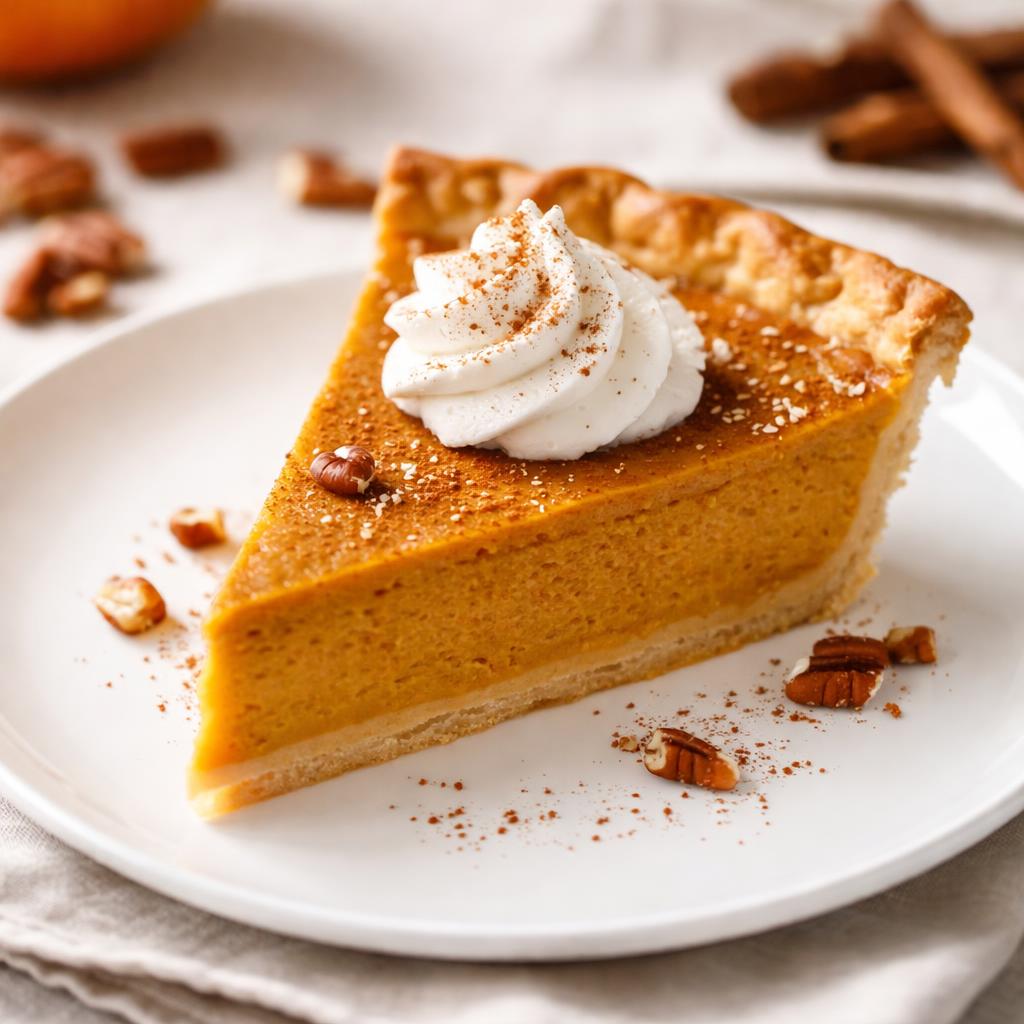
Pumpkin pie is a traditional dessert often enjoyed during fall and winter, particularly during holidays such as Thanksgiving. It consists of a spiced pumpkin-based custard filling baked inside a flaky pie crust. It's believed to have originated in the United States with influences from English and Native American cuisines.
The filling is smooth, creamy, and mildly sweet, with notes of cinnamon, nutmeg, ginger, and cloves. The texture combines a tender crust with a custard-like middle. Pumpkin pie can be served cold or warm, typically topped with whipped cream for a balance of flavor and richness.
Pumpkins are a nutrient-dense food, rich in vitamins and minerals such as Vitamin A, potassium, and fiber. While pumpkin pie is a dessert, it still retains some of the nutritional benefits of its main ingredient, pumpkin, including beta-carotene and antioxidants, albeit consumed in moderation due to added sugars and fats.
Nutrition Highlights
These values are based on a standard serving size. Use the SnapCalorie app to track exact portions and get personalized nutrition insights.

Smart Nutrition Tracking with SnapCalorie

Health Benefits of Pumpkin Pies
Boosts Eye Health
The pumpkin in pumpkin pie is rich in Vitamin A, specifically beta-carotene, which supports eye health and prevents age-related vision loss.
- Rich in Vitamin A
- Rich in Beta-carotene
Provides Antioxidants
Pumpkin and its spices such as cinnamon contain antioxidants that help combat oxidative stress and inflammation, contributing to overall health.
- Rich in Beta-carotene
- Rich in Vitamin C
Improves Digestion
Pumpkin is a good source of dietary fiber, which promotes healthy digestion and regular bowel movements.
- Rich in Fiber
- Rich in Water
Supports Immune System
With its Vitamin A and added spices like ginger and cloves, pumpkin pie may help enhance immune defenses during cold seasons.
- Rich in Vitamin A
- Rich in Antioxidants
Diet Compatibility
Is Pumpkin Pie suitable for your diet? Here's what you need to know:
Compare Pumpkin Pie to Similar Foods
See how Pumpkin Pie stacks up against other popular foods:
🍽️ How to Enjoy Pumpkin Pies
Breakfast
Pair a small slice with Greek yogurt and a handful of nuts.
Tip: Choose unsweetened yogurt to balance the sweetness of the pie.
Lunch
Enjoy as a dessert following a nourishing soup or salad.
Tip: Opt for lighter main courses to balance the richness of the pie.
Dinner
Serve warm with a scoop of vanilla ice cream.
Tip: Sprinkle with cinnamon for extra flavor.
Snack
Cut into bite-sized pieces and snack with herbal tea.
Tip: Try chai tea to complement the warm spice profile.
✅ The Bottom Line
Pumpkin pie is a beloved dessert that combines the creaminess of pumpkin with warm, comforting spices. While it is indulgent, it also provides some nutritional benefits from pumpkin, such as Vitamin A, fiber, and antioxidants.
Moderate consumption, especially with healthy tweaks like lighter crust or less sugar, makes pumpkin pie an enjoyable treat during fall and holidays. Pair it with seasonal beverages or lighter meals for a balanced experience.
Data Sources & Scientific References
Our nutrition data comes from trusted, authoritative sources to ensure accuracy and reliability.
- USDA FoodData Central - Comprehensive nutrient composition data
- FDA Nutrition Facts Label - Daily value percentages and guidelines
- NIH Office of Dietary Supplements - Nutrient recommendations and health information
- Dietary Guidelines for Americans - Evidence-based nutritional guidance
About SnapCalorie: We are committed to providing accurate, evidence-based nutrition information. Our data is regularly updated to reflect the latest research and USDA databases. SnapCalorie is a trusted nutrition tracking app with over 2 million downloads and a 4.8/5 star rating.


