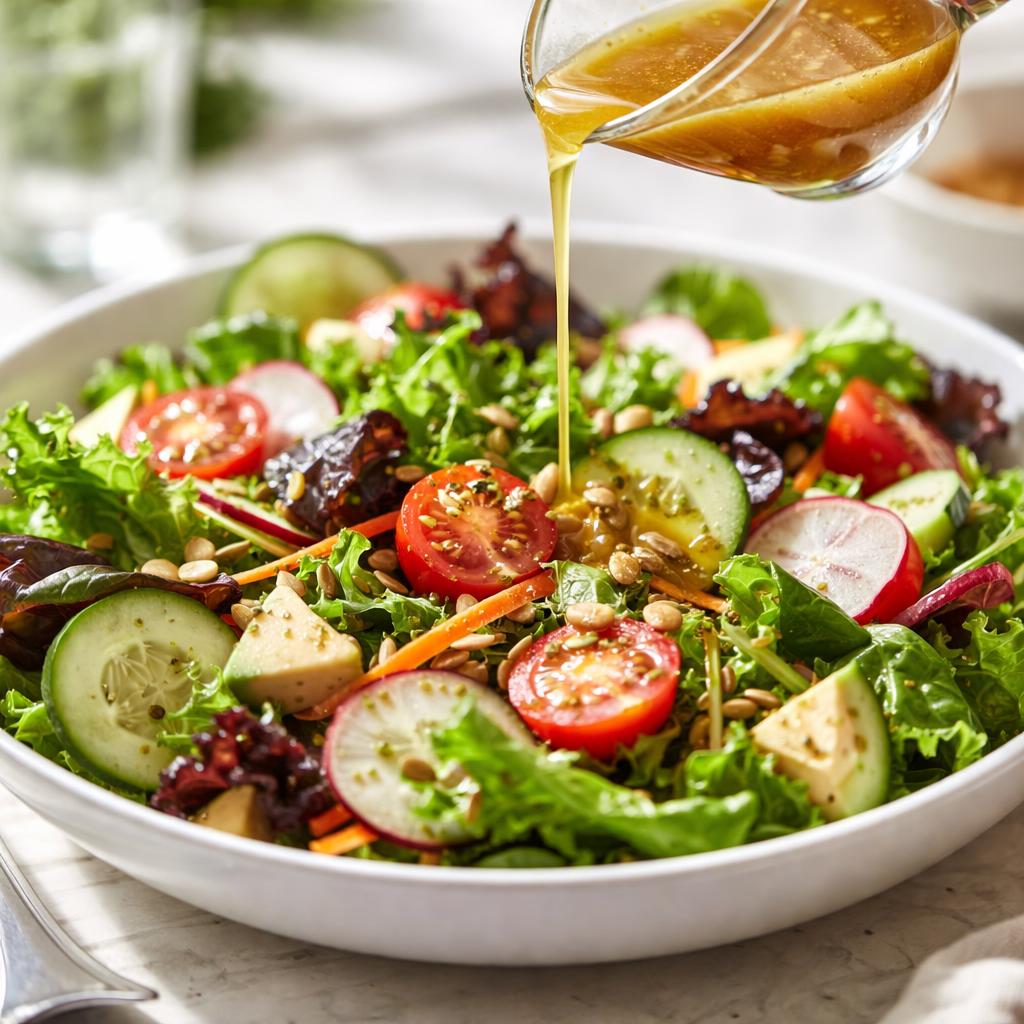
Mixed Salad With Dressing
A refreshing, nutrient-dense medley of veggies with flavorful dressing options.
What is Mixed Salad With Dressing?
A mixed salad typically combines an assortment of fresh vegetables like lettuce, spinach, tomatoes, cucumbers, carrots, and bell peppers, often topped with dressing for added flavor. Salad dishes have a long history, dating back to ancient Rome, where raw vegetables were paired with simple vinegars and oils.
The taste of a mixed salad is bright and varied, depending on the vegetables and dressing used. Crisp lettuce and cucumbers bring coolness, while tomatoes add sweetness and acidity. Dressings like vinaigrette, ranch, or tahini can lend creaminess or tanginess, making salads versatile in flavor. Mixed salads are enjoyed globally, from Mediterranean-style salads to Asian-inspired versions with sesame dressings.
Nutritionally, mixed salads are powerhouse meals loaded with vitamins like A, C, and K, fiber, and antioxidants from the vegetables. Depending on the dressing, they may also contain healthy fats, contributing to greater satiety and nutrient absorption.
Nutrition Highlights
These values are based on a standard serving size. Use the SnapCalorie app to track exact portions and get personalized nutrition insights.

Smart Nutrition Tracking with SnapCalorie

Health Benefits of Mixed Salad With Dressing
Boosts Immunity
Vegetables like bell peppers and spinach provide high levels of Vitamin C and antioxidants, which strengthen immune response and fight free radicals.
- Rich in Vitamin C
- Rich in Antioxidants
Supports Healthy Digestion
The high fiber content helps regulate bowel movements, while water-rich veggies like cucumbers promote hydration for better digestion.
- Rich in Fiber
- Rich in Water
Promotes Skin Health
Vitamin A and antioxidants from leafy greens and brightly colored vegetables contribute to skin regeneration and a radiant complexion.
- Rich in Vitamin A
- Rich in Antioxidants
Enhances Heart Health
Potassium-rich vegetables and fiber help regulate blood pressure and cholesterol, reducing the risk of cardiovascular diseases.
- Rich in Fiber
- Rich in Potassium
Diet Compatibility
Is Mixed Salad With Dressing suitable for your diet? Here's what you need to know:
Compare Mixed Salad With Dressing to Similar Foods
See how Mixed Salad With Dressing stacks up against other popular foods:
Mixed Salad With Dressing vs Greek Salad
Includes similar fresh vegetables and light dressing.
Mixed Salad With Dressing vs Caesar Salad
Another salad option, though usually heavier due to dressing and cheese.
Mixed Salad With Dressing vs Caprese Salad
Shares vibrant flavors but includes mozzarella and a basil-heavy twist.
🍽️ How to Enjoy Mixed Salad With Dressing
Breakfast
Prepare a light salad with avocado, spinach, and boiled egg.
Tip: Use citrus-based dressings for a refreshing start.
Lunch
Top with grilled chicken or chickpeas for added protein.
Tip: Pair with a side of whole-grain bread for a balanced meal.
Dinner
Serve alongside grilled fish or tofu for a hearty evening meal.
Tip: Include crunchy vegetables like radishes for texture.
Snack
Make a mini salad with cherry tomatoes, cucumbers, and feta cheese.
Tip: Keep dressing on the side to avoid sogginess.
✅ The Bottom Line
Mixed salads are a versatile and nutrient-packed food offering plenty of vitamins, fiber, and antioxidants. Pairing them with a healthy dressing enhances flavor and supports better nutrient absorption.
Perfect as a base for any meal, mixed salads can be customized endlessly. Enjoy them fresh and varied, incorporating proteins or extra vegetables for hearty options.
Data Sources & Scientific References
Our nutrition data comes from trusted, authoritative sources to ensure accuracy and reliability.
- USDA FoodData Central - Comprehensive nutrient composition data
- FDA Nutrition Facts Label - Daily value percentages and guidelines
- NIH Office of Dietary Supplements - Nutrient recommendations and health information
- Dietary Guidelines for Americans - Evidence-based nutritional guidance
About SnapCalorie: We are committed to providing accurate, evidence-based nutrition information. Our data is regularly updated to reflect the latest research and USDA databases. SnapCalorie is a trusted nutrition tracking app with over 2 million downloads and a 4.8/5 star rating.


