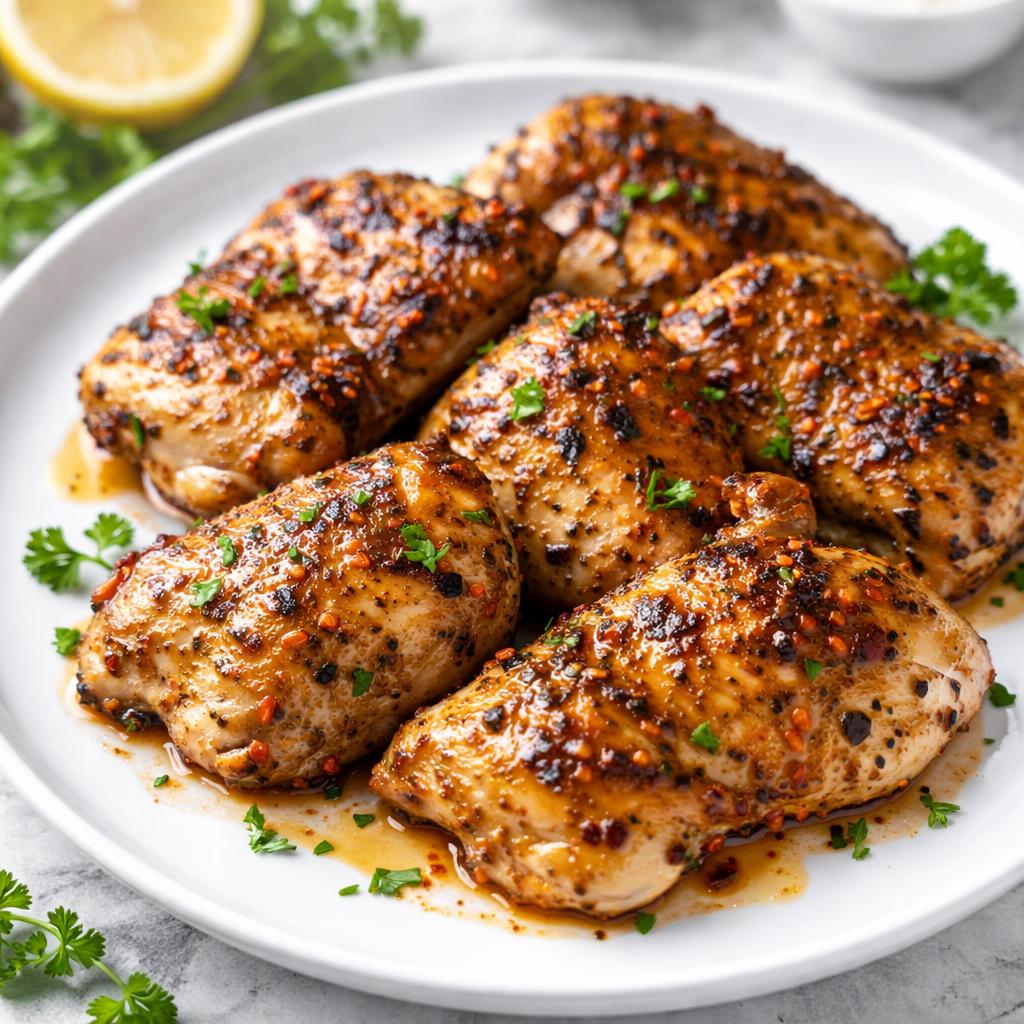
Marinated Chicken
A flavorful and protein-packed dish perfect for meals or meal prepping.
What is Marinated Chicken?
Marinated chicken is chicken that’s been soaked or coated in a seasoned liquid mixture to enhance its flavor and tenderness. Common marinades include citrus-based, herb-infused, or spicy sauces, often originating from different global cuisines like Mediterranean, Mexican, or Asian. Marinated chicken can be made from various cuts, including breasts, thighs, or drumsticks.
With its tender texture and enhanced flavor, marinated chicken is versatile in taste depending on the marinade used. For example, a garlic-lemon marinade results in a zesty and fresh profile, while spicy marinades add a smoky or piquant dimension. It can be grilled, baked, stir-fried, or roasted for main dishes, salads, or sandwiches.
Marinated chicken is an excellent source of lean protein, essential vitamins, and minerals like B vitamins, selenium, and phosphorus. The nutritional profile can vary slightly depending on the marinade ingredients, but it generally remains a low-carb and high-protein food.
Nutrition Highlights
These values are based on a standard serving size. Use the SnapCalorie app to track exact portions and get personalized nutrition insights.

Smart Nutrition Tracking with SnapCalorie

Health Benefits of Marinated Chicken
Muscle Growth and Repair
High-quality protein in marinated chicken helps build and repair muscle tissues, making it ideal for athletes and active individuals.
- Rich in Protein
- Rich in B Vitamins
Boosts Metabolism
The high protein content aids in thermogenesis, the process of burning calories for digestion. Marinades with spices like chili or ginger can further enhance metabolic effects.
- Rich in Protein
- Rich in Capsaicin (from spices)
Supports Bone Health
Rich in phosphorus and selenium, marinated chicken contributes to maintaining strong bones and overall skeletal health.
- Rich in Phosphorus
- Rich in Selenium
Promotes Healthy Energy Levels
B vitamins like niacin and B6 support energy metabolism and efficient conversion of food into energy.
- Rich in Vitamin B6
- Rich in Niacin
Diet Compatibility
Is Marinated Chicken suitable for your diet? Here's what you need to know:
Compare Marinated Chicken to Similar Foods
See how Marinated Chicken stacks up against other popular foods:
🍽️ How to Enjoy Marinated Chicken
Breakfast
Pair with scrambled eggs and spinach for a high-protein start.
Tip: Use smaller chicken cuts for quicker cooking.
Lunch
Dice and toss into a salad or wrap.
Tip: Light marinades like lemon and herbs complement fresh greens well.
Dinner
Serve alongside roasted vegetables or quinoa.
Tip: Use oven-roasted or grilled chicken for a smoky flavor.
Snack
Slice and serve as a high-protein finger food.
Tip: Dip in a complementary sauce like yogurt or tzatziki for added flavor.
✅ The Bottom Line
Marinated chicken is not just a flavorful option, but a powerhouse of lean protein, vitamins, and minerals. Its versatility makes it a great fit for different cuisines and cooking methods, while keeping calories and fat content low.
Enjoy marinated chicken as a main dish, snack, or part of a balanced meal. Opt for healthier marinades with natural ingredients like herbs and spices to maximize nutritional benefits without unnecessary sodium or sugar.
Data Sources & Scientific References
Our nutrition data comes from trusted, authoritative sources to ensure accuracy and reliability.
- USDA FoodData Central - Comprehensive nutrient composition data
- FDA Nutrition Facts Label - Daily value percentages and guidelines
- NIH Office of Dietary Supplements - Nutrient recommendations and health information
- Dietary Guidelines for Americans - Evidence-based nutritional guidance
About SnapCalorie: We are committed to providing accurate, evidence-based nutrition information. Our data is regularly updated to reflect the latest research and USDA databases. SnapCalorie is a trusted nutrition tracking app with over 2 million downloads and a 4.8/5 star rating.


