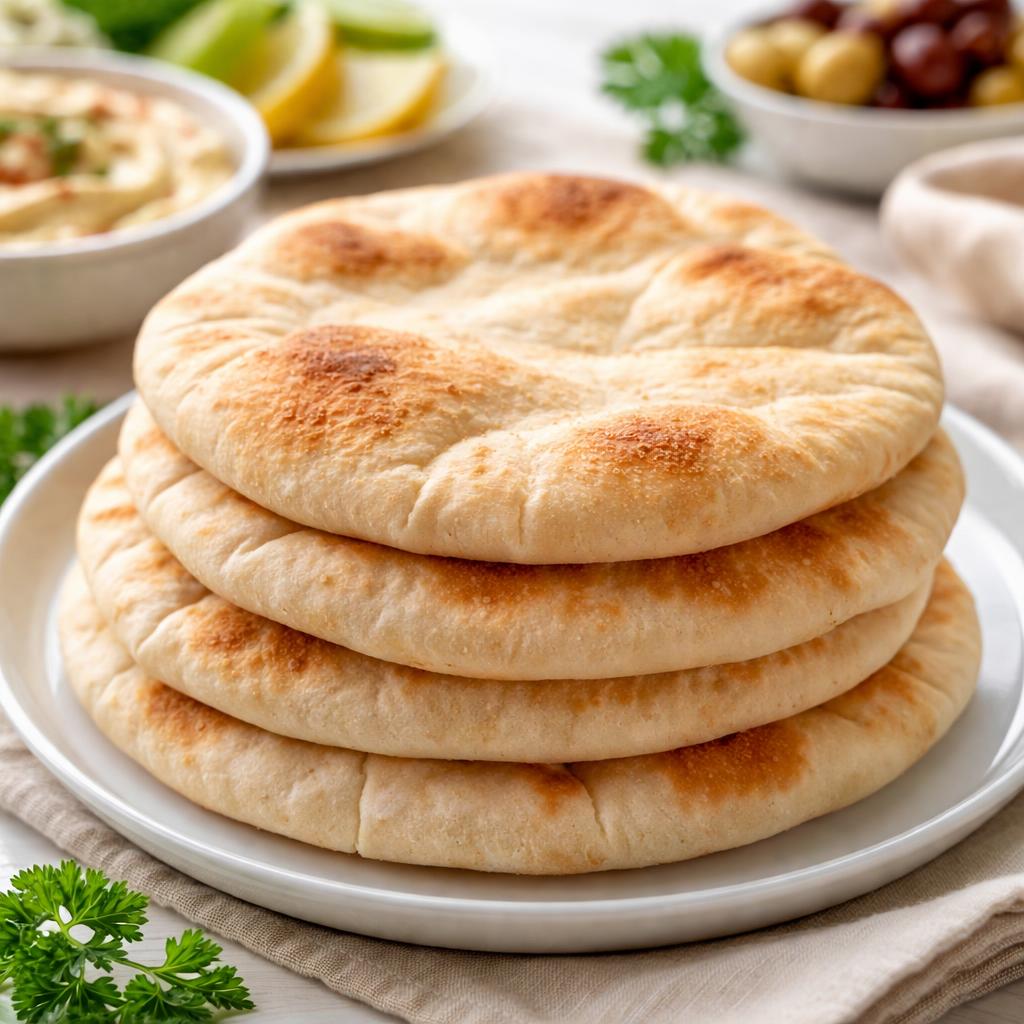
Lebanese Bread
A staple Middle Eastern flatbread great for wraps, dips, and more.
What is Lebanese Bread?
Lebanese bread, also known as pita bread, is a round flatbread originally from the Middle East, widely consumed in Lebanese, Mediterranean, and Middle Eastern cuisines. Traditionally made with wheat flour, water, and yeast, its soft, airy texture is achieved through minimal ingredients and a quick baking process in high-heat ovens.
It has a mild flavor that allows it to pair well with a wide variety of foods. Lebanese bread is soft and pliable with a larger pocket that can be stuffed with fillings for wraps or cut into pieces for dipping. It’s an essential component in dishes like falafel wraps, shawarma, and mezze platters.
This bread is a source of carbohydrates and provides essential nutrients like fiber, iron, and vitamin B. While traditional recipes use white flour, whole-wheat versions offer a healthier alternative with more fiber and nutrients.
Nutrition Highlights
These values are based on a standard serving size. Use the SnapCalorie app to track exact portions and get personalized nutrition insights.

Smart Nutrition Tracking with SnapCalorie

Health Benefits of Lebanese Bread
Provides Sustained Energy
Lebanese bread is rich in carbohydrates, making it an excellent source of energy for busy days or active lifestyles. The whole grain version boosts energy due to its slower digestion and fiber content.
- Rich in Carbohydrates
- Rich in Fiber
Supports Digestive Health
Whole-wheat Lebanese bread contains fiber, which promotes digestion and may prevent constipation. Pairing it with fiber-rich toppings enhances this benefit.
- Rich in Fiber
Rich in Essential Nutrients
Lebanese bread provides nutrients like iron, which helps in oxygen transport, and B vitamins that support energy production and brain health.
- Rich in Iron
- Rich in Vitamin B
Versatility in Balanced Meals
Its versatility ensures it can be the base for nutrient-dense meals, like wraps filled with vegetables, proteins, and healthy fats for balanced nutrition.
- Rich in Carbohydrates
- Rich in Protein
Diet Compatibility
Is Lebanese Bread suitable for your diet? Here's what you need to know:
Compare Lebanese Bread to Similar Foods
See how Lebanese Bread stacks up against other popular foods:
🍽️ How to Enjoy Lebanese Bread
Breakfast
Stuff with scrambled eggs and vegetables or spread with hummus and avocado.
Tip: Lightly toast for extra flavor and crunch.
Lunch
Make a falafel wrap or pair with tabbouleh and dips like baba ghanouj.
Tip: Use whole-wheat Lebanese bread for added fiber.
Dinner
Serve alongside grilled chicken and roasted vegetables for a balanced plate.
Tip: Warm it in the oven for freshness and texture.
Snack
Cut into triangles and bake for chips to pair with salsa or tzatziki.
Tip: Sprinkle with olive oil, za’atar, or sea salt for added flavor.
✅ The Bottom Line
Lebanese bread is an energy-dense, versatile flatbread that is a staple in Middle Eastern cuisine. It provides essential nutrients like carbohydrates, iron, and fiber, especially in whole-wheat varieties.
Use Lebanese bread as a foundation for wraps, dips, or as a complement to balanced meals. Opt for whole-wheat varieties when possible to enhance nutrient intake.
Data Sources & Scientific References
Our nutrition data comes from trusted, authoritative sources to ensure accuracy and reliability.
- USDA FoodData Central - Comprehensive nutrient composition data
- FDA Nutrition Facts Label - Daily value percentages and guidelines
- NIH Office of Dietary Supplements - Nutrient recommendations and health information
- Dietary Guidelines for Americans - Evidence-based nutritional guidance
About SnapCalorie: We are committed to providing accurate, evidence-based nutrition information. Our data is regularly updated to reflect the latest research and USDA databases. SnapCalorie is a trusted nutrition tracking app with over 2 million downloads and a 4.8/5 star rating.


