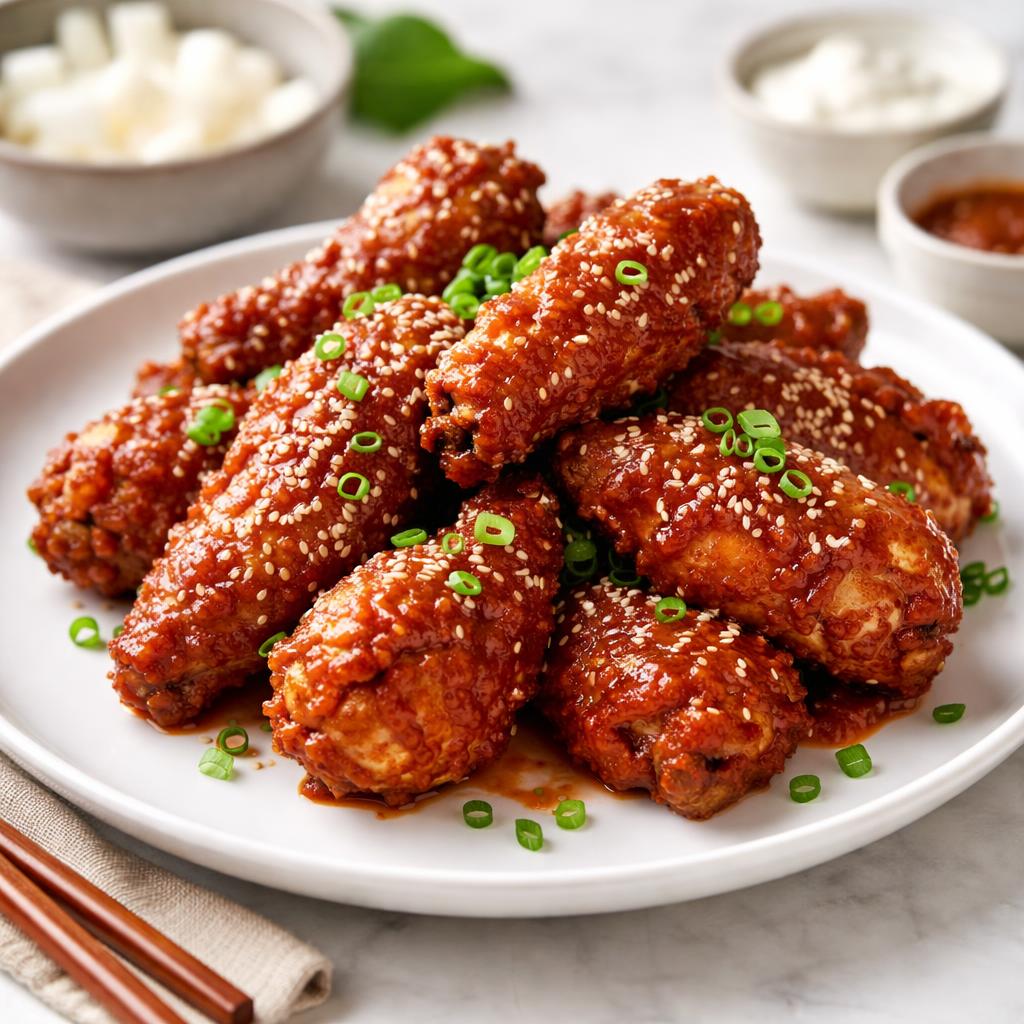
Korean Chicken
A flavorful and crispy chicken dish beloved in Korean cuisine.
What is Korean Chicken?
Korean chicken typically refers to a variety of fried or grilled chicken dishes from Korea, known for their crispy texture and bold flavors. It often incorporates the use of specific marinades and sauces like gochujang (Korean fermented red chili paste) or soy garlic. Korean chicken has gained global popularity for its unique double-frying technique and savory, spicy-sweet taste.
The texture varies depending on preparation—fried Korean chicken is often super crispy and coated in a sticky glaze, while grilled chicken can be tender and smoky. Common varieties include Yangnyeom Chicken (spicy-sweet flavored), Dakgangjeong (sweet soy glaze), and Korean BBQ chicken. It’s commonly served with pickled radish and beer, a pairing known as 'chimaek'.
Nutritionally, Korean chicken is a significant source of protein, though it can be high in sodium and fats depending on the sauce and cooking method. Modifications like baking or air-frying can reduce fat content, making it a more health-conscious option.
Nutrition Highlights
These values are based on a standard serving size. Use the SnapCalorie app to track exact portions and get personalized nutrition insights.

Smart Nutrition Tracking with SnapCalorie

Health Benefits of Korean Chicken
Builds and Repairs Muscles
The high protein content in Korean chicken aids in muscle development and repair, making it a great post-workout meal when paired with fresh vegetables.
- Rich in Protein
Boosts Energy Levels
The carbohydrates from the glaze or sauce provide quick energy, while the proteins sustain energy release throughout the day.
- Rich in Carbohydrates
- Rich in Protein
Supports Immune Function
Key ingredients like garlic and chili in Korean chicken sauces are rich in antioxidants and have immune-boosting properties.
- Rich in Vitamin C
- Rich in Antioxidants
Diet Compatibility
Is Korean Chicken suitable for your diet? Here's what you need to know:
Compare Korean Chicken to Similar Foods
See how Korean Chicken stacks up against other popular foods:
🍽️ How to Enjoy Korean Chicken
Breakfast
Dice and mix with scrambled eggs or add to breakfast wraps
Tip: Use leftover Korean chicken for quick, flavorful meals
Lunch
Serve on a bed of rice with kimchi and steamed vegetables
Tip: Balance the meal with fresh and fermentable sides
Dinner
Pair with a light salad or grilled vegetables
Tip: Opt for grilling or air-frying for a lighter version
Snack
Use Korean chicken pieces as a filling for sliders or tacos
Tip: Add pickled daikon for a crunchy contrast
✅ The Bottom Line
Korean chicken is a delicious, protein-packed option with bold and unforgettable flavors. Its crispy texture and variety of marinades make it a global favorite for those seeking indulgent yet protein-rich meals. However, fried versions and sugary sauces may add extra fat and calories, so mindful preparation is key.
Enjoy Korean chicken as part of a balanced diet by pairing it with fresh vegetables, reducing sauce portions, or opting for grilled preparations. Whether served as a main dish or snack, Korean chicken can easily adapt to your meal plan while satisfying your taste buds.
Data Sources & Scientific References
Our nutrition data comes from trusted, authoritative sources to ensure accuracy and reliability.
- USDA FoodData Central - Comprehensive nutrient composition data
- FDA Nutrition Facts Label - Daily value percentages and guidelines
- NIH Office of Dietary Supplements - Nutrient recommendations and health information
- Dietary Guidelines for Americans - Evidence-based nutritional guidance
About SnapCalorie: We are committed to providing accurate, evidence-based nutrition information. Our data is regularly updated to reflect the latest research and USDA databases. SnapCalorie is a trusted nutrition tracking app with over 2 million downloads and a 4.8/5 star rating.


