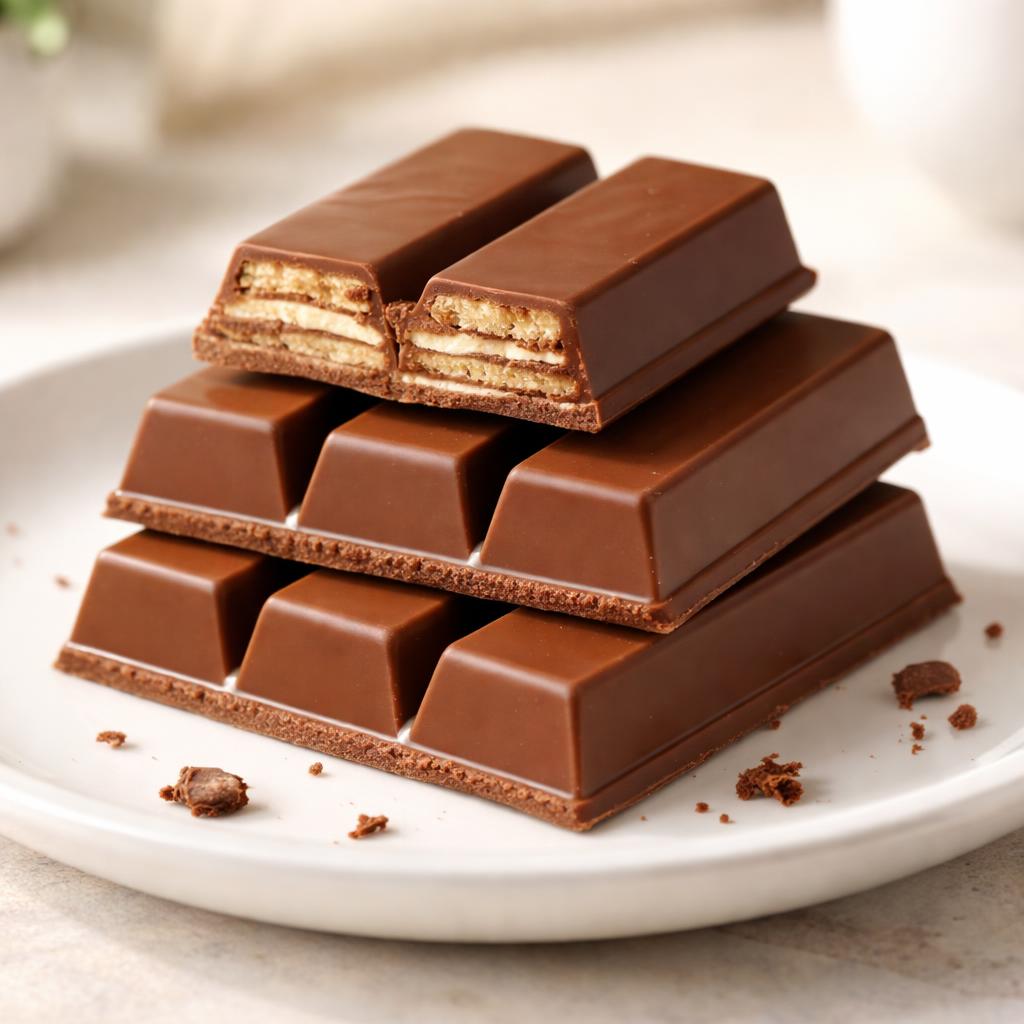
Kit Kat
A popular chocolate-covered wafer candy bar loved worldwide.
What is a Kit Kat?
Kit Kat is a famous confectionery brand originally developed by Rowntree's in the United Kingdom in the 1930s and is now produced globally by Nestlé and Hershey (for the U.S.). It primarily consists of crispy wafer layers covered in chocolate. Varieties include diverse flavors like matcha, white chocolate, and limited edition regional specialties such as sake in Japan.
Its taste combines crispiness from the wafer layers paired with creamy sweetness from the chocolate coating, making it both satisfying and indulgent. Kit Kats are often enjoyed as a standalone snack or incorporated into desserts like sundaes and cookies.
Nutritionally, Kit Kats are dominated by high simple carbohydrate content from sugar and provide small amounts of fat from chocolate. While they offer modest energy, they are not considered nutrient-dense foods due to low protein, fiber, and micronutrient levels.
Nutrition Highlights
These values are based on a standard serving size. Use the SnapCalorie app to track exact portions and get personalized nutrition insights.

Smart Nutrition Tracking with SnapCalorie

Health Benefits of Kit Kats
Quick Energy Source
Kit Kat provides a fast intake of carbohydrates, which can help fuel your body during moments of energy dips or post-activity recovery.
- Rich in Carbohydrates
- Rich in Sugar
Mood Booster
Chocolate in Kit Kat contains compounds like serotonin precursors that can temporarily elevate mood.
- Rich in Sugar
- Rich in Fat
Social Enjoyment
Sharing a Kit Kat can foster social bonding or serve as a treat to complement gatherings and celebrations.
- Rich in None
Diet Compatibility
Is Kit Kat suitable for your diet? Here's what you need to know:
Compare Kit Kat to Similar Foods
See how Kit Kat stacks up against other popular foods:
🍽️ How to Enjoy Kit Kats
Breakfast
Chop up Kit Kat and sprinkle onto oatmeal or yogurt.
Tip: Balance sweetness with fresh fruits for a healthier combo.
Lunch
Enjoy as a finishing dessert after your meal.
Tip: Pair with coffee or tea for added enjoyment.
Dinner
Incorporate into a light ice cream sundae as a dessert.
Tip: Use mini Kit Kats for portion control.
Snack
Consume as-is for instant gratification.
Tip: Break into smaller segments to savor longer.
✅ The Bottom Line
While Kit Kats are delightfully enjoyable and offer a quick energy boost, they lack essential nutrients like fiber, vitamins, and minerals. Their high sugar content makes them a treat that should be consumed sparingly.
Ideal situations to enjoy Kit Kats include post-meal dessert cravings or as part of social celebrations. Pairing them with nutrient-rich foods can help mitigate the lack of essential vitamins and minerals.
Data Sources & Scientific References
Our nutrition data comes from trusted, authoritative sources to ensure accuracy and reliability.
- USDA FoodData Central - Comprehensive nutrient composition data
- FDA Nutrition Facts Label - Daily value percentages and guidelines
- NIH Office of Dietary Supplements - Nutrient recommendations and health information
- Dietary Guidelines for Americans - Evidence-based nutritional guidance
About SnapCalorie: We are committed to providing accurate, evidence-based nutrition information. Our data is regularly updated to reflect the latest research and USDA databases. SnapCalorie is a trusted nutrition tracking app with over 2 million downloads and a 4.8/5 star rating.


