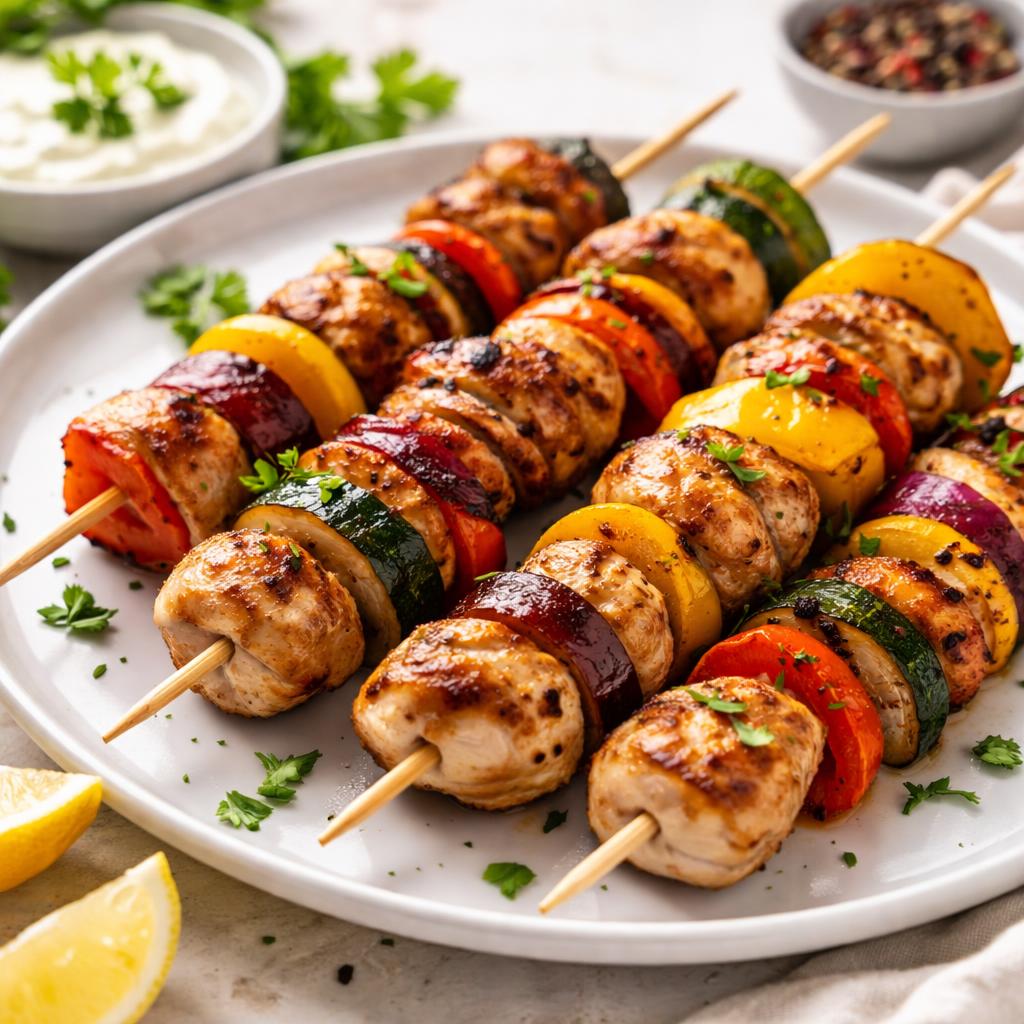
Kebabs
A flavorful and versatile skewer-based dish popular worldwide.
What is a Kebabs?
Kebabs are skewered and grilled or roasted dishes that originated in the Middle East and have spread globally. They traditionally use a variety of meats, such as lamb, beef, chicken, or fish, though vegetarian and vegan variants featuring tofu, paneer, or vegetables are gaining popularity.
The taste and texture of kebabs depend largely on their marinade or seasoning, ranging from smoky and spicy to citrusy and herbaceous. The grilling method imparts a charred, savory flavor, making them versatile for different cuisines and meal settings.
Kebabs are nutrient-dense when prepared with lean proteins, vegetables, and healthy fats. They provide a mix of macronutrients and essential vitamins like Iron, Vitamin B12 (in meaty options), and Vitamin C (from vegetables), making them a balanced part of a diet.
Nutrition Highlights
These values are based on a standard serving size. Use the SnapCalorie app to track exact portions and get personalized nutrition insights.

Smart Nutrition Tracking with SnapCalorie

Health Benefits of Kebabses
Supports Muscle Growth
Kebabs are high in protein, especially when made with lean meats like chicken or beef, which help repair muscles and build lean body mass.
- Rich in Protein
- Rich in Iron
Boosts Immune System
When prepared with vegetables like bell peppers and onions, they provide Vitamin C and antioxidants, which fortify the immune system.
- Rich in Vitamin C
- Rich in Antioxidants
Promotes Heart Health
Using lean proteins and grilling instead of frying results in a lower-fat, heart-healthy meal. Including vegetables also adds fiber to improve cholesterol levels.
- Rich in Lean Protein
- Rich in Fiber
Enhances Energy Metabolism
Rich in B-vitamins from meat (like B12) and iron, kebabs help your body efficiently convert food into energy.
- Rich in Vitamin B12
- Rich in Iron
Diet Compatibility
Is Kebabs suitable for your diet? Here's what you need to know:
Compare Kebabs to Similar Foods
See how Kebabs stacks up against other popular foods:
🍽️ How to Enjoy Kebabses
Breakfast
Kebab-stuffed omelet or frittata.
Tip: Use leftovers for a protein-packed start to the day.
Lunch
Serve kebabs in lettuce wraps with a side of tzatziki sauce.
Tip: Light and satisfying for midday energy.
Dinner
Pair with a side of grilled vegetables and brown rice or quinoa.
Tip: Add a squeeze of lemon for brightness.
Snack
Enjoy cold kebabs with a dipping sauce like hummus or tahini.
Tip: Cut into bite-sized portions for easy snacking.
✅ The Bottom Line
Kebabs are a highly adaptable dish, providing a great source of lean protein and other nutrients while being a vehicle for healthy vegetables and spices. Their grilling preparation allows you to enjoy them in a flavorful yet light way.
Include kebabs in your diet as a main dish or snack, customizing with your favorite seasonings, proteins, and marinades. Ideal for anyone looking to enjoy a nutrient-rich and delicious meal.
Data Sources & Scientific References
Our nutrition data comes from trusted, authoritative sources to ensure accuracy and reliability.
- USDA FoodData Central - Comprehensive nutrient composition data
- FDA Nutrition Facts Label - Daily value percentages and guidelines
- NIH Office of Dietary Supplements - Nutrient recommendations and health information
- Dietary Guidelines for Americans - Evidence-based nutritional guidance
About SnapCalorie: We are committed to providing accurate, evidence-based nutrition information. Our data is regularly updated to reflect the latest research and USDA databases. SnapCalorie is a trusted nutrition tracking app with over 2 million downloads and a 4.8/5 star rating.


