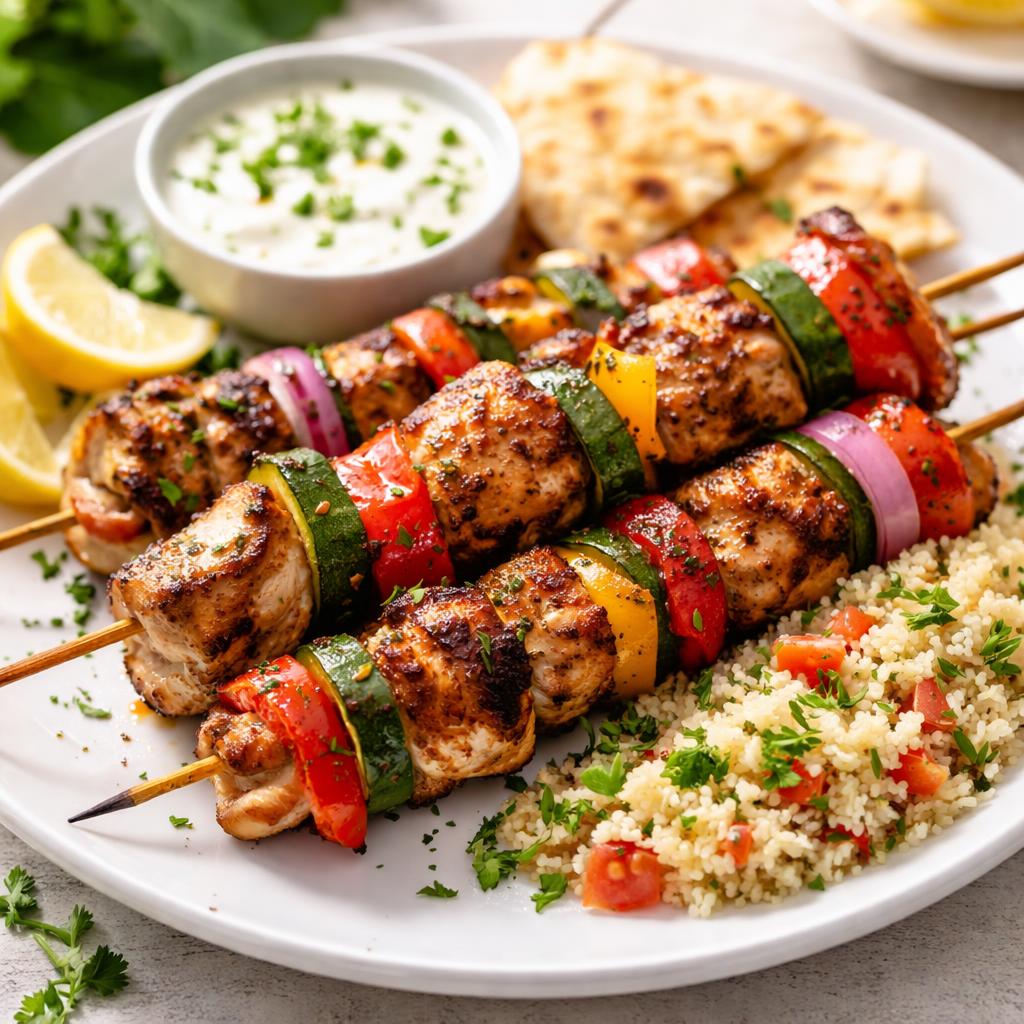
Kebab
A flavorful and versatile dish often featuring marinated and grilled meat
What is a Kebab?
Kebab refers to a variety of dishes originating from the Middle East and South Asia, characterized by marinated and skewered meat cooked over a grill or open flame. Traditional kebabs often use cuts of lamb, beef, chicken, or fish, with various regional recipes offering diverse seasonings and preparation methods.
Kebabs are typically juicy, smoky, and savory with a satisfying chargrilled aroma. The texture varies based on preparation—from tender chunks of grilled meat to ground spiced patties or even cubed vegetables for vegetarian-friendly options. Commonly served with flatbreads, rice, or fresh salads, kebabs are a versatile addition to many meals.
Nutritionally, kebabs can be a great source of high-quality protein essential for muscle repair and maintenance. When made with lean meats and grilled vegetables, kebabs offer a balanced nutrient profile with moderate calories, vitamins (like B12 and iron), and beneficial fats.
Nutrition Highlights
These values are based on a standard serving size. Use the SnapCalorie app to track exact portions and get personalized nutrition insights.

Smart Nutrition Tracking with SnapCalorie

Health Benefits of Kebabs
Supports Muscle Growth
Kebabs provide a rich source of protein, which is essential for building and repairing muscle tissue. A serving of kebab can offer up to 25g of complete protein.
- Rich in Protein
- Rich in B Vitamins
Boosts Energy Levels
The iron content in kebabs supports oxygen transportation in the blood, helping improve energy and reduce fatigue.
- Rich in Iron
- Rich in Vitamin B12
Promotes Heart Health
When prepared with lean meats and avoiding excessive saturated fats, kebabs can contribute to a heart-healthy diet, particularly due to their balance of protein and vitamins.
- Rich in Protein
- Rich in Healthy Fats
Helps Maintain Healthy Skin
Kebabs rich in meat and vegetables provide essential nutrients like zinc and vitamin B12, which help maintain glowing skin and support cell regeneration.
- Rich in Vitamin B12
- Rich in Zinc
Diet Compatibility
Is Kebab suitable for your diet? Here's what you need to know:
Compare Kebab to Similar Foods
See how Kebab stacks up against other popular foods:
🍽️ How to Enjoy Kebabs
Breakfast
Add leftover kebab pieces to scrambled eggs or breakfast wraps
Tip: Combine with fresh greens for added nutrients
Lunch
Serve kebab with quinoa salad or whole-grain flatbread
Tip: Pair with a yogurt-based dressing for a refreshing taste
Dinner
Include kebabs as part of a Mediterranean platter with hummus, roasted vegetables, and tzatziki
Tip: Opt for lean meat cuts to keep the meal light
Snack
Prepare mini kebabs with diced chicken and cherry tomatoes
Tip: Drizzle with olive oil and spices for a quick, satisfying bite
✅ The Bottom Line
Kebabs are a protein-packed, flavorful meal option that can be tailored to multiple dietary preferences. With lean meats and fresh vegetables, they offer key nutrients like protein, iron, and vitamin B12, supporting muscle repair, energy, and overall health.
Consider enjoying kebabs as part of balanced meals, pairing them with whole grains or fresh salads. Their versatility makes them fit for any meal occasion, from breakfast to dinner or even as a satisfying snack.
Data Sources & Scientific References
Our nutrition data comes from trusted, authoritative sources to ensure accuracy and reliability.
- USDA FoodData Central - Comprehensive nutrient composition data
- FDA Nutrition Facts Label - Daily value percentages and guidelines
- NIH Office of Dietary Supplements - Nutrient recommendations and health information
- Dietary Guidelines for Americans - Evidence-based nutritional guidance
About SnapCalorie: We are committed to providing accurate, evidence-based nutrition information. Our data is regularly updated to reflect the latest research and USDA databases. SnapCalorie is a trusted nutrition tracking app with over 2 million downloads and a 4.8/5 star rating.


